Looking back at the Season – Part 2

The second half of the year we continued with our busy schedule, and threw in both a Hunter/Jumper and Recognized show for fun.
Hunter/Jumper Show, August 2014

Hunter/Jumper Show, August 2014

July – Hunter/Jumper Show
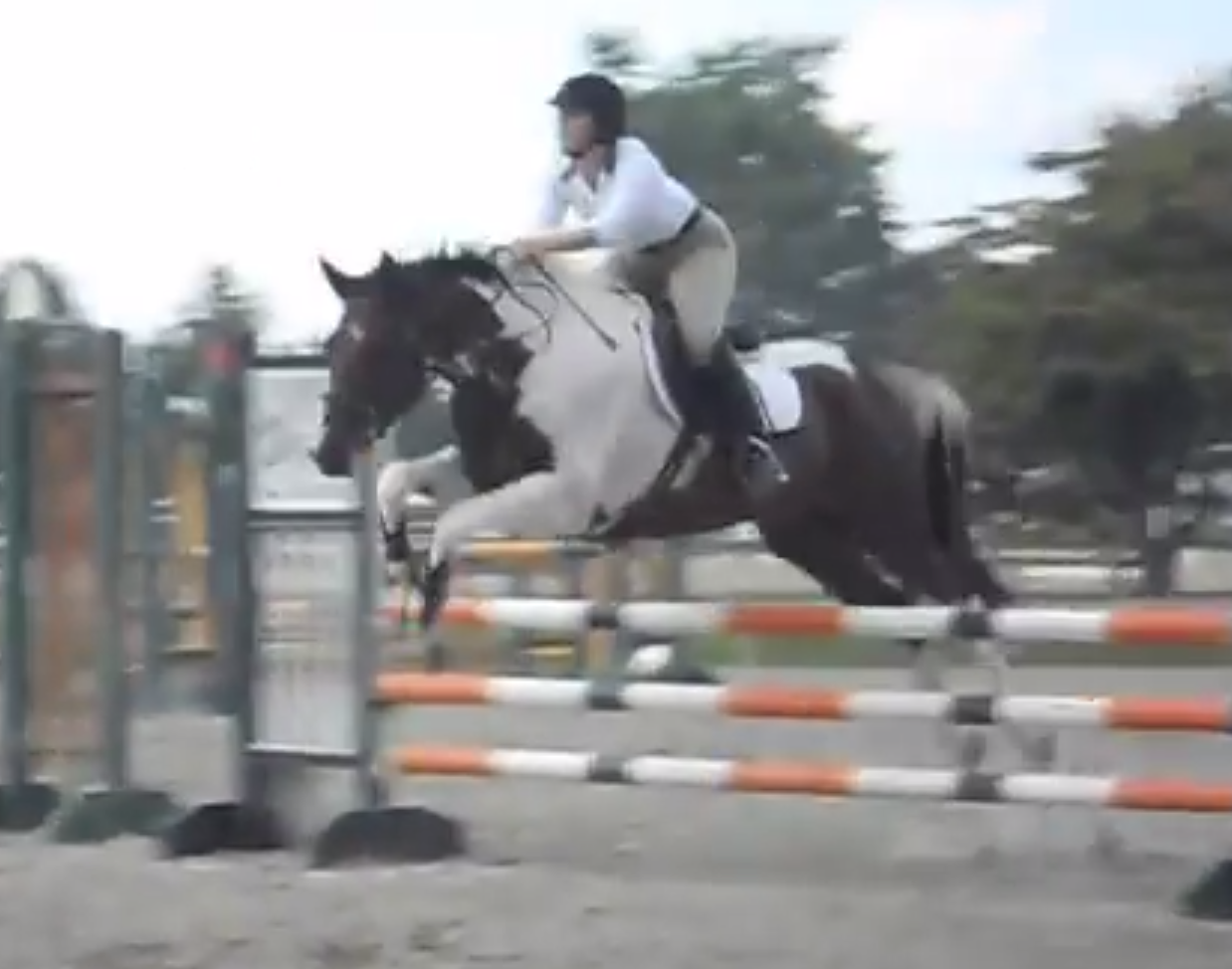
We went to a Hunter/Jumper show for a change of pace and with the goal of getting in jumping rounds in a low pressure environment. Leading up to the show, a series of crap schoolings and trying to fix things instead of leaving them alone left me with a super tired pony who just wasn’t up for what I asked of him. He tried very hard though, and still earned us two 4th place ribbons in a couple classes. I learned a lot about show prep for my horse and about the world of H/J.

FENCE, September 2014

FENCE, September 2014

September – Recognized Horse Trials at FENCE
Foster’s first Recognized show, and my first one in about 10 years had me pretty nervous leading up to it. I did my damned best to prepare my horse for it, and overall it was a success. What felt like a fairly good test earned us our all-time low of 30 for dressage, and we debuted the helmet cam with a rockin’ cross country course up a small mountain and coming in well under time. I made a mishap of not getting to the start box as soon as I should, which looks bad on paper, but oh well. Foster was tired on showjumping day and took out 2 poles, which was pretty good considering I was almost concussed in the warmup.

CHP, October 2014

CHP, October 2014

October – Carolina Horse Park Horse Trials
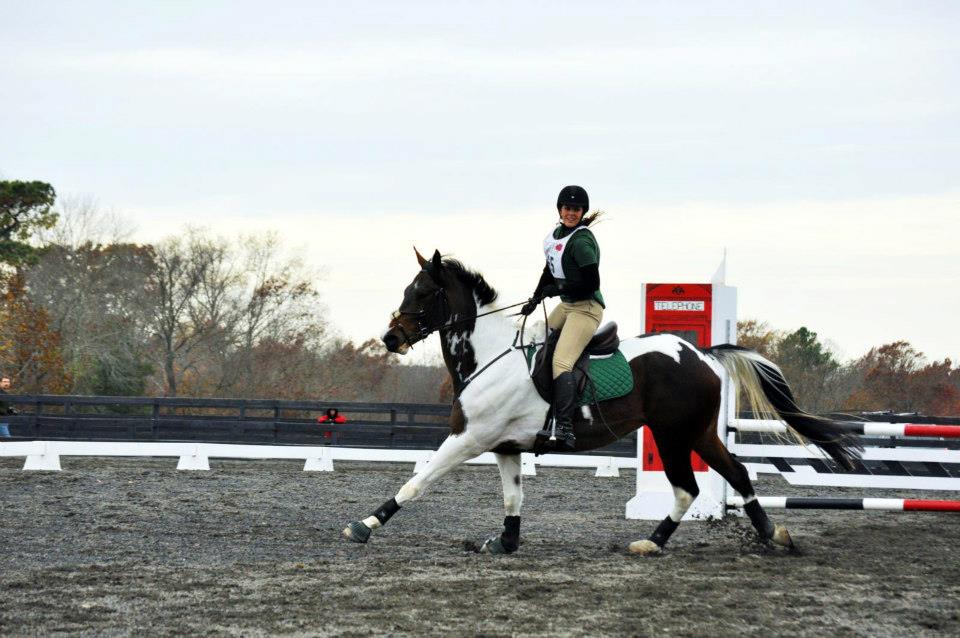
Another show at the Horse Park. Although an unrecognized event, they reused the course from the Recognized show prior, which meant I finally had to jump the dreaded trakehner and brush fences. The footing was super sloppy, which was a first for Foster, but he handled it well. We had a slightly tense test for a 31.7, and added 1 time fault in showjumping with a scrappy round. I thought I was going to puke with nerves before cross country after watching multiple refusals, but Foster came through brilliantly and went double clear. We got ourselves another 4th place ribbon.

CHP, November 2014

CHP, November 2014

November – Carolina Horse Park Horse Trials
… and yet another at the Horse Park. A more forward dressage test and a harsh judge gave us a 35.7, but left us tied for second place. This followed by our most fluid showjumping round, though I made turns way too way big and Foster accidently dropped 2 poles. I then went out to cross country preparing for a fun run around, which I was having when I forgot a fence and was pulled up 3 fences from home. Ended on a Technical Elimination.

Our Season By the Numbers
Total Shows: 10
Number of Horse Trials: 5
Average Dressage Score: 32.65 (67.35%)
Average Number of Poles Down: .85
Double-clear cross country runs: 3 (4 if you count that we probably would have gone clear without my TE, regarding pace and jumping faults)
Number of Ribbons: 6
Color of Ribbons (Placings): 2nd, 4th, 3rd, 4th, 4th, 4th
Times I Forgot Part of Course: 2
Times I dyed Foster’s tail purple: 2

As the numbers show, our tendency is to be at the top of the pack after dressage, then for me to mess things up in the jumping phases. From now on I am holding myself to a mandatory second course walk. But, looking at the positives- we learned a TON. Foster’s confidence at the level has come in leaps and bounds, which in turn has made me more confident. Pace has not been an issue at Novice, though admittedly, there are other venues that run Novice faster than the few I attended. We had one run-out this year, and that was mostly due to my being a passenger instead of kicking on. Since then, my mantra of ride every fence (other than being ironic at the last show) has been a helpful attitude and keeps me from getting too laid back about seemingly easy fences. I should tattoo it on my arm, right next to where my cross country watch goes.

Next year’s calendar will be interesting, depending on how long it takes for us to feel ready to move up to Training. There’s another Running Start Horse Trials in February, and then we would wait until May to do another unrecognized event. Combined Training shows will help us dip our toes into the Training test and battle some showjumping courses, which may be just the ticket. I’ll be spending the winter thinking about our goals and what is the right path for the spring, and hoping the season goes just as well as 2014!

Looking back at the Season – Part 1

2014 definitely marks a year of doing more shows than I’ve ever done before (at least with my own horse, because, IDA). Now that the show season is officially over, it’s time to be retrospective and look at how things went.

Running Start, Feb 2014

Running Start, Feb 2014

February – Running Start Horse Trials
This was our debut at the Novice level, and technically a little on the more difficult end of a move-up course. Foster put in a great dressage test (a 35.5 put us in 2nd after dressage), and was about as relaxed as I’ve ever had him. He then went double clear in showjumping. On the cross country course, he came out a little strong, but did his first jump into water and faux trakehner confidently. Unfortunately, I didn’t keep my leg on at the half coffin and he had a silly runout, followed by my celebrating too early and not realizing I hadn’t yet gone through the finish flags, racking up a whopping 26 time faults to leave us at the bottom of the pile placing-wise.

MacNairs, March 2014

MacNairs, March 2014

March – MacNair’s Combined Training
Somehow I barely remember this show. It was an eh dressage test for a 33.4, and I did a crap job as pilot and we brought down one pole for a 2nd place ribbon.

CHP, May 2014

CHP, May 2014

May – Carolina Horse Park Horse Trials
Our first Novice at the Horse Park, and I remember being pretty intimidated. Instead, I had a solid dressage test, scoring a 31.3. Our showjumping course was pretty sticky, but Foster’s clever feet got us around for a double clear round. Cross country was the first time I really had a blast the whole way around, and we came in with a big grin and double clear. We earned ourself a 4th place ribbon, our first Novice ribbon!

The Fork, June 2014

The Fork, June 2014

June – Fork Combined Training
We drove down to the Fork so my mum could see the painted pony in action. I tried for a forward dressage round that may have been borderline rushing, but earning a 31 nonetheless. I didn’t get to walk the showjumping course at all, and it was the toughest course to date- with two one-stride combinations and lots of bendiness throughout. We took out one rail and I believe we placed 3rd overall. We followed the show with a super fun cross country schooling, and practiced our first water-upbank-fence combinations.

Thus concludes the first 1/2 of the year! Tomorrow, part 2!

Show Recap: Carolina Horse Park Horse Trials – Showjumping

As I mentioned yesterday, even though our score was much higher than normal, we were somehow sitting in 2nd place after dressage. These one day events really fly by though, and with under two hours between dressage and the jumping phases, and with tack to attend to and a stadium course to walk, there really wasn’t much time to ruminate on our placing.

Sorry, no photos! Screengrabs instead!

Sorry, no photos! Screengrabs instead!

Foster decided once again he would warm up for stadium half awake, surely in an effort to make sure my calves were in working order. All kidding aside though, I seriously need to find a way to get him revved up for the stadium phase, because these pokey warm-ups just aren’t cutting it. Anybody have any suggestions for getting a horse forward while conserving energy?

Blurry photo is blurry

Blurry photo is blurry

Thankfully he tends to get his motor running in the actual show arena, and I took a big lap around the course so he could see everything and hopefully get excited.

Even with the two poles, I feel like this is one of our better stadium rounds, at least regarding fluidity. I got stiff to fence 2, which he knocked, and I didn’t balance him as I should to fence 5. But there are some positives- I like my turn from 4 to 5 (why did I not ride every turn like that?) and I didn’t get any nasty chippy spots like I tend to do. Also, an actual flying change! But in retrospect, I should have really gotten that simple change faster (ugh), properly balanced before every fence, and not made my turns so sweeping.

Wish I had a photo of this one!

Wish I had a photo of this one!

So with 8 jumping faults and 7 time faults to add to our score, we dropped a bit down the leaderboard. While we really should have done better than that, there were plenty of other victims of flying poles, and I tried not to stress over losing a ribbon. We still had cross country to run!

Jumping lesson recap: Angles and straightness

Foster got new shoes just in time to have his jumping lesson yesterday, thank goodness. We came so close to the wire though, that I was feeding him from his bucket as he was getting his back feet shod, but we made it!

I rode once again in the ‘Wonder Bit’ to get a second opinion on whether or not it was a good fit. It turns out the first ride was not a fluke, and after a good lesson we decided it would be worth trying it out at the show this weekend!

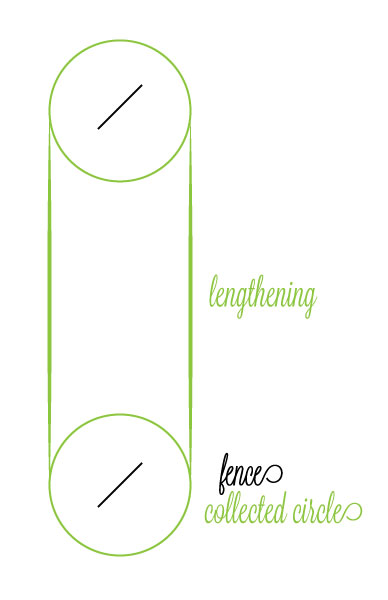
The lesson began with more lengthening to collected transitions, but a little more complex than before. The exercise included a 10 meter (15 meters @ canter) circle around a fence within the collected gait, followed by a lengthening down the long side to another collected circle around another fence, then rinse and repeat. A lot of the focus here was keeping him straight through the shoulder (which likes to pop out) while still maintaining a slight bend to the inside (sometimes I overcorrect and counter-bend by accident), all while keeping the collected trot/canter active. Collection proved to be the toughest part of this exercise, and we were praised for getting a better response to the lengthening cue (though I need to maintain contact and keep the connection when shooting off).

collectedlengthe

After this, we reviewed jumps on a circle, spiraling from a 15 meter canter circle out to a large circle that included an oxer and a vertical. Once again, the emphasis was put on keeping him straight. Doug pointed out that when we were straight we got much better spots, and that the quality of the canter needs to be addressed at all times. If I find myself getting to a long spot, I tend to pump my hands, when instead I should sit back a little and allow my seat/leg to do the work.

Pumping at its finest:

Then the fun [difficult] stuff began. Two small fences (2′) were set up in the middle of the arena. My goal was to go through them at a pretty extreme angle (30 degrees or so), with 3 strides in between. The first time I went through without seeing my line, and totally flubbed it. Then I was shown where my line was, and when I should look vs when I should turn (a remnant from the last lesson), and actually got through it, albeit with a little more wiggle than desirable. A third time through, and it was much smoother. Having the angled fence approach is our toolbox will be very valuable, so if we ever get off our line to an element, Foster will know he can still take it. My homework is to practice over a small warmup cross country fence at the show, followed by a lesser angle to a larger fence, and get him mentally sharp in preparation for this idea.

angledfencesWe finished with a short course of 4 fences, including a 1 stride and the couple new fences I have introduced to the arena, the swedish-oxer-liverpool fence and a brick wall. Once again, straightness was an issue, as I tend to not think about my approach until the base of the fence. Instead, I need to be straight 4 strides out, in order to give Foster the best chance possible of being successful. Something interesting, too, that I learned (and this was a duh! moment on my behalf), was with a Swedish oxer you shouldn’t jump the middle, but jump the side that appears as an ascending oxer. So with the below jump, I would approach this slightly left of center:

Swedish Oxer with 'Liverpool'

Swedish Oxer with ‘Liverpool’ from Fairntosh

Overall, this was another great jumping lesson where I took a lot away. I have confidence in the new bit and hope he rates well in it cross country. With each exercise we improved and once again, I have great homework to work on for some time. It felt good to practice both fences that were technical, and a course that was at or slightly above the height we’ll be competing at this weekend. Because of lesson conflicts this week, I am not sure I will have another opportunity to jump before the show, but I feel like this was a great note to finish on for our prep!

Just for Kicks: USEA Proposed Rule Changes

It has been announced that changes are being proposed at the USEA to the lower levels, in order to bring it up to other country’s standards. Click here for the article on EventingNation. Here’s the recap for those who are unaware:

Cross Country Beginner Novice Novice Training
Speeds @ optimum time 300 350 mpm 350 400-430 mpm 420-470 *450–480 mpm
Speed faults 420 520 mpm 450 520 mpm 520 mpm

* When multiple divisions of Training level are offered, Open Training speed is 480 mpm.

Show Jumping Beginner Novice Novice Training Preliminary
Heights 0.79m (2’7”) 0.90m (2’11”) 1.0m (3’3”) 1.10m (3’7”)
Height Option* 0.85m (2’10”) 0.95m (3’1”) 1.05m (3’5”) 1.15m (3’9”)
Spreads of oxers 1.00m (3’3”) 1.10m (3’7”) 1.20m (3’9”) 1.30m (4’3”)
Spreads w/ height option 1.05m (3’5”) 1.15m (3’9”) 1.25m (4’1”) 1.35 (4’5”)
Spreads of triple bar 1.20m (3’11”) 1.30m (4’3”) 1.40m (4’7”) 1.50m (4’11”)
Spreads w/ height option 1.25m (4’1”) 1.35m (4’5”) 1.45m (4’9”) 1.55m (5’1”)

* One vertical and one oxer permitted at these heights

Being that I have, do, and will be competing at these levels, I’d like to weigh in with my opinion, which is two-fold. If you want to skip the discussion- scroll to the end.

Speed
The current argument for upping the speeds required is that some horses have to do circles at the end of their course before crossing the finish flags in order to avoid speed penalties (for non-eventers, you can actually incur points against you if you go too fast, a time is given as incurring speed faults along with the optimum time). The purpose of the speed faults is to dissuade riders from reckless riding on course.

Beginner Novice XC Oct. 2012

Beginner Novice XC Oct. 2012

From my standpoint, I can understand why increasing the speed @ optimum time could be a good idea. Even if my sometimes pokey horse might struggle with this, I will admit that encouraging a more forward ride might be a good thing. I completely disagree, however, with increasing the speed fault speed to 520. In the current USEA guidelines, 520 meters per minute is a standard speed for a Prelim course. Let me tell you, you are seriously cruising at 520 mpm. Here is a video comprised of Prelim riders at Morven Park in 2011, for example:

Why would anyone jump Beginner Novice (2’7″) or Novice (2’11”) need to get anywhere near Prelim (3’7″) speed in order to safely get around a course? In my opinion, there is no training program that should ever include galloping 2’7″ fences as part of their regimen. If I see someone  taking these smaller fences at almost-Prelim speed (because of course actual Prelim speed incurs speed faults), I think it is safe to assume that either A) the ride is lacking control of the horse, and therefore dangerous OR B) the rider is lacking discipline, and is therefore dangerous.

OctSHT2014_0321-3610283733-O

Erm, yes, I may have trotted a couple steps after the up-bank

Let’s talk about how these new speeds might affect other competitors. When Beginner Novice (the most affected level here) allows horses on course that could be traveling at anything between 350 and 515 meters per minute, it is likely that passing on course is more apt to happen. Think about your average cross country course, which is a mixture of water elements, fields, and wooded trails. Will the horse traveling at the higher speed wait until you are conveniently in a big field to pass you? My experience tells me probably not. Now think about your average horse or rider at the Beginner Novice levels. Beginner Novice is a division created for either green horses, or inexperienced riders. How is a pair like this, presumably new to the sport, going to handle the likelihood of being passed on course? Some horses get understandably upset when another horse gallops up behind them blindly. Novice or young riders may not know how to handle the situation of being approached so quickly on course.

To me, this is the greatest danger of allowing faster speeds on these lower level courses. I think the only solution to this dangerous passing scenario would be to increase the time between riders allowed on course, to allow slower pairs a ‘head start’. However, knowing that most shows operate on tight time schedules, I see this an unlikely predicament.

Height
I can think of (and have heard from on the interwebs) more than a few lower-level riders who are crapping themselves thinking about the new height allowances in showjumping. Many of these riders (of course, not all) ride at the lower levels because they lack confidence to move up. Increasing the heights of some fences is crippling to the anxiety of this crowd, and I truly feel for them. While 2″ is not a whole lot (the increase for Novice and Training), 3″ added to Beginner Novice course practically turns them into Novice fences, exactly what that same crowd is looking to avoid. While I don’t see this increase in height to be as dangerous as the speed fault scenario, I do wonder how these changes will adversely affect current riders at the lower levels.

10649873_10102184144209409_4711948768496501054_n

That being said, I do think that these height rules could find merit at the annual Championship Competition (AEC). These riders have to qualify in order to attend, and are therefore presumably better prepared to tackle a slightly harder course. Similarly, if the championship heights are clearly communicated before the event, it would ease the tension between traditional schooling venues as to what facilities implement 2014 heights versus the new proposed heights.

In Summary
In my mind, having a more forward optimum time is fine. Still safe, and rewarding a forward ride. I get that. Increasing the speed fault speed allowed- big, big red flags for me, and I hope they will be heavily weighed in the proposal discussions. For height, I don’t understand how increasing the height of a couple fences at the lower levels brings us up to international standards, and even more so, I don’t understand why making these lowest levels consistent with other countries matters. Is there going to be a Beginner Novice Olympics any time soon? Traveling to competitions in other countries for Training level? I seriously doubt it. Perhaps implementing new heights for Championship courses is the way to go. Overall, I would like to see better reasons for implementing changes that will affect the greater population of eventers, and that is those competing at the Beginner Novice through Training levels.

Weigh in! What do you think about the new changes? How will they affect you and your decisions about what level to ride at?

Show Recap: Novice @ Carolina Horse Walk – Competition day

After walking the cross country course Saturday, the sky opened up and it poured. And poured. And poured. Luckily this provided excellent opportunity to huddle in Foster’s stall, do a bit of braiding, mentally run through my test, and try not to think about what was happening to the footing all through the deluge.

No dressage photos, so look at us in our snazzy new colors!

No dressage photos, so look at us in our snazzy new colors!

Dressage
Needless to say, it was still very very wet Sunday morning. The dressage warm-up quickly turned to slop, which my poor pony is not so used to working in. I attribute his being slightly stiff in his neck because of this, as he attempted to pick his way through the mud and muck. Still, I was happy with the test he put in, and I was pretty confident it would score in the low 30’s.

photo (7)

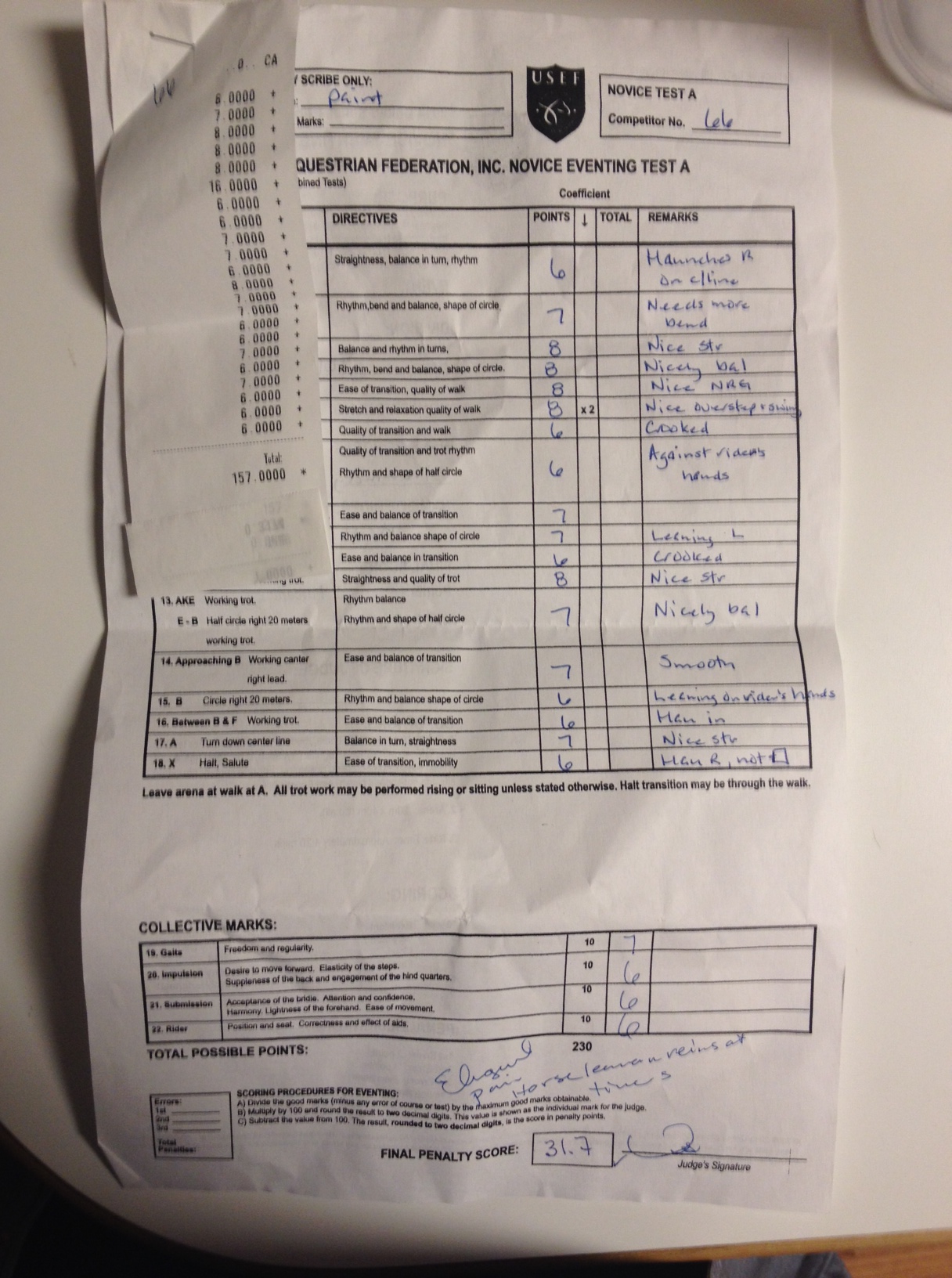
The test earned us a 31.7, good for 5th place. Looking at the test, I’m pleased with the number of 8’s on there, and it appears we were off to a pretty good start. I am, however, a little bummed with how the test finished, and I didn’t feel some of the things the judge remarked on. Similarly, I wish I could have seen my ride, so I could understand why our overall scores dropped so much from the last show just a couple weeks ago. So we’ll be chalking it up to experience and trying to improve even more for the next outing.

Showjumping
Because of the slop, I was a little worried about how showjumping would go. Foster looked just a hair too relaxed hanging out in his stall, and I knew he would need some extra oomph to push out of the steadily deteriorating footing. I gave myself about 15 minutes of warm up, starting by trying to get him really moving forward (kind of successful), before hopping over a couple fences. He was a bit sticky to the fences, but I decided to take the risk of not jumping further in order to save our energy for the fences that would count.

OctSHT2014_1814-3610283681-O

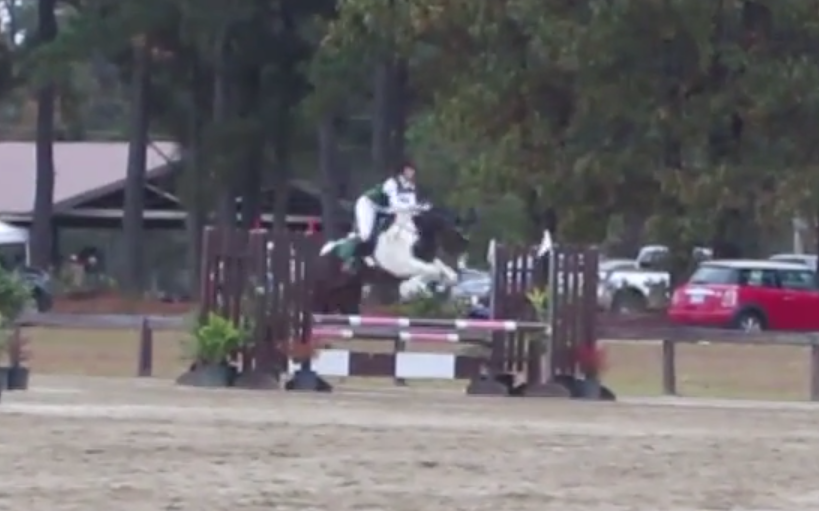
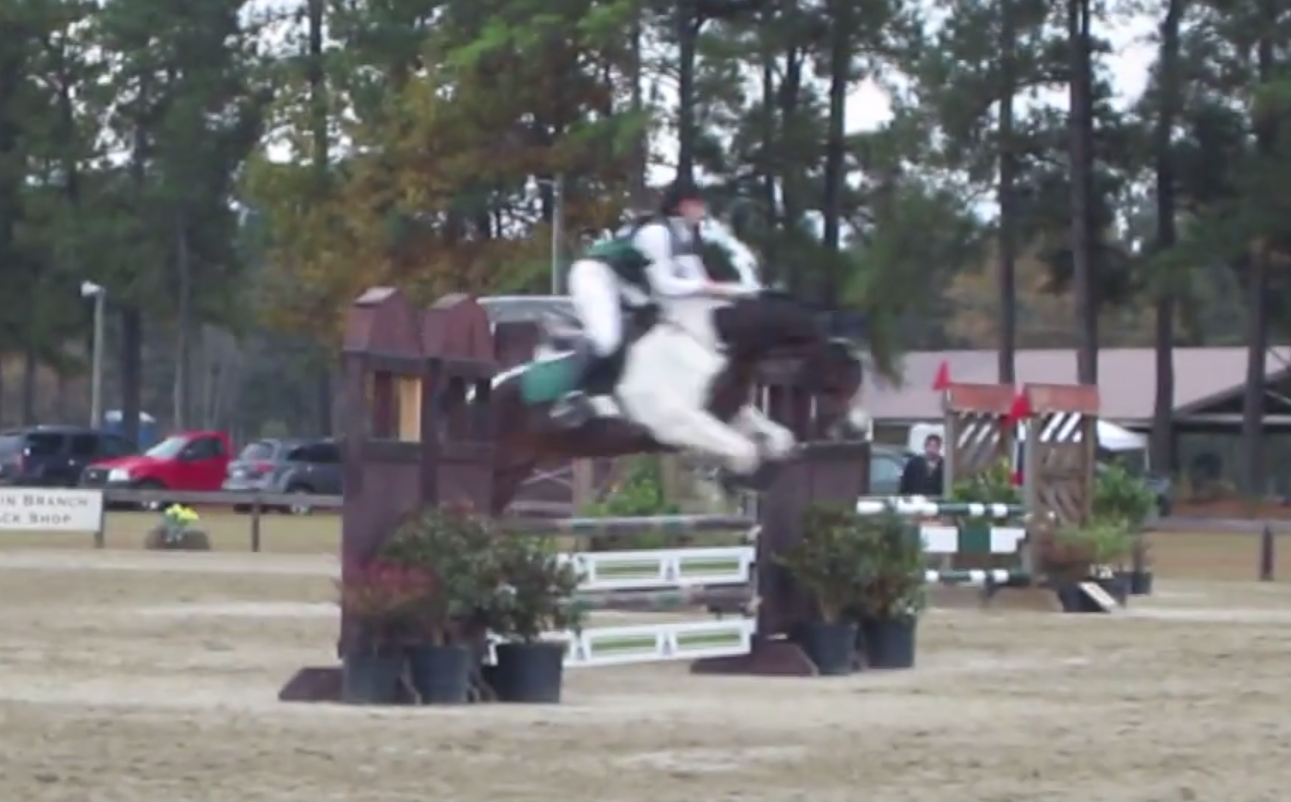
I’ll say this in regards to our round- thank goodness you don’t get pretty points in eventing. He jumped me out of the tack over fence 7, which I got him a little unprepared to and he made a huge effort over. He didn’t pick up the correct leads 100% of the time, and once I brought him back to a trot to switch leads. Because of this, I think, we got 1 time fault, but went otherwise clear through a course that was definitely taking names. I saw 1 fall, and 2 refusals just while I was waiting- an unusual pattern for these lower levels.

Fence 7

Fence 7

Cross Country
When I got to cross country, I was more than a little worried about the footing on course. Foster does not have studs, and though the sandy footing holds up pretty well, I still wondered about jumping these large fences like #3 right from the start. Combine that with watching 2 different horses have refusals at that fence, and thought I was going to puke. But a quick hop over the couple cross country warm-up fences and Foster perked up substantially, and I decided to give it a go.

I won’t rehash the entire experience, when you can watch the helmet cam!

Obviously the course ran pretty well. Other than getting in deep to 8A, we got all our spots and while being forward, Foster was adjustable and able to come back to me when I needed to rebalance him, such as down the hill and through some turns. We came in right under time because of my more conservative ride.

Breezing over fence 3

Breezing over fence 3

In Conclusion
Overall, we finished 4th out of a field of 15 or so horses. I am super happy with how the day went, and again, know there are things to improve which is a great place to be. It was a great relief to finally conquer the trakehner and brush that have been worrying me all year.  We’re still waiting to break into the 20s for dressage, but between this and the last show I feel like Foster can confidently be described as a solid Novice horse. I’m thankful for the opportunity to put in another confidence-giving run, and look forward to our last show of the season, next month!

Patterns in Training

I ride with two different trainers, one for dressage and the other for jumping. I find both of their methods to be helpful, encouraging, and effective in improving both the way I ride Foster, and Foster’s way of going. However, they have two very different backgrounds, and very different ways of teaching. So imagine my surprise when recently my lessons feel like déjà vu over and over again.

621841_10100806547120019_1491748611_o

A couple lesson cycles ago, the emphasis on the flat and within our jumping canter was on the under neck. Specifically, re-teaching Foster how to balance himself within and between the gaits with a more correct, supple topline. At the same time, again in both lessons, we were also asked to create a much more active canter behind. Coincidence? I think not. Since then, I have been working hard to make his canter ‘bounce’ and not get flat like he wants to do. It was a mark of success to me, then, that when a very talented dressage rider at my barn hopped on him last week while I took a breather she specifically called out the quality of his canter in a complimentary way. An 8 on a canter circle at the last show, and an improved feeling in showjumping similarly confirm some improvement.

Yeah, I'd say our showjumping canter has improved...

Yeah, I’d say our showjumping canter has improved…

Now, in the last week or so, yet again I am hearing similar advice in my lessons. In our jumping warm-up, legthening-to-collected transitions help get him listening and in front of my leg, but I am constantly being told that the transition is not sharp enough, and that he shouldn’t take so long to transition within the gait. On the same note, in my dressage lesson Wednesday, I learned that I need to make him more reactive. Coasting along in a pretty frame is not going to cut it anymore, and I should feel like I have both a halt and lengthening accessible at any point in my ride. Right now, I have those tools, but within a matter of  2 to 3 strides.

580554_10200952033138301_1514424813_n

Seeing these patterns within my lessons tells me several things. The first being that these issues are not to be ignored, and that solidifying these skills will make his job easier whether it be over fences or in the dressage court. The second is a sense of confidence in the training program I have, that there is consistency between the trainers I employ even though we are not working on the same things.

430637_10100950863713409_241253961_n

It is now my responsibility to school him in the way they advise, and raise my standards so that Foster and I can continue to grow together and improve our abilities. Time to expect more from him, and myself as a rider/trainer. Adult amateur though I may be, it’s my influence that will over time have the greatest impact on him, as it’s my butt in the saddle first and foremost. It’s our moment to up the ante!

Transformation Tuesday

Foster was a really good boy last night, even if it took me forever to get his motor running. We jumped around a 3′ course with no ugly spots and concentrated on having a good canter over anything else. What a difference a good canter can make!

So in light of this, and a sweet text from a friend, here are Foster’s transformation jumping videos.

From our days of having to trot everything (Feb 2012)

to actually cantering fences 1.5 years later (August 2013)

and starting to have confidence to jump even bigger things, too! (June 2014)

Tonight, we dressage!

Another day, another Showjumping lesson recap

Had another excellent showjumping lesson last night. And not only because of the knowledge gained, but also because of the chance to see friends I don’t normally see! Always a great perk 🙂

As in lessons before, we worked on getting Foster sharp to my aids. Go means go now, not ‘get up to speed when you’re ready’. Similarly, collect means come back to me now, and not when it’s convenient for you. It takes me a few attempts to get Foster listening, but when I finally do it makes a huge difference!

Foster thinks GO should be a subtlety

Foster thinks GO should be a subtlety

Once we had warmed up, we started with some rollback exercises. Balancing through the turns became key, and I got schooled in when to look at the fence versus when to turn to the fence. My timing is not great on this, and we had some super squiggly approaches to start! Similarly, after the fences I am in the habit of getting far too blasé about where we go, and planning (and riding) the back side of the fence is just as important. This became the theme of the lesson in many ways- don’t stop riding just because you jumped the jump!

rollback

One rollback, and landing on the wrong lead like a boss

I expressed the need to jump fences that were a little higher (3′ versus 2’9″) because I have felt a niggling anxiety creep in every time I jump something ‘bigger’ these days, afraid that I will get him deep and underpowered to the base of the fence (PS this is a SUPER annoying new development, since we have been jumping 3′ forever, and even up to 3’6″ for a long time). So eventually we worked up to a 3′ mini course that incorporated both rollbacks and long approaches. I was immediately called out on speeding up to the square oxer, as my anxiety took over and I attempted to throw ourselves into the abyss.

It gets said over and over again, because it’s true: creating a quality canter is the key to successful jumping.

So much to practice!