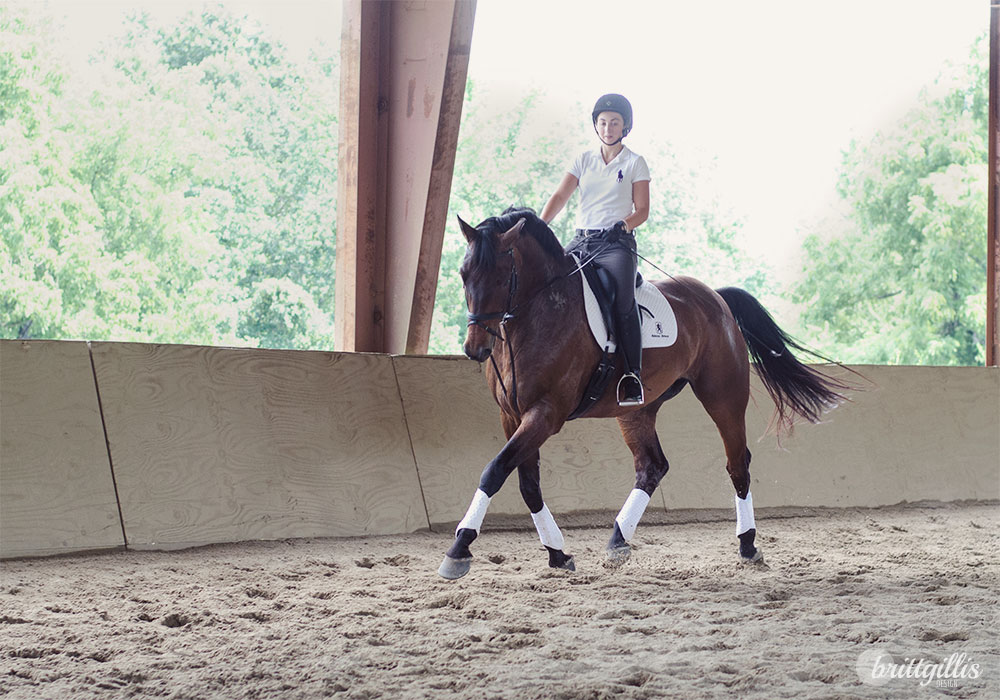
The Sport of Dressage in a Post-Valegro World

Ahead of Valegro’s retirement next month at Olympia, Horse & Hound released this tear-jerking video congratulating Blueberry on an epic career.

Since I can’t be there to watch the ceremony (tickets are already sold out for the December 14th show), instead I find myself looking ahead. What will the sport of dressage look like after Valegro?

For one, I’m going to guess that there’s a lot of riders out there who will be glad to see Valegro back home and not in the dressage court, since it will mean a chance at them finally capturing the blue ribbon, or the gold medal, or what have you. But besides that, I think there is going to be other effects of the Charlotte-Valegro sensation.

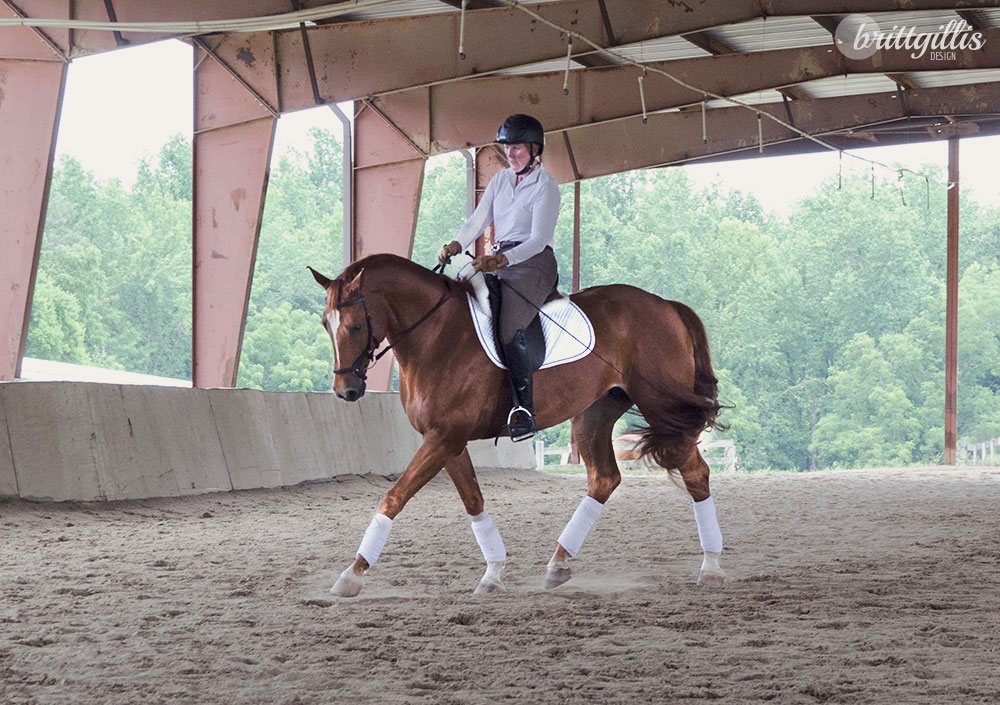
One trend I expect to see is a continuing rise of helmets worn at upper level competition. This year’s Olympics saw the entire British team sporting hard hats, and more surprisingly, the introduction of media outlets questioning the decision of other teams (*cough* Germany *cough*) on the absence of the safety gear. Charlotte Dujardin makes for a wonderful role model, and I think the trickle-down effect of helmet popularity will still continue after Blueberry’s retirement.

What I wonder about most is how the training and breeding of dressage horses will change (or not) going forward. Will breeders see Valegro as a one-hit-wonder from a bloodlines point of view? Or will we see start to see less emphasis on flashy front ends (a la Totilas) and more impressive backsides (bottoms like a cook, as Carl Hester put it) coming forward?

And then training- though the world dressage scene largely rails against rolkur methods, we still see unsightly images from warmups and even on the world’s largest stage that indicate it’s still around and in use at the highest levels. With part of Blueberry’s success surely due to his relaxation in the ring, will we see others follow suit? (As I hypothesize that a horse in rolkur could not possibly be relaxed, or appear relaxed)

Or, with the shining king of relaxation and power on the sidelines, can we expect the flashy, prancy movers with an overtight topline to rein once more?

My hope is that the legacy of Valegro will not fade away with his retirement, and that it will inspire a new generation of riders to adopt some of the lessons learned from him and Charlotte. That is, be safe, be smart, be happy. Focus on the well being of the horse and the correctness of his movement, and don’t cut corners in training to get to the top. The next 4 years leading up to Tokyo 2020 will be defining time period for the sport, and I hope that those with influence lead us down the path that Valegro and Charlotte created.
 

Horse Show Recap: GaG at CHP

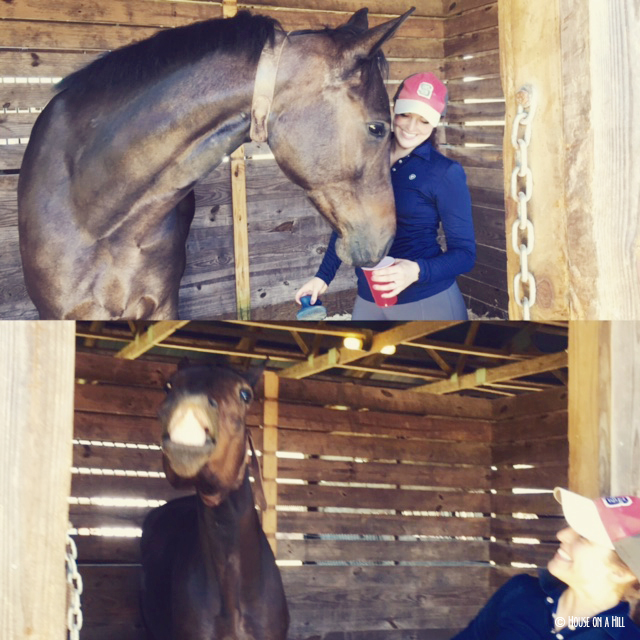
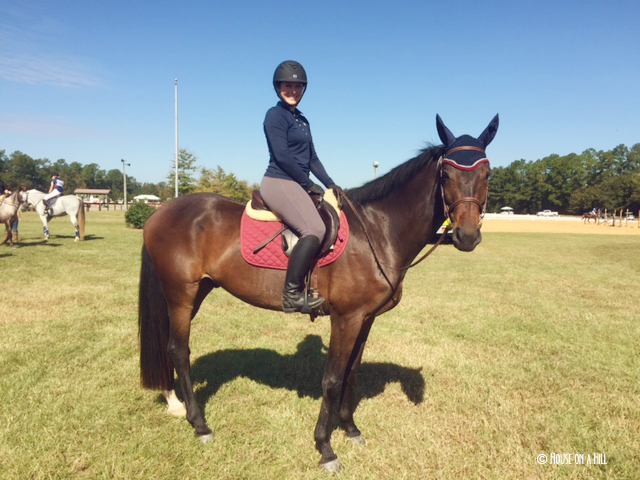
While I’m having a serious bout of horse show hangover (y’all, it was 2 years since my last show!), I can definitely look back on Smitty’s first competition and smile.

We arrived Saturday afternoon and settled him into his stall, and he seemed fairly content to relax and munch his hay and drink his water like a good boy. We walked a few laps of the venue and let him see the bikes, kids, dogs, tents, and other general show atmosphere that was slowly building. Since he handled it well, I tacked up and schooled him a bit. Luckily for us, there was only one other rider schooling, which had little to do with Smitty and a lot to do with my mental composure. Once I relaxed my death grip on the reins and gave us both a job of moving forward and changing direction, life got suddenly easier and we were able to find a good note to end on.

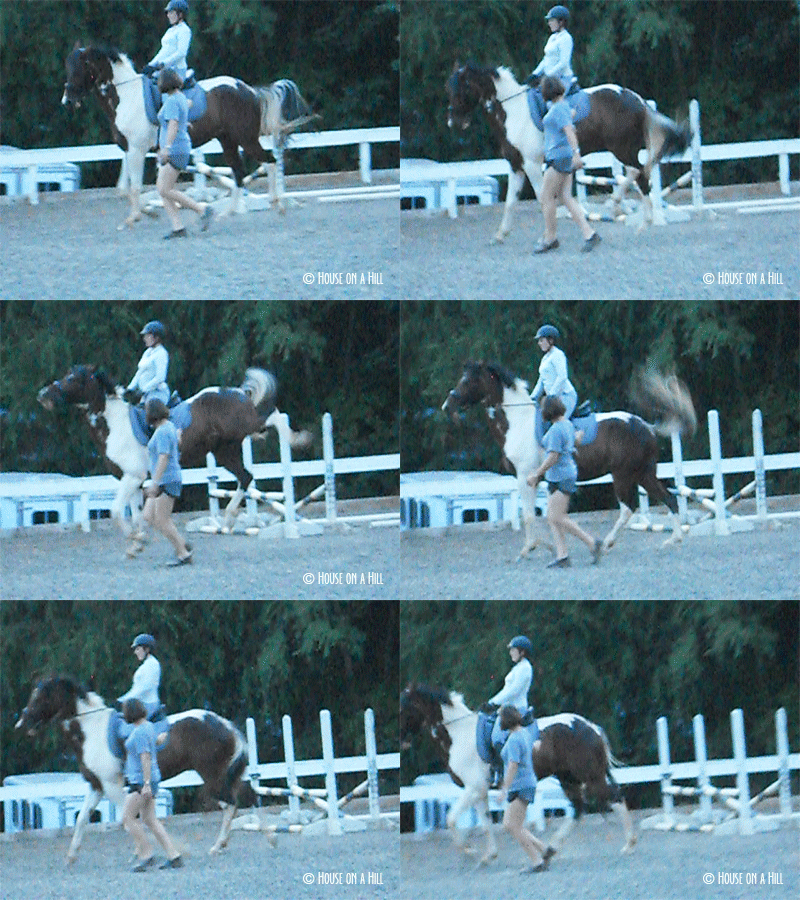
The next morning  we went on another walk around the venue, which was decidedly much busier than the day before. All was well until about 10 minutes in, when the atmosphere got to Smitty’s baby brain and resulted in a minor meltdown. In the interest of self preservation, and of those around me (read: horses, children, dogs everywhere), I found a quiet unused field to lunge him and get the sillies out. It took a lot longer than I would have hoped to do so, but eventually he got his brain reinstalled and was listening and doing transitions politely on the lunge line and it felt safe to venture back into polite society.

img_3897-copy

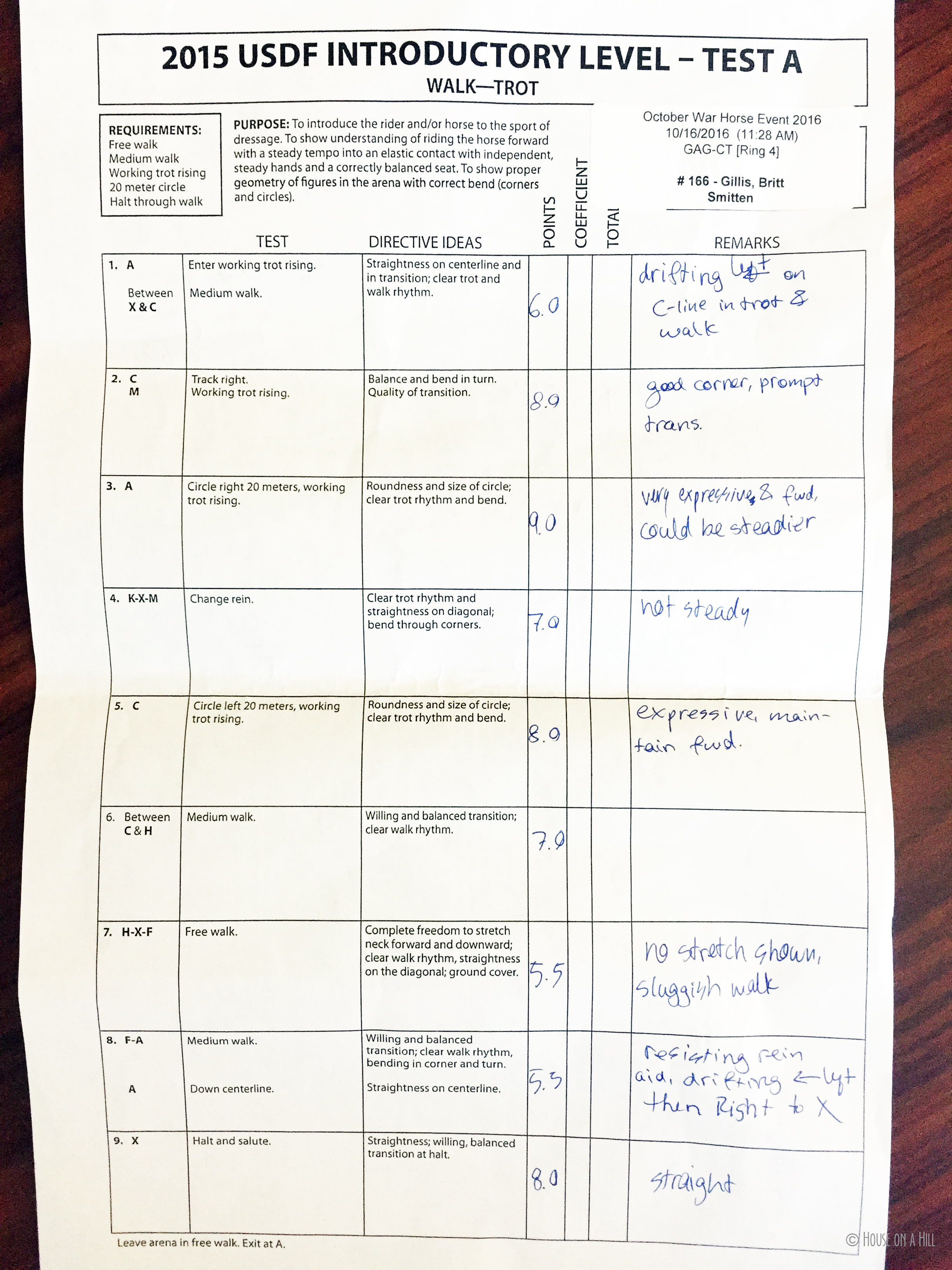
At that point it was almost time for my dressage, and so we tacked up and found another somewhat quiet area to do warm up before heading into the arena. Baby pony was tired at this point, but put in an obedient test and was completely unfazed by his sandbox experience. We had wiggly centerlines (straight lines are hard, yo!), and geometry in general left some points on the table, as well as a lack of free walk (which we haven’t introduced yet). But given that, Smitty still scored a 29.7 and got his first 9 for a movement- what more could I ask for?

introatest

After dressage, Smitty got to nap for a couple hours before heading out to show jumping. The Green as Grass showjumping was held on the grass, and I was surprised to see the cross rails of the past replaced with a full set of verticals and even an oxer, complete with gates (which I have no idea if he’s ever seen) and ferns and the like. It was a proper mini showjumping course.

Celebrating with some dressage with some Chardonneighneigh

Celebrating dressage with some Chardonneighneigh

My warm up consisted of a couple trot circles, one lazy jump over the warm up cross rail, and heading into the arena. Smitty perked up a bit at the sight of the new fences, and we proceeded to fence one. At each new jump, I could feel the baby brain wondering why this one didn’t look like the last. But he was incredibly honest and with a little encouragement took each one with increasing confidence. As you can hear in the video, I did my best to convince him that he was superman after every fence, the dominator of 18″ fences all over the world. Apparently my nattering was highly entertaining to my friends, so enjoy the commentary.

Our clear showjumping result left us in 2nd place (or 1st, they haven’t posted official results) out of 10 horses, and I couldn’t be happier. With the help of wonderful friends, and a great venue, baby Smitty had a wonderful first show experience and hopefully set the bar for things to come.


Lesson Recap: Dressage Lesson Numero Dos

October is officially a big month for Smitty, and last night was the first of several lessons planned before his first show. Sorry in advance for no new media, and for this being a brain dump so I can remember all the things next time.

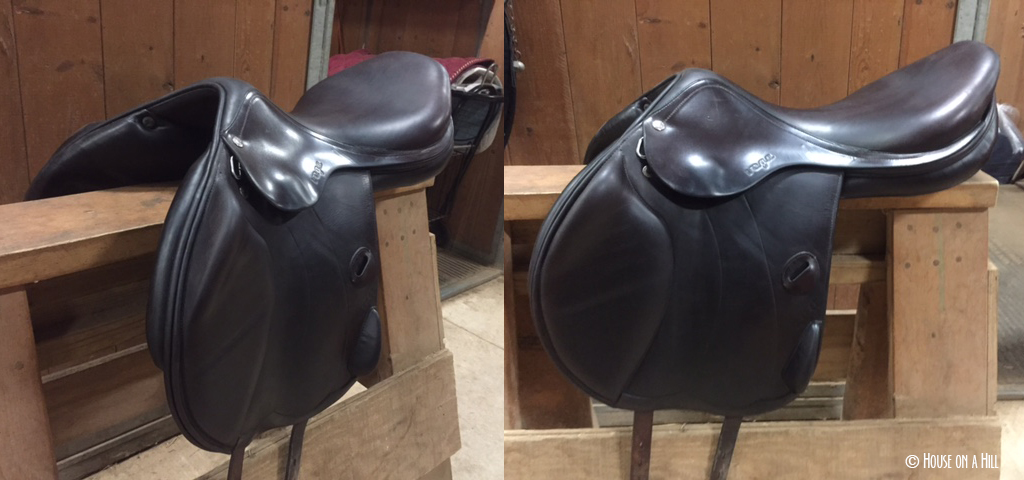
We rode out in the outdoor ring, which I have been avoiding since my confidence took a hit last month and I’ve been sticking to the more enclosed covered arena. But I want to power through some of my anxieties, and for me that means having an instructor there to get me out of my head and focusing on the saddle. Speaking of saddles by the way, the Amerigo Vega monoflap is officially the winner of the trial period, and though it was odd to have a dressage lesson in jump tack, I’m grateful to finally have a saddle that fits my gangly boy.

Winner winner chicken dinner!

Winner winner chicken dinner!

We started our lesson by warming up with a forward walk, and getting me to focus on staying relaxed until I trusted that I could really lengthen my reins to a semi-free walk length and allow him to telescope his neck out- a main focus for the next hour. Once I was able to do so without crabbing up, we introduced transitions between medium walk and free walk. I haven’t yet attempted medium walk, as we were focusing on the forward motion of the walk primarily, but it was a relief to see that he seemed to understand the concept fairly readily. For now though, we don’t want to keep him in medium walk for more than a few strides, since it’s hard for him to hold at this stage.

Just trying to break up walls of text here...

Just trying to break up walls of text here…

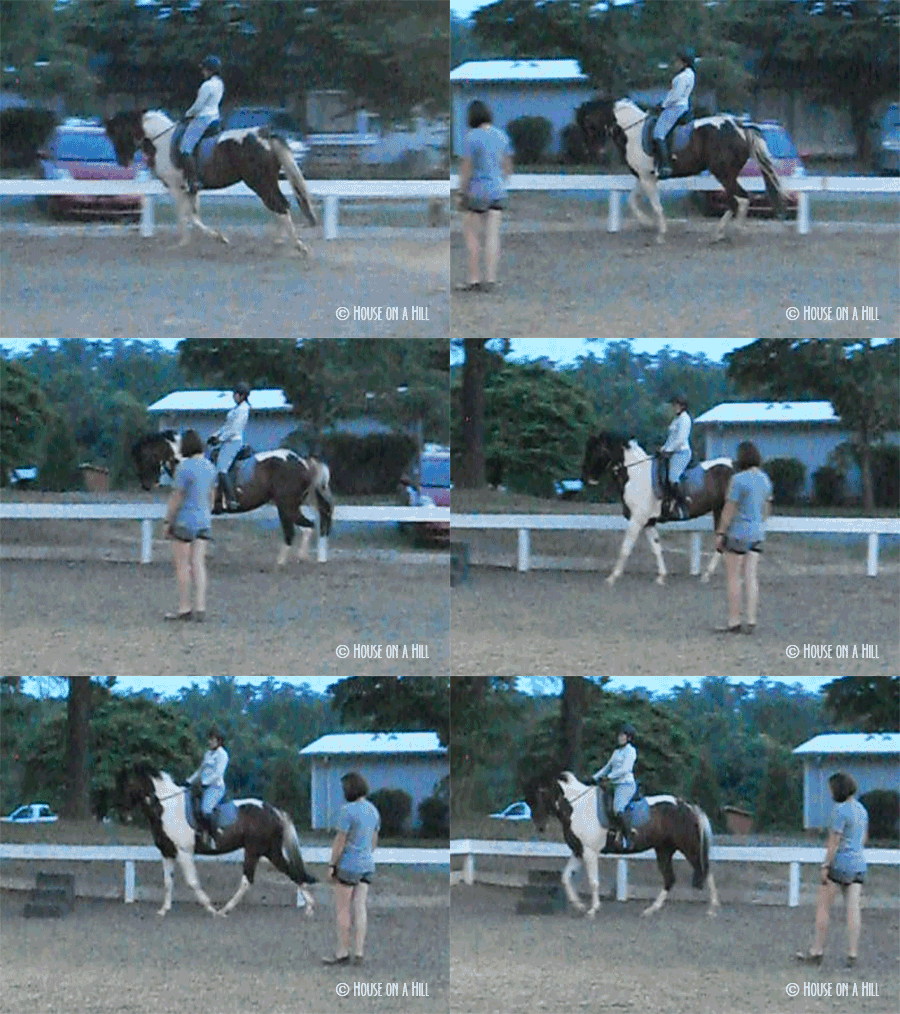
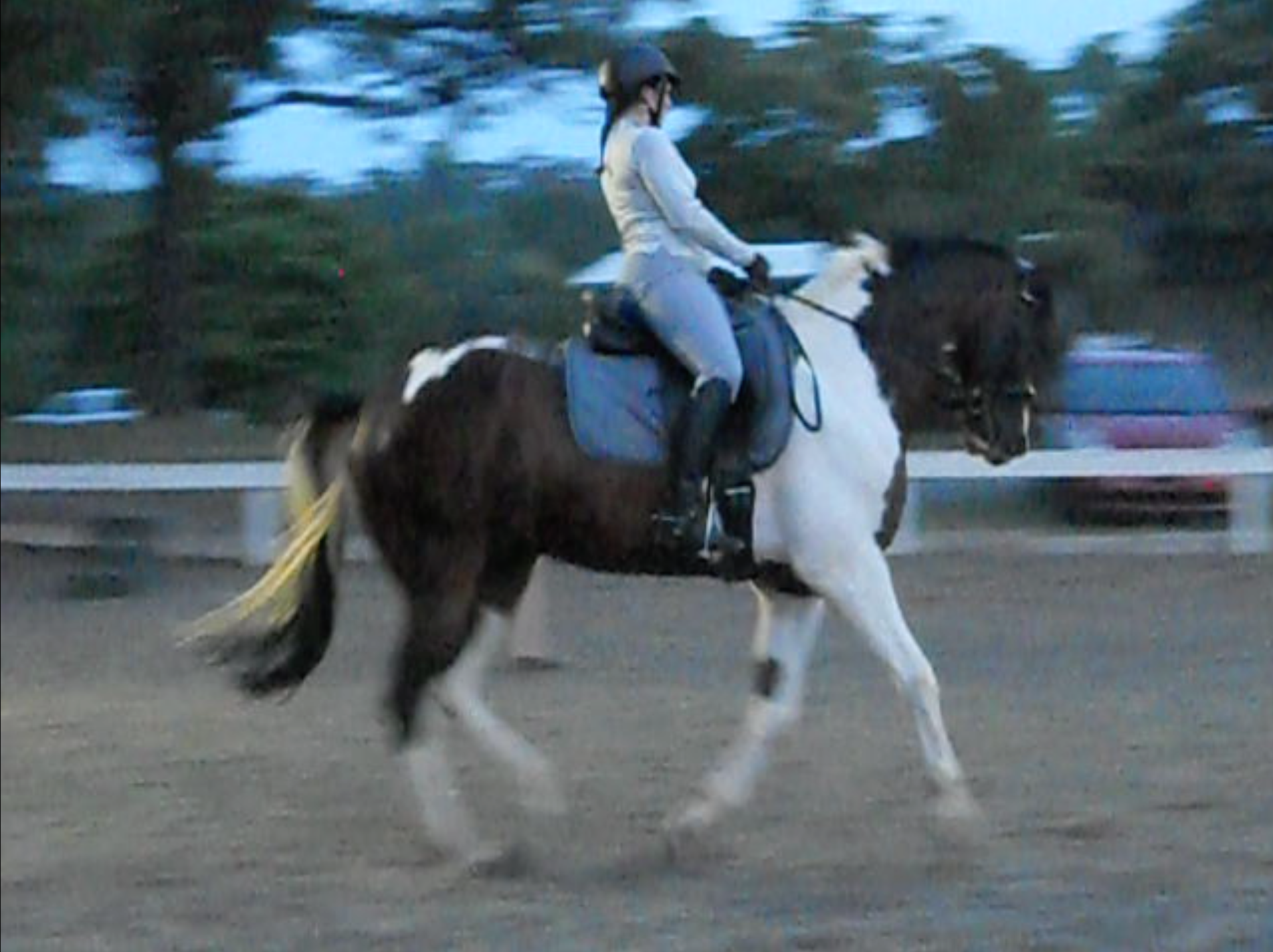
Moving into the trot, again the focus was on transitions. We started asking that the walk to trot transition be from back-to-front, meaning that the push was coming from behind. Again because of the baby status, that meant that it was a small effort, a few small steps before moving into the proper forward, working trot. I now realize that I have been holding my reins too short, and I need to focus on keeping them long enough that he can reach out with his neck at all times. If he comes up in the poll or above the bit, I am allowed to widen my hands to keep the contact with his mouth, but not allowed to shorten the reins in response. Then when he lowers his neck and stretches out again I can slowly bring my hands back together. And if Smitty were to become resistant, or attempt to dive down into the contact and drag me along, it is my job to ride with a strong core and back and lower leg. Then I don’t run the risk as much of being pulled over the handlebars and I can trust in myself to stay balanced should anything happen. Similarly, I need to stay strong and balanced into the downward transitions and keep him marching, instead of going splat into the walk or trot like he wants to do.

img_3807-copy

Probably our my biggest challenge during the lesson was keeping myself loose and pushing him through any distractions. The outdoor ring is horrible for this, being surrounded on two sides by a trailer park, a third side by a neighborhood under construction, and the last side by a spooky hay barn. I feel like I am constantly watching to see if dogs are going to pop out, or cars, or trailers, or deer… you get the picture. So when one of the neighborhood residents closest to the arena started up his Harley Davidson, and preceded to let it warm up for 5 minutes just out of sight, I nearly lost my shit. Riding can be so much of a mental game, and truthfully, last night I had some fail moments. While Smitty handled it quite beautifully for a youngster, I was a tense mess until the motorcycle left the area and confined us to the furthest end of the arena, clutching my neck strap for dear life. Now looking back on it, I realize that I really need to push through and find some trust in Smitty, or fate, or what have you, and not lose my game face any time the atmosphere becomes challenging. Because as Eliza reminded me, you can’t control the weather, or the atmosphere, or even the footing sometimes, but you can always control or focus on your line, or your tempo, or your bend when those things become annoyances, and that it’s best to just keep riding through.

We found a really good note to end things on, cantering in both directions, and Eliza praised us for our progress with the quality of our canter departs and for the overall picture. It was a good lesson for reminding me of the positives and for getting an outside perspective on myself and my abilities as well as how Smitty actually is a very good baby and that it’s going to take time for us to develop a partnership. Tonight, we squeeze in a jump lesson with a new-to-me trainer. Hopefully I can build on some of this retrospective mental mojo and get some good points to boot!

Lesson Recap: Darcy Dressageing

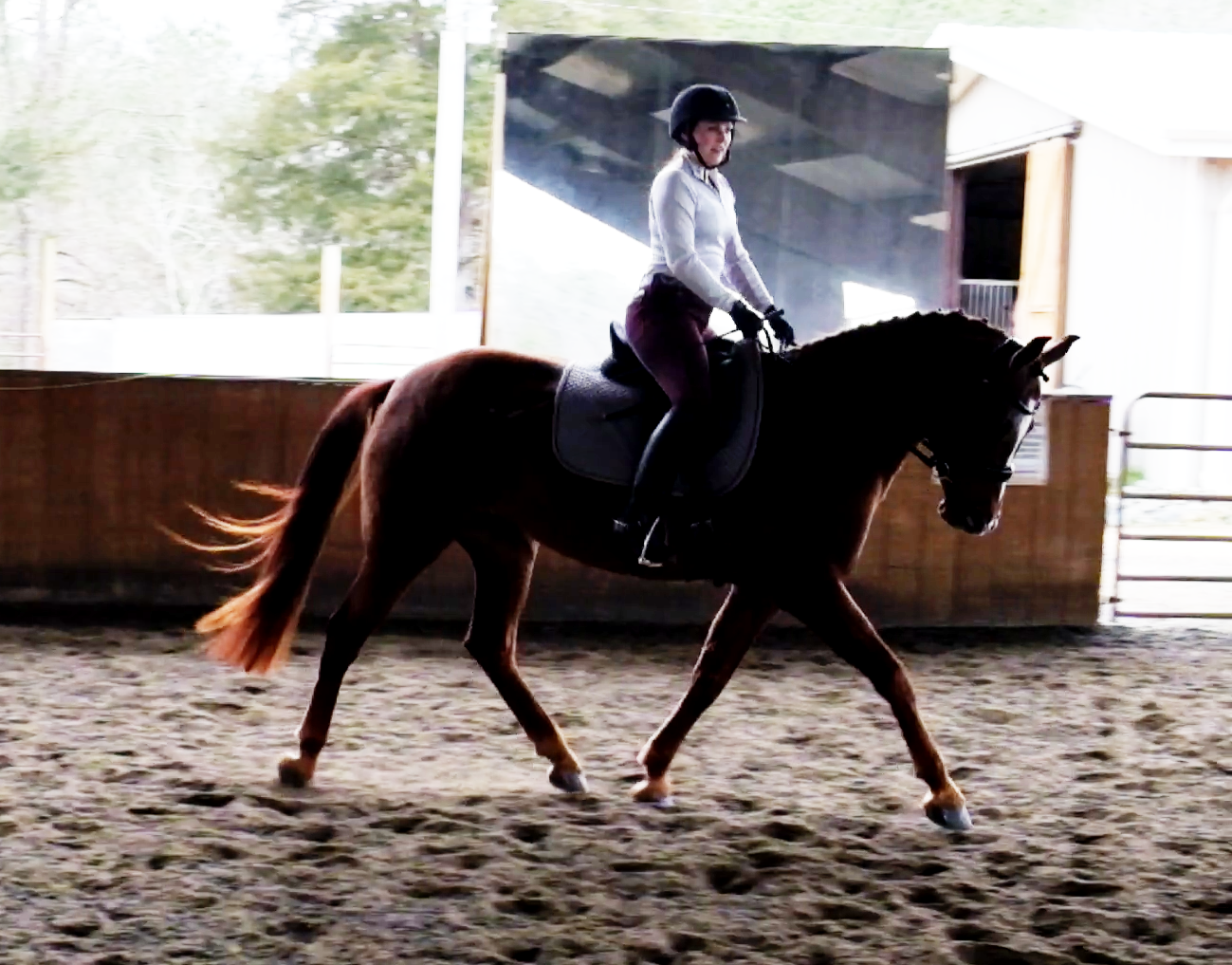
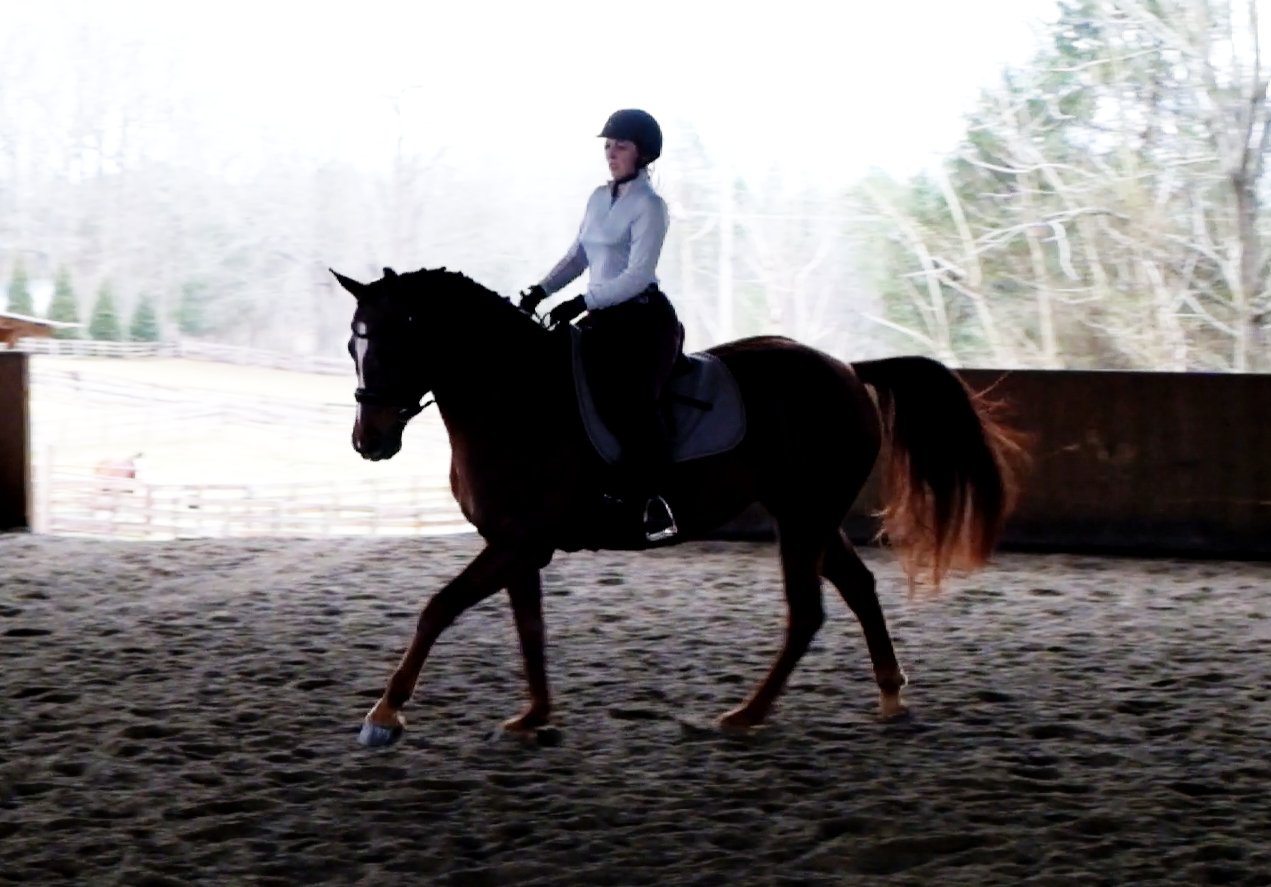
Yesterday I had Eliza out for our first dressage lesson in, oh, 9 months. I introduced her to Darcy, expressing that I hoped to get her a bit more sensitive to my leg (currently Darcy is very much a kick ride) and make sure I was making the right decisions in general.

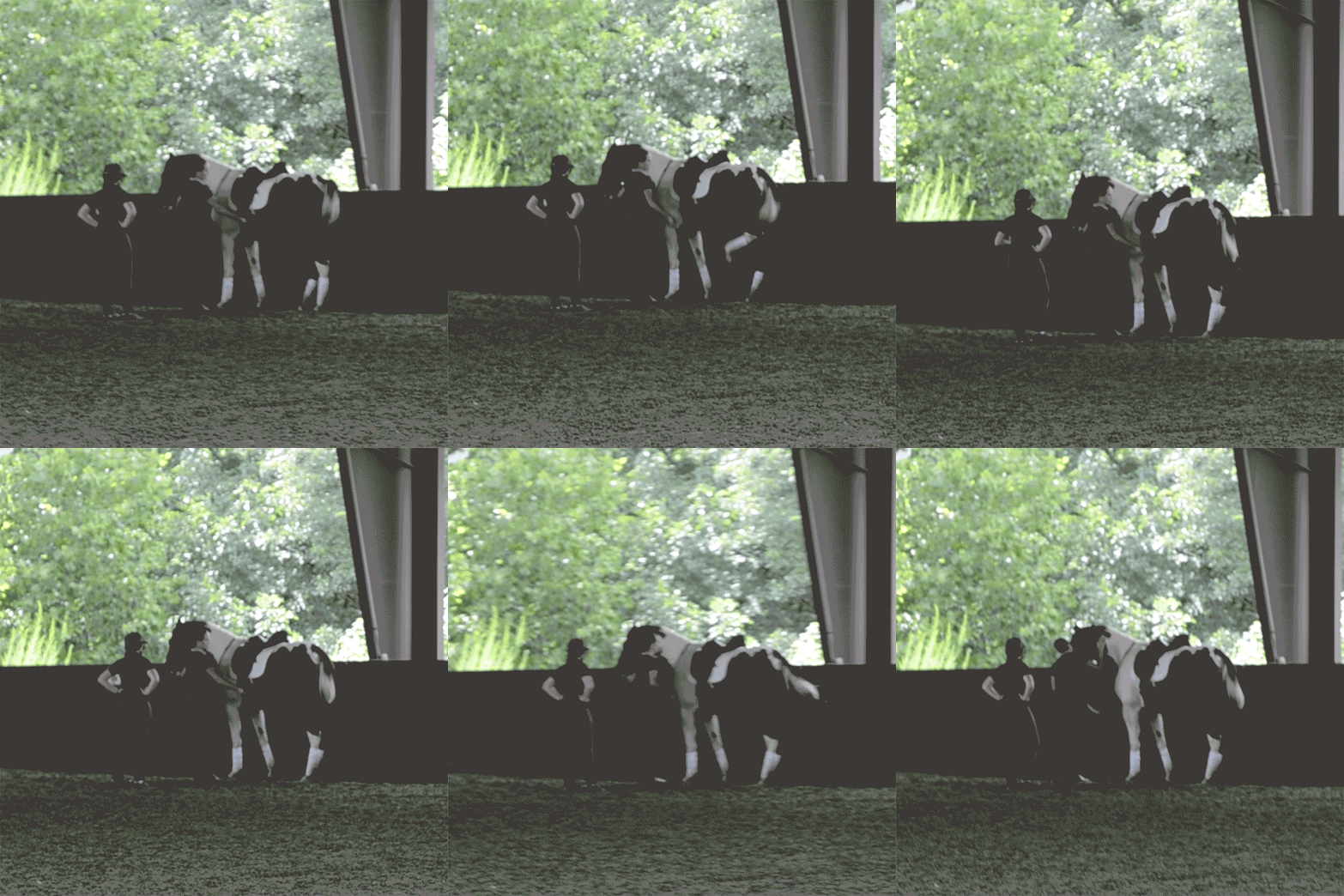
Dark screengrab from prior video of Darcy dressaging

Dark screengrab from prior video of Darcy dressaging

We talked about setting the expectation to be in front of the leg even from the ground. So walking in hand, I’m now to carry a whip, and Darcy is expected to march along with me, instead of meandering behind. In the walk under saddle, same thing- we march, and I overemphasize moving my hands with the motion of her head to encourage Darcy to use her neck. Moving my hands also releases my hips and further encourages the motion.

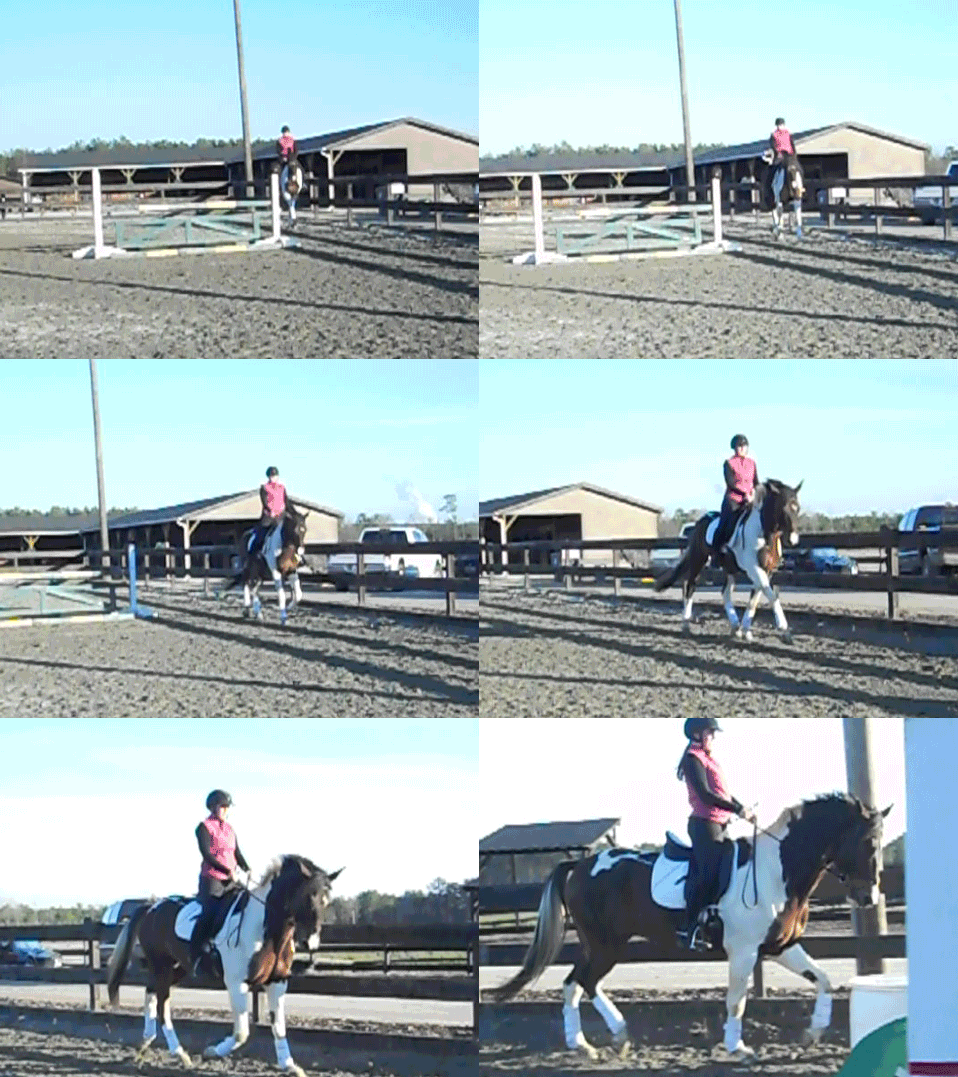
Darcy trot 2

One note that I thought was interesting in the walk was regarding leg cues. In general, at all gaits, I am to keep my legs very quiet and hanging along her side, then lightly ask for a forward response- if I don’t get it, then I quickly ask strongly with both legs to get a reaction. At the walk though, using both legs isn’t as helpful, and it was in Eliza’s opinion that especially on a mare, squeezing with both legs creates more of a negative response. Instead, I am to alternate left and right leg aids for a few strides to encourage her to walk forward.

Talking + Riding = Derp face

Talking + Riding = Derp face

Also of note was our discussion around sitting the trot. Darcy’s a round girl, and rather bouncy to sit her working trot. She can also tend to tighten her back when you sit, which makes for an even bouncier experience. So I am to practice sitting her trot, but not until she is truly pushing into the contact. Continue to sit even if she tightens her back and in Eliza’s words “until you have improved the trot” before posting again. This really only happens over a few strides, but ideally eventually I’ll be sitting more and more. It’s a good tool to have in our pockets.

Darcy canter 2

Overall Eliza was impressed with Darcy, and everyone who sees her go ends up grinning and saying just how cute she is! She’s definitely a different kind of ride from Foster, but in Eliza’s opinion is a great horse to make me a more well rounded rider, and I couldn’t agree more.


Drawing the Bigger Picture: Part II

This didn’t get out Friday because I got caught up at the barn, trying to assess whether Foster is still sore from our jumping last weekend, or if there is something shoe-related going on there. I won’t even consider that it might be something else until tomorrow. *Sigh* Anyways, until then, here are the rest of our brainy break throughs (part 1 here) from the week of lessons.

fb_IMG_3127

Effectiveness of the Seat
To be a dressage queen is to have a good seat. But the seat is also important in jumping, as the rider has to make decisions about two-pointing versus sitting versus sticking close to the saddle (the last is BC’s phrase, used before XC fences). In dressage, I am really focusing on using my weight properly in the half-passes. I’m also working to fight against my own natural confirmation, the dreaded hollow-back ghetto booty combination, that makes it hard for me to stick with the full circle of movement my hips should make in the canter. For showjumping, Bobby emphasized a lighter seat and as previously mentioned, moving from galloping position to sticking “closer to the saddle” upon approach. One seat, used lots of different ways!

Locked on the fence- also, this photo just makes me laugh

Locked on the fence- also, this photo just makes me laugh [Portofino CT Oct 2013]

Commitment Issues
Damn all that baggage of the past. Committing to a course of action is an absolute necessity with jumping, and being less than confident can sometimes have dire consequences. BC picked up immediately on when I became anything less than a fence-eating-machine, and as of course, so did Foster. In his words, I am not to ride pathetically, and having that confidence and grit will help me be a quieter rider by not feeling the need to make any “big moves” in front of the fences. For dressage, commitment means being clear in my instructions and the level of my expectations. Even if it is a trot to walk transition, the horse should “land” going forward and in a good balance, not petering out or falling on the forehand into a lazy amble. It’s up to the rider to commit to asking for all those details, and thinking about these things until it becomes habit.

JumpLesson2

Thinking about the Landing
How many times have I heard this one? Probably a bajillion times, but it really resonated when BC asked us to halt in 5 strides after the gymnastic. That shit is hard. And why is it hard? Maybe because my horse is not used to expecting something to happen on the landing. Halting after fences is one of the big take-aways from our showjumping lesson, and a wonderful exercise for getting a horse listening. In the June Jump lesson, we did something similar in making small circles after landing from a fence before continuing on to another element. And guess what- in dressage, you know what is a great way to get a horse focused on you and “keyed up to your seat”? Transitions. Forward, backward, halt, etc. Never should we just careen around the arena without a plan, and that was the point I’ve finally figured out this week.

It’s going to take real discipline to remember all of these, and surely there will be times when I forget one or more of these major points. On the flip side, I really do think that if anyone can master all of these issues they would gain major ground in becoming a better rider. And that is, of course, what I aspire to be.

Drawing the Bigger Picture: Part I

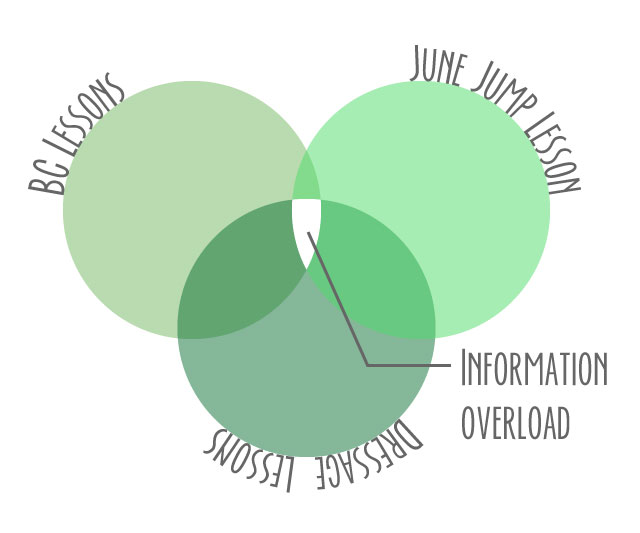
3 trainers, 8 days. Information overload? Just a little.

venndiagram

In many ways though, the lessons do overlap, even though each trainer had different ways of communicating the same things. Here are some of the theories that I’ve noticed transcend two or more of the lessons in just a short time period.

Response to the Aids
Foster should always be listening (ideally), and always waiting for the next cue. We’ve been together so long that sometimes I fall into being repetitive or allowing him to be ho-hum, which makes communication when I really need him a challenge. In our June jump lesson, the trainer had us do canter walk or canter halt transitions and incorporate turn on the haunches or turn on the forehand to keep him thinking about balance and reactiveness. In Bobby’s showjumping lesson, we focused on halting after fences or a line, to keep him coming back to me as the source of instruction. Both accomplish a horse that is listening and reacting quickly to my aids.

My [mental] picture of the right canter

My [mental] picture of the right canter

Focus on the Canter
The quality of the canter in showjumping is everything, and Bobby stressed that he be balanced and active when approaching fences. Similarly, in our dressage lessons we have been working on increasing the activity of the canter, which teaches Foster to sit while engaging his hind legs. Even though the truly collected canter is not a gait that you would use through a showjumping course, the idea of increasing engagement certainly translates.

[From the Clinic] Bobby Costello shows us how to use both hands and outside aids to make a turn to 9

[From the Clinic] Bobby Costello shows us how to use both hands and outside aids to make a turn to 9

Following with the Hands
All three instructors have now said something to this effect, which is saying something. In my June jump lesson, she reverberated pretty much word for word what BC said in the February clinic– push your elbows to the fence. With dressage, this really comes into getting the most out of the free walk by actively following the bit with my hands- even if there is slack in the reins, the horse can feel it and likely take that room to stretch down. With the collected canter, this comes as making sure that I am not constantly holding, which would make him heavier and heavier in my hands.


Tomorrow- 3 more things that have been beaten into me this week…

Dressage Videos

Firstly, I want to thank Tracy for setting up a fund so we can show some support for Lauren, who is bravely going through one of the hardest things imaginable. Though I haven’t seen Lauren in person since before she was married, those events have been weighing on my heart all week and it’s good to know how to help.

Secondly, I just want to say that I had every good intention of blasting you guys with videos of the majority of the lesson, but thanks to an almost kaput computer, you’ll have to settle for the highlights- Half-pass and Canter Work.

Hoping you all have a good weekend! Get ready for more lesson recaps next week 🙂

Dressage Lesson Recap: Half-Pass, Baby Piaffe, and Canter-Walk

Phew- are you guys sick of recaps yet? Well if so- you’ll get a brief respite until next week, when you’ll find out just how hard I got my butt kicked by BC.

Monday’s lesson was much a review of the lesson before, except that I felt like I had figured out a couple key concepts regarding the half-pass and Foster had a bit better concept of the piaffe cue. The main difference was introducing canter-walk transitions and bonus- videos!! I’ll post a couple videos tomorrow, for today screenshots and gifs will have to do.

Working on the half-pass left

Working on the half-pass left.. and do I need taller tall boots?

After warming up in shoulder-in and haunches-in, we started the lesson by revisiting half-pass, first at the walk and then at the trot.

Haunches in animated gif

Haunches-in for the win.. also I think I do need taller boots..

When talking about the half-pass at the clinic this weekend, I really had a lightbulb moment but only had half a schooling to try out what I had learned.  What I had been struggling with previously was having the haunches lead, when really it’s the shoulders that should be leading. Foster has picked up on the concept quite readily, but I need some finessing in my position to really be more effective- as in stop collapsing my rib cage, open my shoulders and body in the direction where I want to go, and keep that inside leg soft and bending the horse as he moves in that direction.

walk half pass animated gif

Walk Half-pass right

Following the half-pass, we went back to review baby piaffe and collected canter work. We are teaching the piaffe as a way to teach Foster to sit and have activity in his hind legs without necessarily going forward, which translates into the collected canter. Foster tries really hard to figure out the piaffe cue (a touch with the whip- no Fosters were harmed in the production of these gifs), but sometimes just doesn’t know what to do with the extra energy…

buck

and other times he starts to figure it out…

piaffe

Bounce baby bounce!

When he is starting to think up and under with his hind legs, we then move into the walk-canter depart, and I try to maintain the came level of electricity in his hind end. It’s tough, because Foster can be so laid back that he settles really quickly, and in this instance I want him to be amped.

walkcanter

Since it was getting a bit late at this point, rather than hammer the collected canter we proceeded to start on those canter to walk transitions. These are brand-spanking-new to Foster, and it’s been about 12 years since I schooled them with Merry, so it was no shock that we didn’t achieve one right out of the gate.

canterwalk

Still, for his first attempts, I’m pretty pleased with how quickly he was able to sit and balance himself to walk, even if it took a step and a half of trot to get there. The tricky part of riding the canter to walk transition is to ride forward into it. For now, I am over-emphasizing my half halt in order to stop the motion of the canter, and purposefully thinking “halt”, which is what I almost got in my first attempts. Eventually my aids will become lighter, and I will be able to think about landing in a forward and balanced walk. But that’s probably some time away while we both figure things out.

Hind end: Engaged!

Hind end: Engaged!

As per usual, some quick notes regarding the lesson:

Canter-walk:

  • for now, might need to use more hand, but eventually this will lighten as he learns
  • Try using half halt at two different times- when I am deepest in the seat (when he is sitting) and when he is landing (stiff horses sometimes prefer the latter)

Half-pass:

  • Keep my weight left for left half pass
  • Do no let my left elbow become a chicken wing/collapse my left rib cage
  • Start with less angle to the haunches, I can always add more but taking away from the angle is hard to do quickly
  • Establish bend first then add the haunches (Half-pass and haunches-in)

Positioning Myself:

  • to the left think about allowing my left side to sink down
  • Tuck my tailbone under when sitting the canter so I “complete the circle” with my hips (rather than stop the motion slightly with my concave path)

Overall, the lesson was great in showing me the potential that Foster has, but like our last jumping lesson, that he needs to put on his big boy pants to accomplish some of these tougher exercises. On the same note, it’s become so much more important with these new movements that I am as effective and correct as I possibly can be, which is a struggle as I learn new things, or practice dressage that I haven’t done in over a decade.

Tami Batts Clinic Recap

Saturday I spent the day about an hour away, where USDF gold medalist and “S” judge Tami Batts was giving a dressage clinic at her own Fellowship Farm. I won’t lie, one of my primary reasons for making the trip was to spend the day with an old friend and meet her new Trakehner mare, Rea. Besides investing in my dressage education, the clinic also gave me the opportunity to try out my “fixed” camera- which was wonderful and means that I finally have new [dressage] media!

Tami-Batts-clinic-mare

Unlike the Janet Foy/Chris Hicky clinic I audited a few months prior, Tami spent somewhat less time on theory and put more emphasis on each horse and rider combination’s effectiveness of training. She would also check in with the audience every so often to discuss how we thought the pair would score in an actual test, either for that movement or in the Collective scores, and then work with the pair on how to improve those scores, which was really insightful for those of us watching it happen.

Rea and N in action

Rea and N in action

From each session, I gleaned bits of knowledge that I thought could be applied to most horses, or that specifically could help my own horse. Sometimes this involved the rider’s position or approach:

  • For the canter to trot downward transition (and I quote): Put your crotch in the saddle and sit up!
  • In the half-pass, the inside leg is the smart leg- it keeps the horse bent and keeps the ribcage lifted
I developed a girl crush on this mare

I developed a girl crush on this mare

Or how to warm up a horse:

  • Think of the warmup like lunging, just getting the trot out
  • Get the horse moving forward until all the steps have push/engagement/bounce from behind

Tami-Batts-clinic-mare2

Sometimes it involved telling when a horse needed correcting or was likely to struggle:

  • Ear tilting can indicated a dropped ribcage on that side
  • A horse that travels faster in one direction is probably falling-in in that direction
  • Confirmationally speaking, a horse with a dip in front of her shoulders can be harder to connect from neck to shoulder

fb_DSC7870

But most of all the feedback centered on how or when to ride certain movements:

  • Use haunches-in to help you bend
  • Use both leg aids together once quickly to prepare the horse for walk-canter
  • When you feel the horse brace you need to relax for a moment
  • For the half-pass, if the haunches tend to lead, try riding 3 shoulder-in steps, followed by 2 strides of half-pass

Tami-Batts-clinic-baymare

With each session, the horse and rider pair improved remarkably. Tami as a clinician and instructor was very positive with her feedback, but kept her expectations high, which left each rider feeling confident and having accomplished something by the end of their ride. It was a great day spent with a great friend, and a wonderful opportunity to meet fellow dressage addicts as well!

Dressage Lesson Recap: Half-pass, Piaffe and Collected Canter

A friend recently told me that she could see me switching over to pure dressage sooner rather than later. I scoffed and got a bit offended that in her eyes I seemingly didn’t fit in with the eventer crowd, even though I could see where she was coming from. As much as I love eventing, I also love dressage, I do, and lessons like the one this week just make the little DQ heart in me go pitter patter. (But don’t expect me to give up eventing –quite- yet)

With it being almost 20* colder than it has been all week, and with Foster stuck inside for 36 hours, I wondered how spastic the creature would be for our lesson. Warming up I got a couple expected spooks from a bird flying up and car passing by, but otherwise homeboy felt nicely forward and attentive, and Eliza commented on how even he looked behind. After all the ups and downs of slight offness, hock injections, etc, this is feedback I really appreciate hearing, and such a relief to see my horse as being 100%.

No new media- here's gifs that are almost a year old instead :)

No new media- here’s gifs that are almost a year old instead 🙂

I told her about my half pass attempts from the night before, and so we started out with taking a look at them. Moving from shoulder-fore to haunches-in in each direction, we then found space for a fairly steep diagonal (equivalent of a short ring diagonal MXK/HXF) to try it at a walk. We were getting plenty of angle, and if anything I was asking the haunches to lead too much, which was a misunderstanding on my part. We would throw in a walk pirouette at X to re-establish bend and continue on the half pass track.

shoulder-in-right

Posting lateral work from over the winter


Then we proceeded to try the half-pass at the trot, on a less steep angle. Before I begin the half-pass, I change my diagonal to the ‘incorrect’ side so that I can use my weight in the seat at the proper moments. Again I tended to overcompensate with the haunches and need to let the shoulders lead. Keeping the left bend is tricky because I tend to let my left leg get very stiff as my outside leg pushes the haunches right, which in turn pops my left seat bone out of the saddle and pushes my weight onto the right seat bone, also incorrect. In order to correct this I should ride the bend as if we were doing a 10 meter circle, and if he starts getting stiff or I begin leaning outside, start a 10 meter circle into the mix to realign ourselves.

We then moved onto some canter work from the walk, and I found that the quality of the canter was not as light as it had been the night before. Discussing the activity of the hind legs brought up piaffe, which we had started on the ground some months before, but hadn’t touched since.

Starting piaffe in hand July 2014

Starting piaffe in hand July 2014

So as I continued to sit in the saddle, Eliza followed us down the long sides reviewing the whip cue (a whisper touch to the leg), which Foster remembered without any real reminders. Then it was my job to keep him super straight and as round as possible (very difficult as it turns out, since horses want to throw the energy to either side rather than sit), while she gave him the cue while moving. Any sitting and under movement was immediately rewarded by stuffing his face with clover. It was such a feeling to have him bounce underneath me, and to feel the power through his haunches when he sat.

Way way more than this canter

Way way more than this canter

Once the active hind legs were established from baby piaffe, we were told to move off immediately to canter after the whip cue. The energy that I felt in that post-piaffe canter was nothing like I have ever sat on my horse, and it felt like riding a destrier into battle. It was eye-opening to hear that that canter is what I should be striving for in my tests, and couldn’t believe it when the word “pirouette” was even mentioned.

In Summary (notes for myself):

  • For the Half-pass…
    • Ride inside leg like as in a 10 meter circle)
    • Weight inside seat-stiff leg also pushes me onto outside seat
    • Throw in 10 meter circles when there is stiffness or we lose the bend
    • Allow the shoulders to lead, shoulders leaning is more acceptable to judge than haunches leading
    • In trot, post on wrong diagonal in the half-pass
  • Canter-Walk Transitions
    • Walk-canter transitions: think Canter-Halt and keep strong into walk steps, otherwise piddle into trot
    • Needs consistently active collected canter to get a great canter walk transition
    • Canter walk not a transition that tends to feel good

Overall the lesson was eye-opening as to feeling the energy that I’ll need for progressing up the levels, and what Foster is capable of doing. It was showed me my own weaknesses, such as an uncoordinated left leg and weakness in my core. However, there were plenty of highlights and I am durn excited to try it all again.

Have a happy weekend!