Janet Foy and Chris Hickey Clinic Recap: Second – Fourth and Overall Impressions

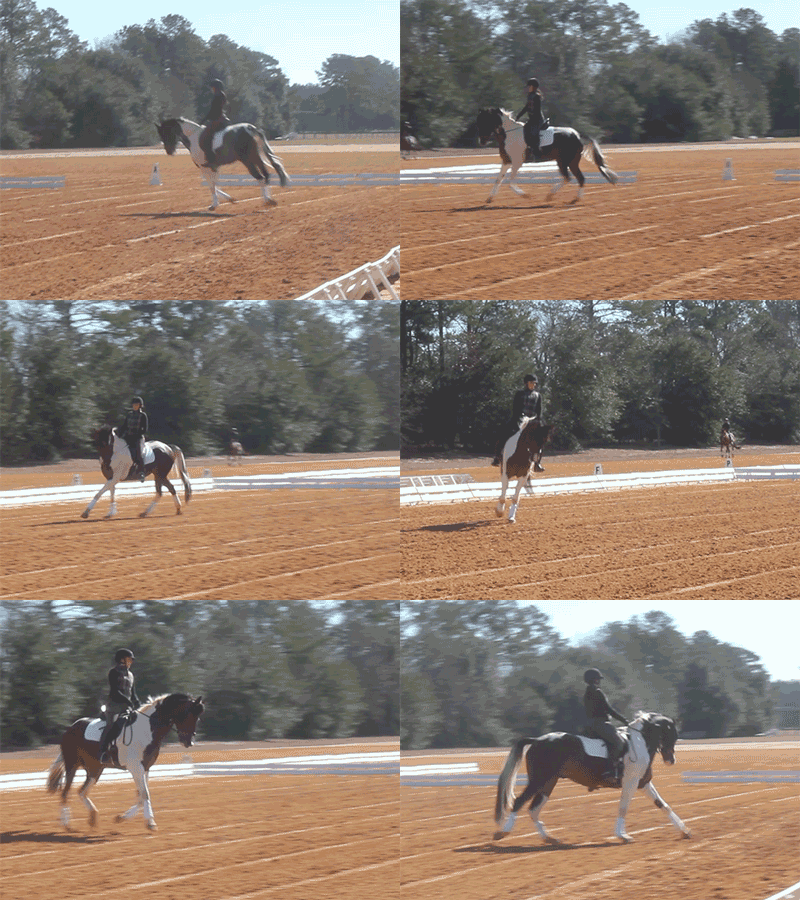
Phew, how are you guys handling the information overload? Today’s post starts with the Second level rides, which was most interesting to me as this is what we are (were) working towards this year. Because of that, I took some rather shoddy video of Janet critiquing this pair as they rode part of Second level test 1.

(excuse my video skills, was trying to watch and listen at the same time!)

Second Level

  • At this level, collection is expected to “come and go” slightly
  • When the test was rewritten, Janet advocated for less counter-canter in the second level tests as she thought it was counter-productive for those schooling changes
    • She feels the current test therefore has too much counter canter
  • The short sides of the arena are the only place where the judge can see overall balance/collection/etc
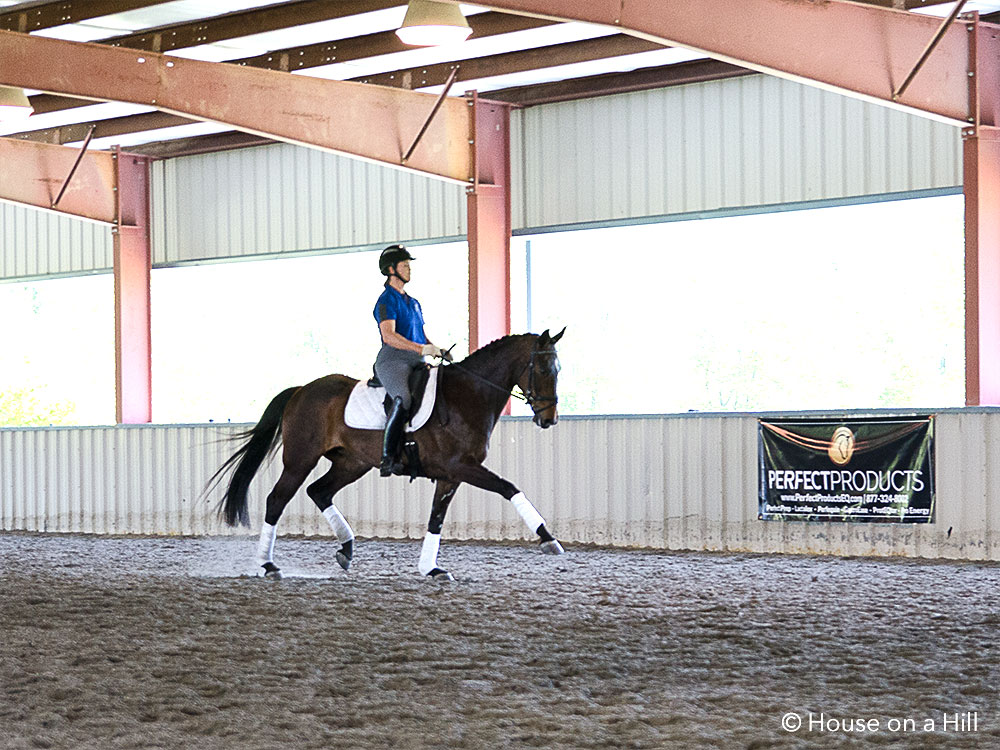
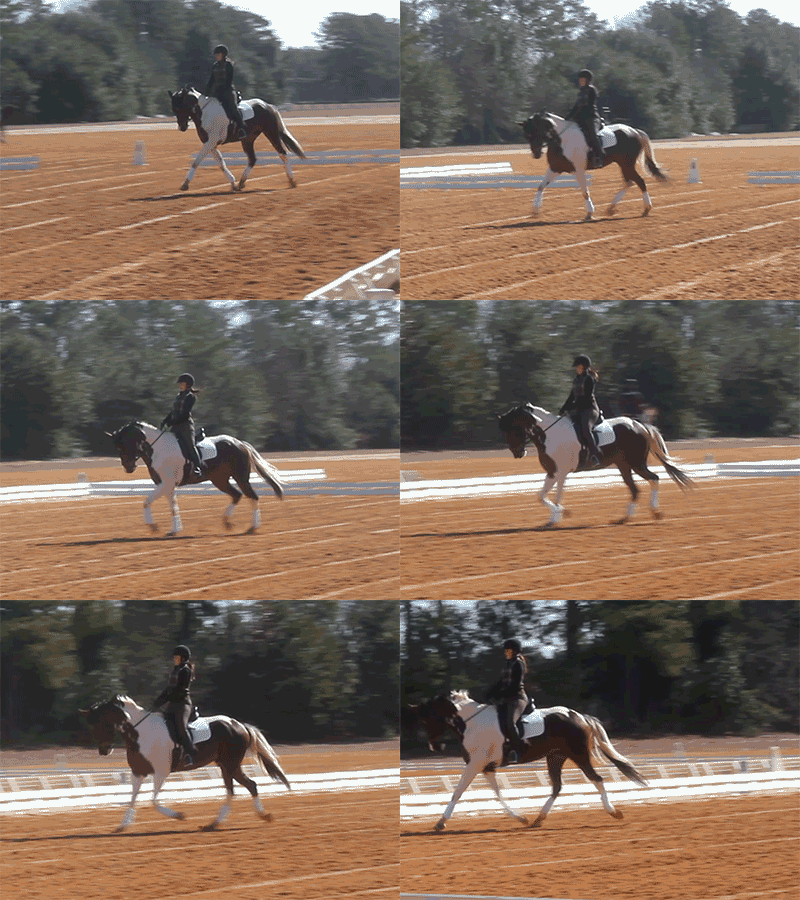
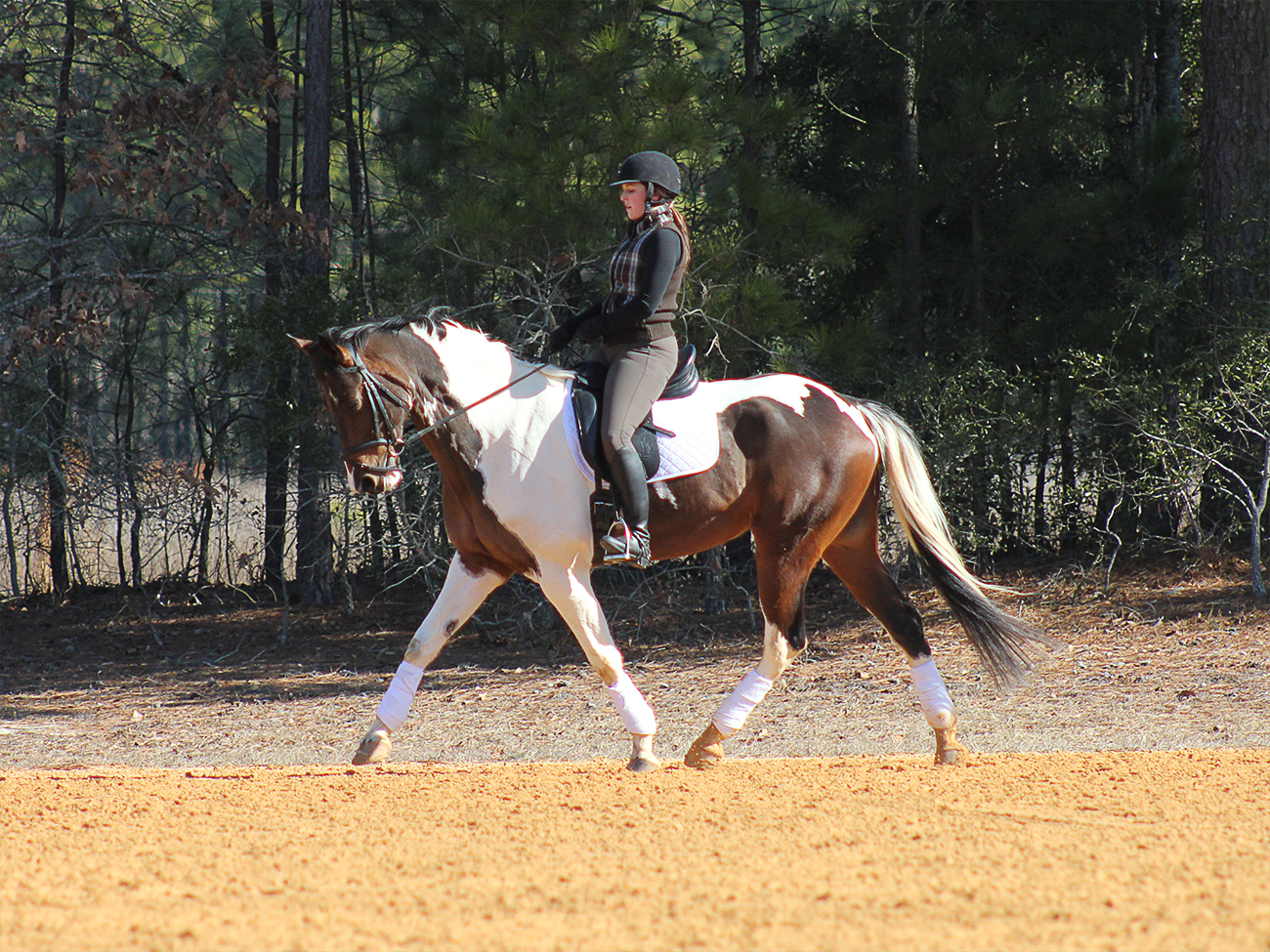
Eliza demonstrates the Extended trot

Eliza demonstrates the Extended trot for Third level

Third Level

  • The primary goal of the half pass is forward, the secondary is sideways
  • The half pass should have more bend than a 10 meter circle
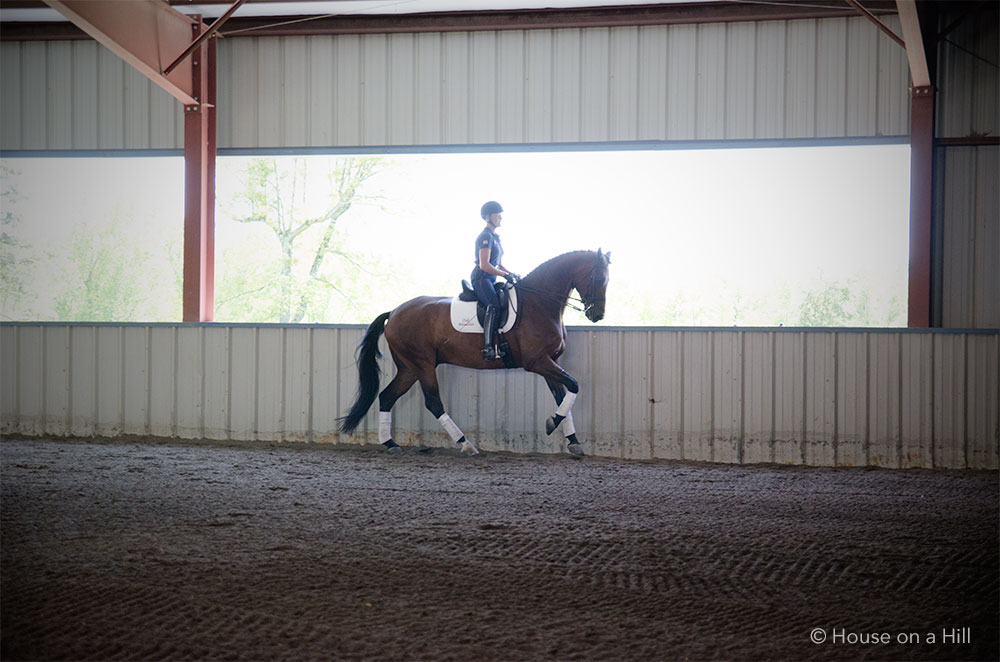
Another Raleigh trainer rides in the Fourth level demo

Another Raleigh trainer rides in the Fourth level demo

Fourth Level

  • In walk or canter pirouette, the haunches should be in the direction of the bend
  • Flying changes are the most “personal” of movements for a horse/rider pair, and so are most difficult to replicate for a strange rider
    • This because each rider is built differently- for instance she compared her leg length to Chris’s, which are about 6 inches longer. Her cue for the change will be in a very specific place, so if Chris asked for a change on her horse the horse might overreact due to not being used to feeling the leg ‘there’. If she got on Chris’s horse, the horse would likely ignore her aid for the change because her leg couldn’t reach where the horse is expecting that cue.
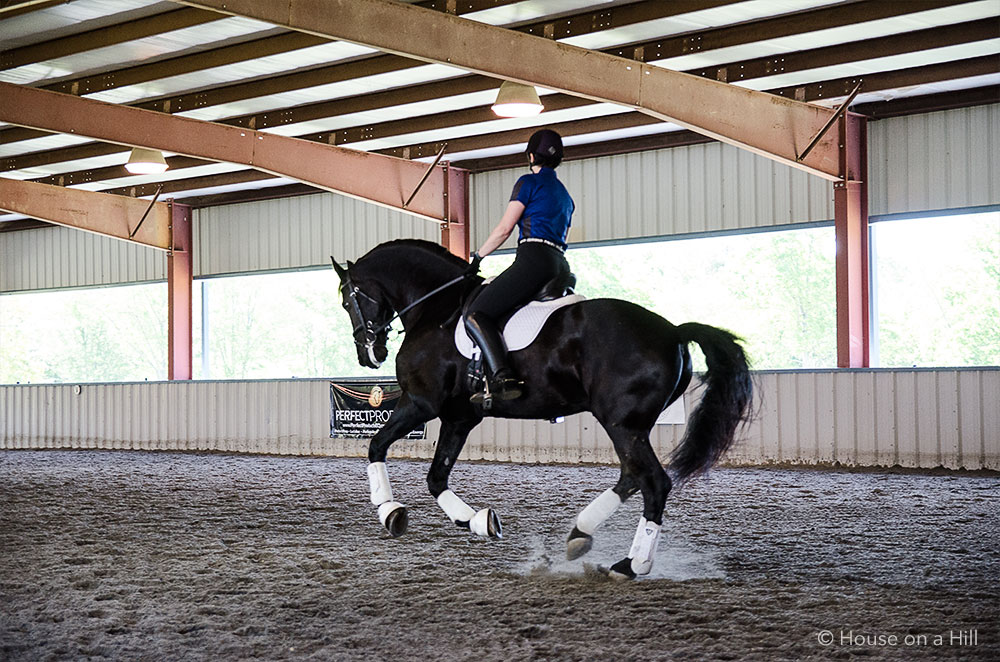
First level Friesian

Interesting Tid-Bits

  • In Europe, judges at the CDI level are only paid a per-diem fee of roughly ~$150, but nothing else, so judging is really out of a passion for the sport
  • The German language has much better verbage for dressage, whereas they have a single word for a concept, in English we sometimes need whole sentences to describe it. Takeaway? Germans just speak dressage better than us.
  • The change of diagonal (HXF or MXK) in intro builds the foundation for flying changes, as it tests the straightness of the horse
  • Most tests are written for the judge at C, so in tests where there are multiple judges C tends to be the highest score
    • Judging at ‘H’ is referred to the Hellhole, since judge’s can only see the horse’s ass (her words, not mine)
    • Judges at E and B typically give the lowest scores because they can see the most sins
  • Do not, under any circumstances, retire from the arena without the judge’s permission. Not only is it bad sportsmanship, but the judge can (and Janet Foy will) give you a zero for the test (which at a recognized show is a big deal since the scores stay with you forever) and the judge can also opt to give you 0’s for every other ride (even on other horses)
    • It doesn’t matter if it is a local show or a Selection Trials, good sportsmanship matters.

Congratulations to you if you made it through all that! 8 hours of dressage clinic left us all a little brain dead, but eager to hop on our own horses and apply some of the new found knowledge.

Last Thoughts
My overall impression was that each horse was extremely well schooled in the level it was representing. With the exception of the Friesian, all horses were warmbloods of varying quality. A couple were built downhill, a couple flat-crouped, and a couple that were just absolutely drool worthy. The riders also in general were very well turned out and for the most part had nice equitation, but some had holes in their position that definitely reflected in their rides. Seeing some of these imperfections made me think that perhaps a dressage clinic of this caliber might be something that Foster and I could do in the future, and will definitely be something I would consider going forward.

For certain, each rider left the arena having been improved in some shape or form, and the auditors left being a little more schooled in understanding scoring and the execution of movements at each level.

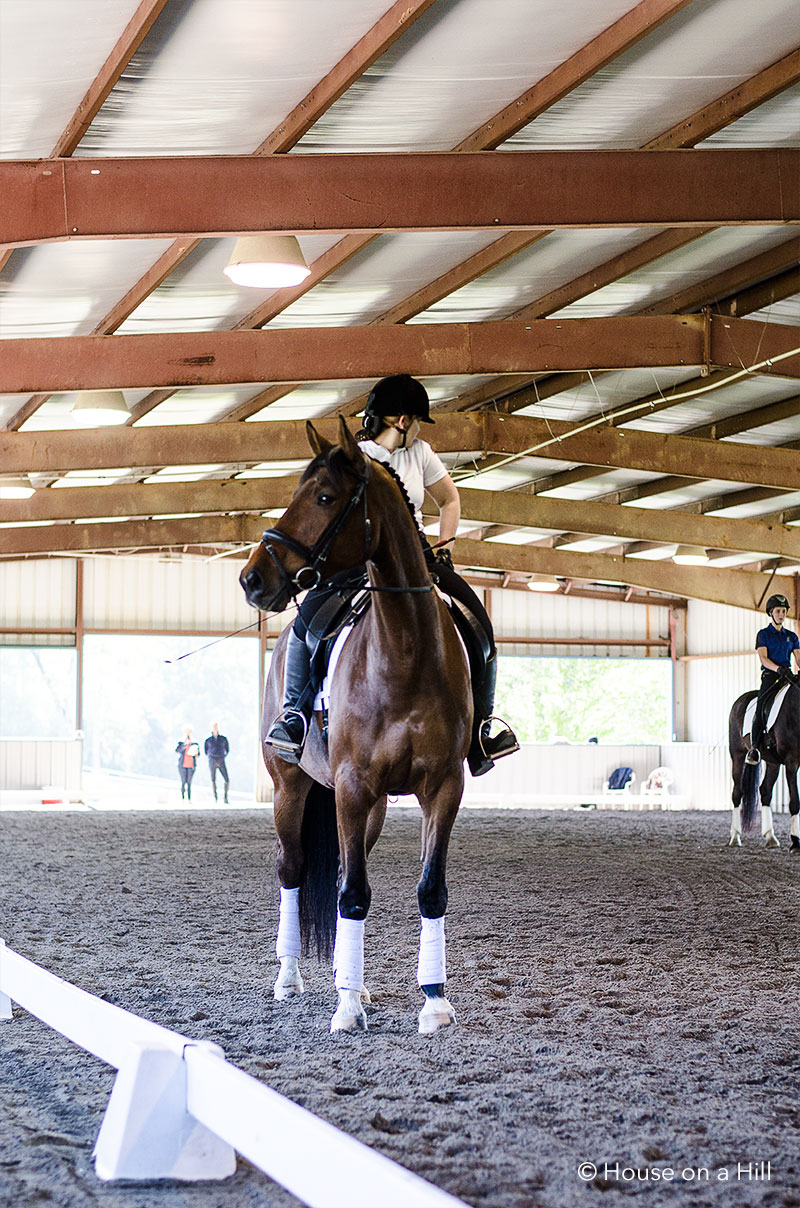
Janet Foy and Debbie McDonald Clinic Recap: Overall comments, Training and First

Or should I say, the Janet Foy and Chris Hickey Clinic. Unbeknownst to us, Debbie experienced severe vertigo before getting on the plane and was banned from flying, so Chris Hickey (formerly of Hilltop Farm – a la Riverman, Don Principe etc) filled in for her. Certainly it was a dissapointment that Debbie could not be there, but that didn’t mean the day wasn’t exceptionally informational nonetheless.

The clinic was structured around each level, progressing from Training level to Grand Prix with two riders demoing part of their level’s test or movements. Janet spoke mostly from a judge’s point of view, providing scores and their justification as the riders went through the test elements, followed by Chris working on each pair’s weaknesses for a short time.

Because the clinic was so darn long (8:30am – 4pm) there was just too much to capture in one post. So today, let’s look at the more general feedback and Training and First level demos.

_DSC7622

General:

  • Janet describes a “red line” for her, where at scores of 5 and 6 there are more problems than good, and where that starts to affect the overall scores of submission, gaits, etc.
  • Horses tend to like the right leg better than the left, and therefore be more submissive in that direction
  • Watch out for “jelly belly”, or the rider absorbing too much of the motion of the horse in their torso
  • The horse MUST be in front of the leg
    • Send the horse forward and back to confirm being in front of the leg
    • Also test how quickly the horse responds to the forward request (sounds familiar to me!)
  • For the horse that evades a more forward trot by cantering, don’t bring them back to the trot, instead send them forward at the canter, so the horse does not learn the escape being forward
  • True dressage is when things look easy, and the relationship is symbiotic
Training Horse checks out the crowd

Training Horse checks out the crowd

Training:

  • Stretchy trot: The nose should be between the shoulder and the knee, but not any lower, else the horse be on the forehand
  • Use the geometry of the tests to fix the horse’s problems, often being accurate allows the horse to better be on the aids
  • Even at this level, corners should be obvious, not part of the 20m circles
  • Straightness down the long sides is really represented by shoulder-fore (so the shoulders are in front of the hips)
This lovely creature rode in the First level demo

This lovely creature appeared in the First level demo

First Level

  • Even in the working trot, a lengthening should always be accessible at any moment
  • Don’t bother lengthening the frame in a trot lengthening until the weight is properly on the hind end
  • The canter is truly balanced when it is “10 meter circle-able”, or that the rider could complete a 10 meter circle at any time without the horse losing balance
  • The canter should be 50% pushing power and 50% carrying

Tomorrow, Second thru Fourth level and my overall impressions from the day!

Dreaming of jumping

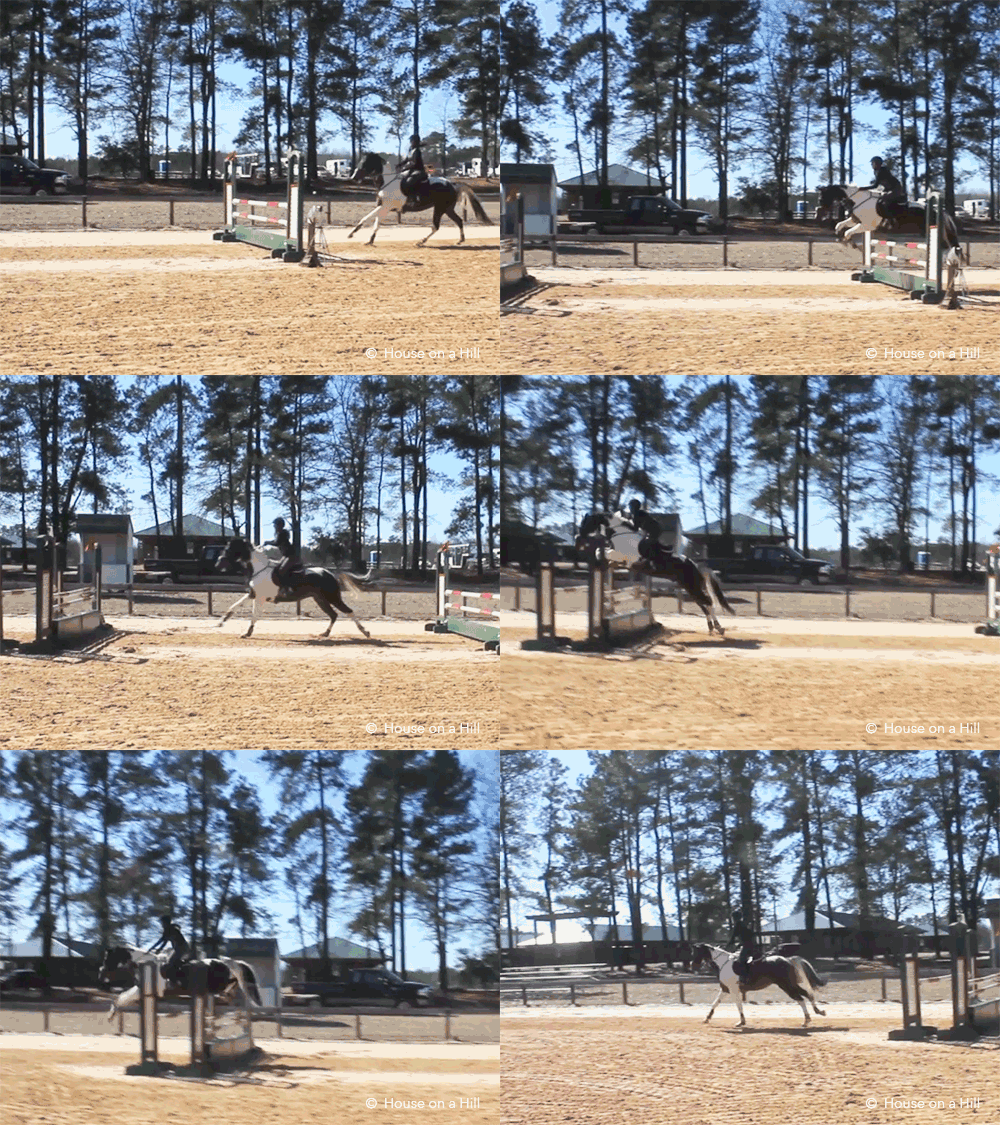
2 weeks isn’t the longest amount of time we’ve gone without jumping by any stretch of the imagination, but still, with the impending show season looming in front of us, it seems like we will never have a chance to prepare.

vertical_jump

Yesterday we got 2 inches of snow (I’m sure those up north are snickering right now) and expecting (supposedly) another 8-12 inches in the next couple days.

firstoxer

It’s enough that our outdoor arena, which was already under water from the melted ice, will be unusable for some time.

warmup_oxer


Some time as in, until spring.

onestridePlease, spring, hurry. We need you.


Winter Weather and a mini Dressage Lesson Recap

Winter weather has officially hit North Carolina (and seemingly a lot of other places too), so obviously, pretty much everything that can be closed is closed. And of course the problem with living in a house on a hill is that when said hill ices over, you’re pretty much stuck anyways. So if you want to find me, I’ll be in my sweatpants working from home the next couple days.

The upside to all this is that everytime I look outside I think of this…


… and therefore sing all four parts to my husband, complete with cheesy railroad noises. I like to think I’m adorable, but I’m probably just hurting my chances on getting that next blog post out of him. Whatevs snow snow Snow SNOW SNOW!!!

Before the ice storm hit, I was able to squeeze in a dressage lesson and discuss  the feedback from the clinic. Foster had a couple days off after the clinic, then a long stretchy session to work out any kinks, so even though I hadn’t dressaged yet since the clinic, it was still helpful.

clinic canter

Basically the lesson was a repeat of lessons before in that there was a lot of emphasis on transitions within and between gaits, lateral work in the form of shoulder and haunches in, and more work on our lengthenings. Foster’s still figuring these out to some degree, and part of how he is dealing with the added ‘pressure’ of the lengthening is to curl under, so I’m learning how to get his poll up and keep him going, or for now, come back to the walk then try again.

trotlengthening

One of the most aggravating parts of my test was getting that 5.5 on the free walk, and so we worked on getting him to really take the extra stretch without rooting. Part of solving this problem includes my moving my hands towards his mouth (i.e, pushing my elbows to the fence!) so that he has even more ‘place’ to go. So obviously this is a feeling that I need to get the hang of in order to get the most out of my horse! Funny how habits transcend disciplines!

Carolina International Clinic Recap: Course Walk

Obviously the course walk doesn’t leave me with cool action shots or video, but I’m telling you, that doesn’t make it any less interesting. The discussion we had really made me recognize how much detail goes into planning stadium courses, and left both J and I with a newfound appreciation for showjumping in general.

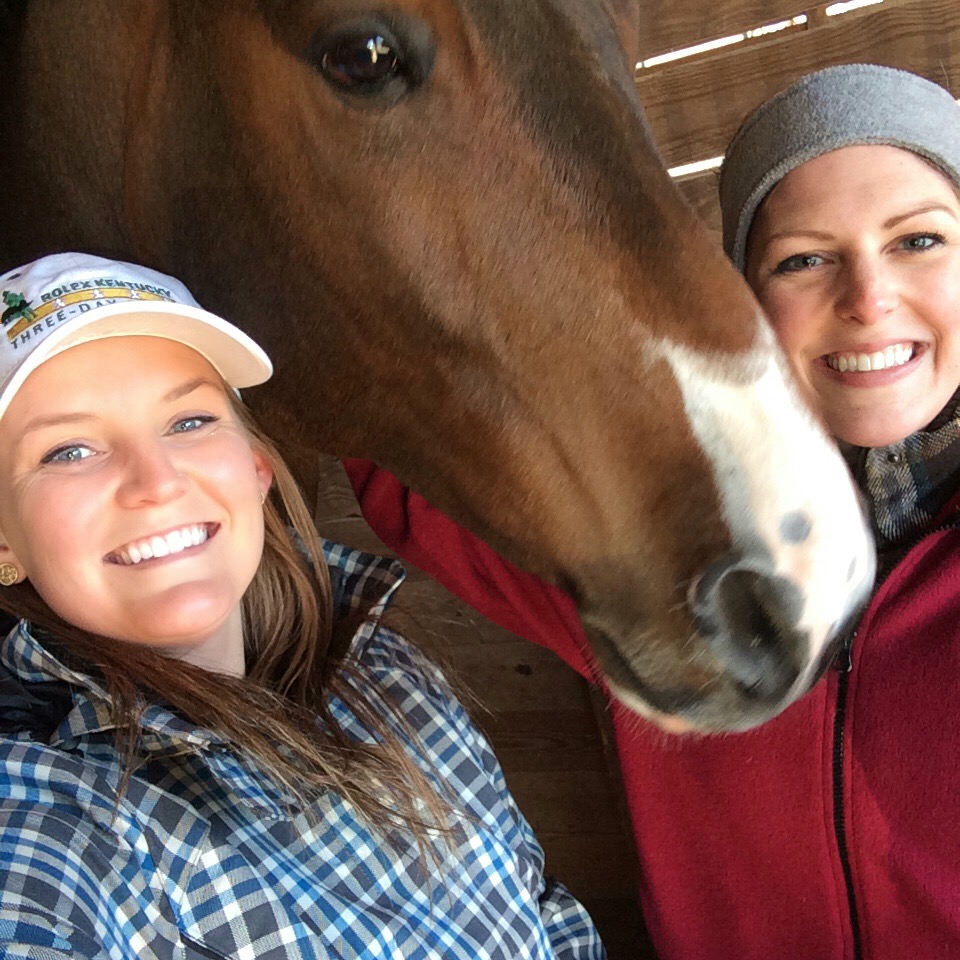
Group selfie after the knowledge drop

Group selfie after the knowledge drop

Speaking of J, I really must give credit where credit is due and thank her for getting up at the butt crack of dawn to come with me to the clinic! Not only do all these photos/videos exist because of her, but she is probably the main reason why I didn’t pee in my jods before our showjumping time. Big big thanks from me!

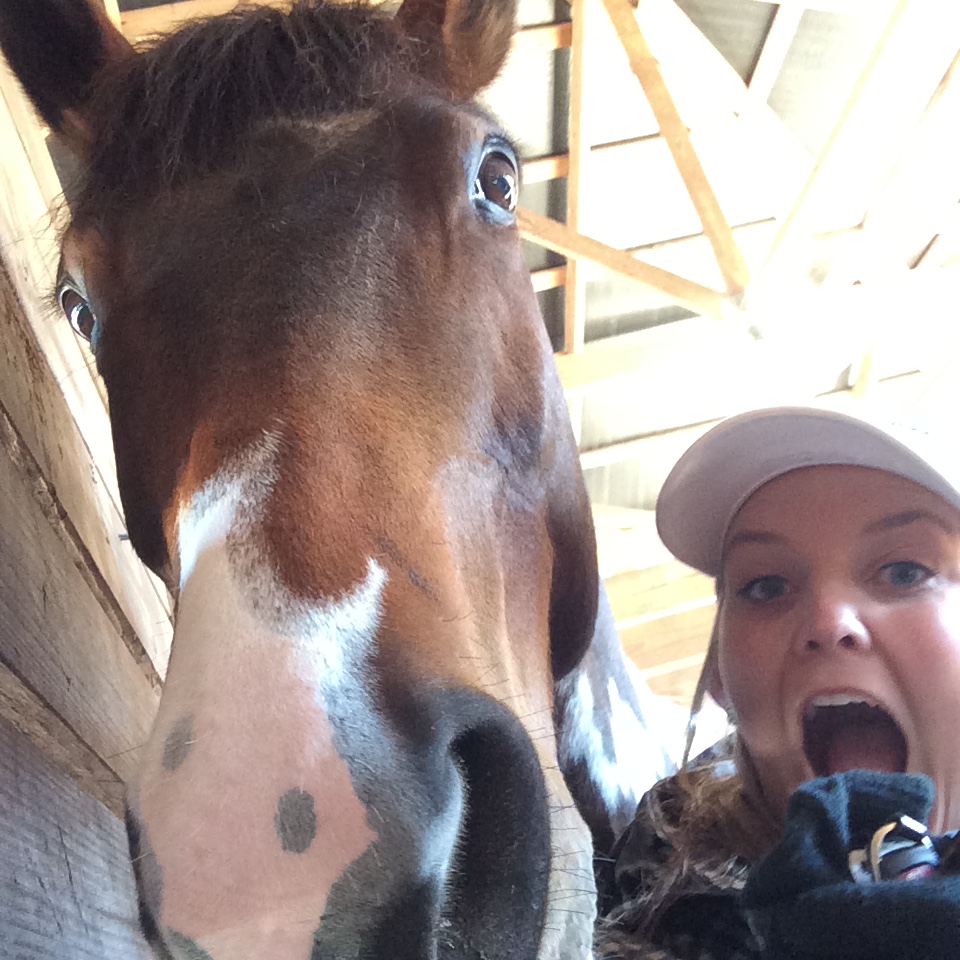
J teaches Foster about selfies

J teaches Foster about selfies

Anyways, back to the clinic. We started at the course map itself, and Marc Donovan (course designer) talked us through all the details that go into this small piece of paper. According to Marc, most designers now make the course sheet to scale for the arena, and he takes care to measure every arena he works with. Decorative signs or bushes placed about the arena are also included, as well as a dotted line path that shows exactly how the course was wheeled off.

The Training course

The Training course

We learned about the parameters designers typically give themselves, such as changes in direction (a good course has 3) and ideally having an equal number of jumps off of each lead. Marc discussed his particular tendencies in his designs, which are often twisty-turny and on the ‘long’ side, requiring a definite forward ride. As you can see above, the day’s course was no exception.

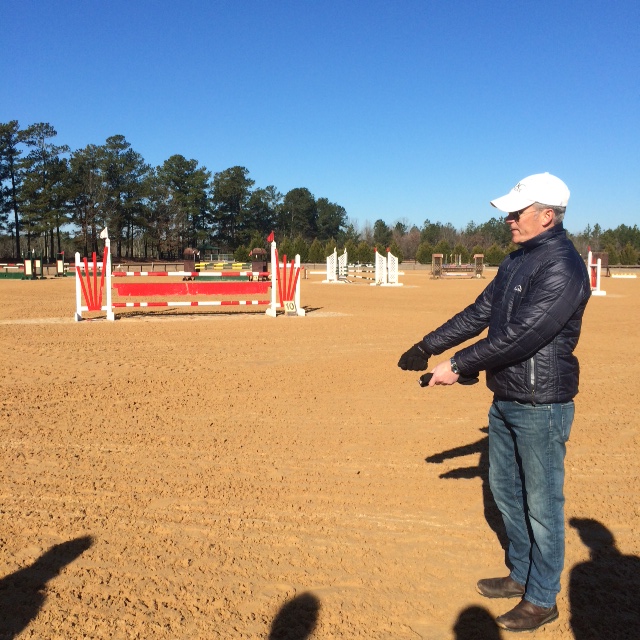
L to R: Lizzie, Marc, and Bobby at fence 6

L to R: Lizzie, Marc, and Bobby at fence 6

We then proceeded to walk the course, with Lizzie Snow and Bobby Costello coming along to ask questions or add their thoughts about how to jump a particular fence. Without going into every detail discussed, here’s the bulleted version (also thanks to J! These notes are a testament to her clever multitasking skills during the walk):

  • ‘Hold’ your shoulders to verticals
  • Anything more than 7 strides is no longer ‘related’ and you shouldn’t worry about counting strides
  • You can go backwards through the start flags, and through the finish flags whenever, without penalization
  • It generally takes a horse 2-3 strides to turn, so when you walk a bending line, walk 2 strides straight and then begin turning in the third stride
  • Mental Technique: Split the course into sections so that you can focus on a smaller section and reevaluate as you go along
  • Ride each fence individually, even in the combinations. Focus on the first fence first.
  • Continue riding through all the turns, focus on turn and then the combination
  • The more you square off a turn, the slower and ​more ‘snug’ you will get to the fence
Bobby Costello shows us how to use both hands and outside aids to make a turn to 9

Bobby Costello shows us how to use both hands and outside aids to make a turn to 9

  • Oxer/vertical combination typically rides longer than a vertical/oxer combination
  • In an oxer, the first rail is the responsibility of the rider, the back rail is the responsibility of the horse
  • Ride the front rail of the oxer, not the back rail (your eye gets too long)
  • When adjusting distances between fences for time/positioning, canter should stay the same throughout but the track you take should change (so swing out wider in a bending line to go slower instead of slowing down the canter)
  • Take shorter lines for more impulsion and momentum (make tighter turns is where this really applies)
  • In combinations, land and in the following stride, make the adjustment, not 3 or 4 strides after landing

As you can see, we were imparted with an absolute wealth of knowledge. I’m not overstating when I say that this will completely change how I walk courses in the future. I also realized (even though I may have suspected before) that in showjumping, it’s not just about the fences, and every step must be considered just as in dressage. You can be sure I will be studying these notes and trying to replicate these thoughts in our future stadium rounds.

I hope you all have a great weekend, and I will be putting together a jumping video for next week! Stay warm!

Carolina International Clinic Recap: Dressage

Wow. Let me just say that again- WOW. I feel so much wiser having attended the clinic at the Carolina Horse Park yesterday, and can’t wait to write it all down!

Even though the clinic format was 1) course walk, 2) dressage, 3) jumping, I feel it’s worthwhile discussing dressage first. We warmed up on our own, and while it was cold and a bit windy it remained sunny and the footing quite nice. Foster felt in fairly good form, though a bit short in his neck, so I decided to post the trot to keep his back soft. We did a few transitions, and a couple lengthenings in both trot and canter before heading into the arena.

fb_IMG_3111

I thought we put down a fairly good test, minus a couple bobbles. During our canter lengthening, the horse in the adjacent ring spooked, causing Foster to spook in turn. Luckily I was able to get him back to save the next movement, the downward transition at X, but that still unsteadied me slightly. His upward canter departs need revisiting a bit, he almost broke in the medium walk, and he has picked up the fun new habit of rooting in our free walk (advice here anyone?) which brought our normal 7-8 down to a 5.

fb_IMG_3127

After the test, Will Faudree, our ring judge, walked us through his thoughts. He was quick to ding us on the bobbles, and noted that he really expected these lower level tests to appear seemless, rather than as punctuated movements. There was also lots of advice on how to be a better test rider- for instance, by preparing and executing the transitions on the long sides of the arena (the walk at H and last trot at K) a little early, since to the judge’s eye they appear late if done exactly at the letter. Also he pointed out that by starting my centerline well outside of the actual arena, it gave him longer to watch any waviness of Foster’s hind end, and suggested starting the centerline closer to the arena so as not to give a bad impression too early. Will then went through each movement of the test and his thoughts as to why he scored the movement as he did, which was of course vastly helpful in understanding the score sheet.

Collective Marks: Gaits - 7.5, Impulsion - 7.5, Submission - 6.5, Rider - 7

Collective Marks: Gaits – 7.5, Impulsion – 7.5, Submission – 6.5, Rider – 7

This test would have earned me a 66.4%, or 33.6 in an actual event. I definitely walked away knowing that we have homework to do to bring those 5’s up, and I’ll be damned if we’re going to start getting anything less than 7’s on our free walk. However, this is an encouraging start, plus we accomplished our first goal for 2015!

  • Get a 7 on a lengthening

They still need help, but apparently 7’s are within our reach!

Warm-up lengthening

Warm-up lengthening

All in all we walked away with our head held high, and I can’t wait to put all the wonderful feedback to good use!

Tomorrow- the course walk!


Dressage Clinic Recap

Stop leaning forward!

Stop leaning forward!

Welp, we did the clinic! After attacking the wind puff with some DMSO based cream, the heat magically vanished and the worry-wort inside me took a deep breath of relief. We got in maybe one decent dressage schooling and then clinic day was upon us!

I definitely cut my warm up time short (let’s be serious- what warm up time?) by arriving a mere 10 minutes before my scheduled ride (um, it was Rolex XC day!), but this gave us a good opportunity to talk to Brendan about what’s been going on or not with Foster. I was hoping to get some confirmation of the lateral work we’ve been working on this winter, but it seems we had bigger fish to fry- the dreaded under neck.

Hot mess moment, displaying his fabulous under neck muscle

Hot mess moment, displaying his fabulous under neck muscle

After our lesson last year, I worked really hard to get this muscle softer and encourage Foster to use his bum to balance himself instead- then things fell apart a bit. Brendan wanted to see Foster go in a much deeper frame with his nose just in front of the point of his shoulder. We struggled for quite some time, and about half way through I felt some of the tension in his back melt away and he gave in to the new way of going.

Finally getting his head lower (also, let's ignore how low my hands are and how big my butt looks in this pic!)

Finally getting his head lower (also, let’s ignore how low my hands are and how big my butt looks in this pic!)

While working on getting him deeper (and deeper and deeper), we tried the canter transitions, again asking him to stay round without popping up in front. Mostly we were unsuccessful, but there were definitely a couple attempts that were close. I think it’s safe to say Foster is finally fit enough to do this correctly, and I will be working hard on this in the coming weeks!

Working on roundness in the canter

Working on roundness in the canter

Lastly, Brendan got us focusing on riding forward and backward within the working trot. This will help us get closer to true lengthenings, although Brendan confirmed what myself (and Eliza, from our last lesson) thought, which is that he may never have a true, exuberant lengthening. If the trade off is a great brain, but no lengthening, I’ll take that trade any day!

Pushing forward within working trot

Pushing forward within working trot

All in all, a great lesson and it was really interesting to watch the video (props to A) afterwards. A great lesson, even if I felt like I could not ride through most of the lesson, and basic steering flew out the window when I was concentrating on Foster so much! I was having some serious issues with my jods sticking to the saddle (and causing the extra bit of the stirrup leather to bunch up underneath my leg) and with the excess of reins getting in my way constantly. New reins will be in our future I think, as this has happened a lot recently as I ride with a shorter rein! Otherwise though, we have some serious work to do, and I am thankful for the opportunity to squeeze in this much needed dressage lesson!

A video clip from the lesson:

In other pony news, Foster has pulled a shoe. And sometime this week I need to fit in a jump school, to get ready for our first ‘big’ Novice at CHP on the 11th! Gosh, it’s coming up fast!

Good pony!

Good pony!


Prepping for Clinic # 2..

Or this post could be called, “Attack of the Wind puff”.

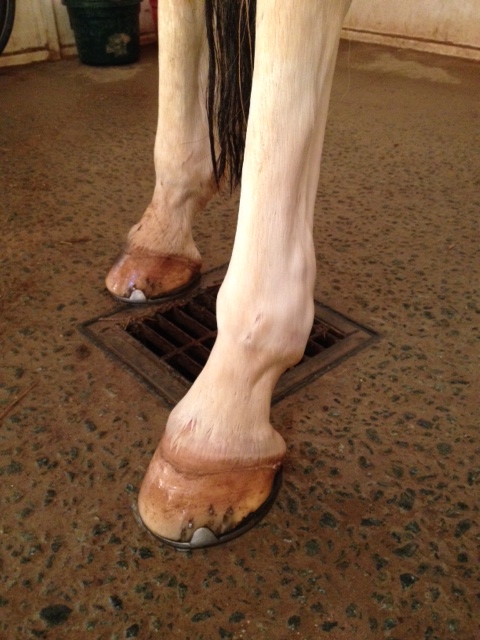
Foster developed some swelling in his back fetlock while I was in Savannah, and after having several people who are much smarter than me (i.e, the vet who did his shots, another vet looking at pics, and a former vet-tech) all diagnose it as a fresh wind puff, I haven’t been too concerned. It had a minimal amount of heat it in, which again I wasn’t terribly worried about since it is so fresh.

Of course Foster doesn't care, all he wants is more grass.. yay spring!

Of course Foster doesn’t care, all he wants is more grass.. yay spring!

A few days ago though, this poofy blemish took on a little more heat than I was comfortable with. So I’ve been poulticing the crap out of it and hoping it goes down. I’ve worked Foster only a few times since the last clinic, and kept our rides pretty simple- lots of stretching, some basic transition stuff, and given him a gram of bute after each ride to reduce the swelling. After not seeing much change, I’ve gone the next step and started applying Surpass, a DMSO based cream, to it.

Fetlock a week ago

Fetlock a week ago

photo 3 (3)

A couple days ago

Technically, Foster is sound and ready to go, but I’m being a total helicopter mom and watching his leg like a hawk. Nothing shows up lameness-wise when I ride him, and if anything he feels more forward than ever. There was a wee bit of tension in his back last night, but I put that down to us not working on transitions recently and insisting that he not use his neck to pull himself into the next gait. So, my hope is to ride him and apply more cream Wednesday, and check on him Thursday morning and see what it looks like. Rinse and repeat for Thursday night/Friday morning. If the heat really has not gone down at all, I’ll consider scratching.

thank you, google, for the pic of Brendan riding

thank you, google, for the pic of Brendan riding

If you’re wondering what the clinic is about this weekend- it’s a dressage clinic just 15 minutes up the road, with Brendan Curtis. I’ve seen Brendan ride many a time beside Jim Koford when they both trained at a barn I used to board at. I never got to take a lesson from him, but I have a friend who has become a beautiful dressage rider who highly recommends him, and I’m very curious to see what he would do with us!

So, our preparations this week are mostly focused on easing my mind about Foster’s leg, and if it gets better we will just have to see what happens at the clinic. He should at least be able to rock a stretchy trot and some lateral work! I’d love to have the opportunity to ride, but Foster comes first. We’ll see what happens.


Clinic Recap: Day 1

Half Trakehner

Half Trakehner

Whoo! What a weekend. The clinic was a great success, and Foster and I came away tired, but with some definite goals and advice to keep with us as we practice on our own.

The clinic included 3 lessons of any combination, and knowing my weakest areas (jumping), I opted to do 1 showjumping lesson and 2 cross country lessons. Day 1 was our showjumping and first cross country lesson. And boy, did we struggle at first.

Screen shot 2014-04-13 at 8.50.29 PM

heads up like a turtle!

Day 1 Showjumping

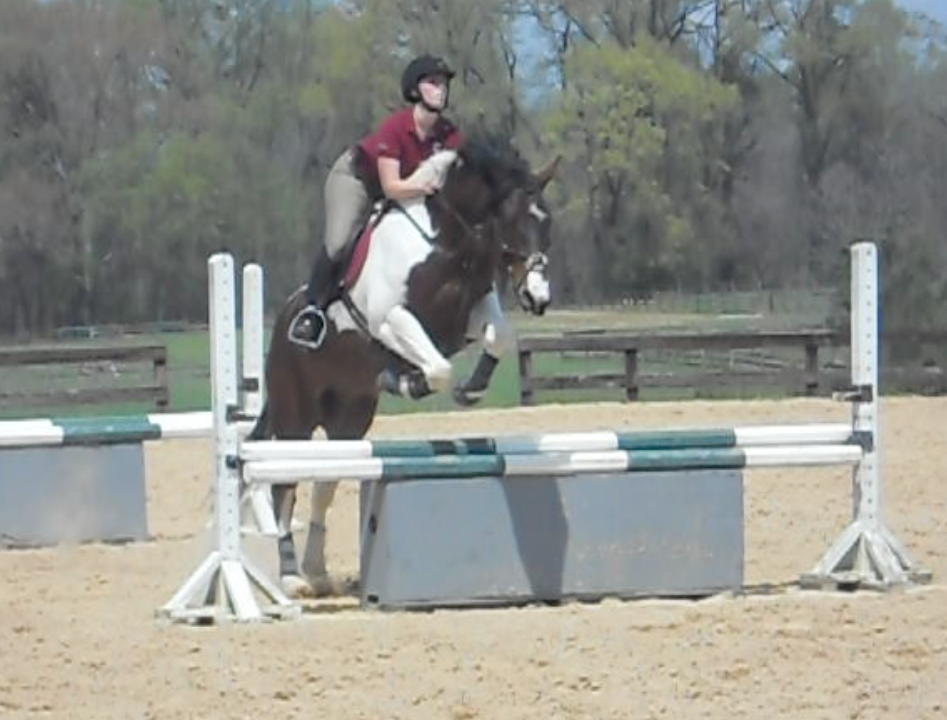
One of the first things Holly pointed out is that I was riding with a dressage seat, and I needed to lighten my fanny for jumping. Needless to say, after about 3 months of doing almost nothing but dressage, that fanny felt heavy, and I struggled to find my balance after being out of practice for so long. She also had me lengthen my rein and lower my hands, to encourage Foster to have a slightly rounder shape and therefore jump with better bascule.

The course included a few single fences, a 3 stride line, a 1 stride, and the biggest grid I’ve seen (in life). Foster has never jumped a grid like that, and normally when we do grids we build them up bit by bit. Not to mention, when’s the last time he did a 1 stride? (I’m sure I don’t remember!) Thankfully he was game, and we struggled through.

This exercise showed us that we could benefit from more gymnastic practice, to get him sitting, me waiting (and steering), and improve balance issues.

Overall themes included getting a more active canter (no surprise there), looking without leaning, and getting him straight to the fences. The latter is one of my biggest issues right now, as I don’t tend to take the time to get his shoulders straight at the approach to the fence, and then we jump crooked, or if it’s a line, drift through it. I will be working on this for sure!

Luckily we did end on a good note where I actually started to ride, but the video is sadly a bit blurry. Just a few jumps together, but beginning to see improvement. I do notice in these videos that my form over fences has suffered some from lack of practice (belly button to pommel!), but hopefully we will be able to get more jump schooling in soon!

Day 1 Cross Country

Figuring out how to turn

Figuring out how to turn

After Foster had a quick rest, we headed out to the cross country course. I was pretty excited to see what he felt like, but that didn’t keep me from being tense. I had mixed success with getting the tension out of my elbows, but Foster was an honest, solid citizen the whole time, which helped me relax more and more. Everything stayed pretty small as we revisited the basics… No, we didn’t always get our distance, and tempo was occasionally a mixed bag (though admittedly, mostly on the slow side), but I was very happy and got the confidence boost I needed!

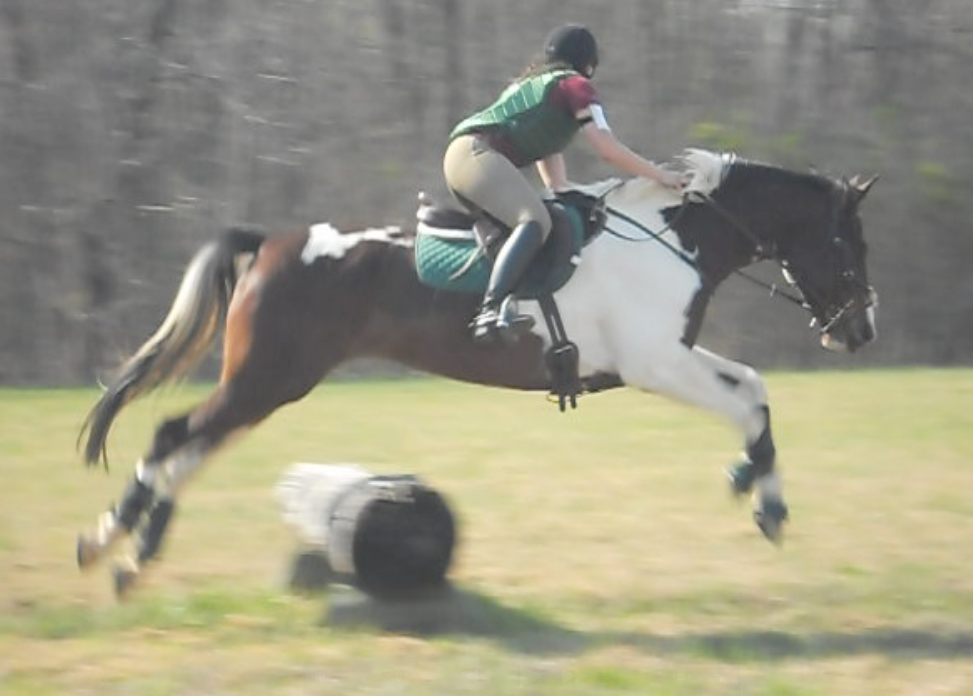
Again themes of more canter and allowing him to come to the fence (this is a trust issue with me, left over from his rushing days), and relaxing my elbows. Watching the video I can see exactly when I lock up and when I start to relax my arms, and generally speaking, he looks relaxed when I look relaxed. Definitely something I’ve been working on for some time, and finally started seeing better results towards the end of the lesson.

Following cross country, we headed back to the barn and Foster got a much deserved dinner and I got to hang out with my fellow participants, some of whom are friends from our old barn! It was so nice to catch up with everyone, and hear how they are progressing with their rides!

Drinking beer after riding all day? Yes, please!

Drinking beer after riding all day? Yes, please!