First of all, does the word natter translate into American English? It may be one of my favorite words. Along with ninny. So today I’m a silly ninny nattering about nosebands.
Ahem.
This past weekend, while assisting a friend in her own horse shopping adventures, I witnessed some very, erm, strong opinions on nosebands. In the world of dressage, there’s a lot of different nosebands that are totally legal. Flash nosebands, regular cavessons, drop nosebands, figure-eights… all totally legal. Beyond dressage, there are even more options. And in this individual’s opinion, the flash was the only thing a dressage horse should go in and the rest of it (as in a bridle without a flash) was “hunter jumper stuff.”
Happily modeling a well-fitting flash
Now I’ve used a flash noseband plenty of times, but my main preference is to go without if possible. So as soon as I purchased the PS of Sweden bridle, I tossed the flash attachment in the bag and never looked back.
Wah, I loved this bridle.
To me, a flash can easily mask training issues, like bracing against the bit and hide underlying tension in the form of gaping and gnashing the bit. I have nothing against those that use a flash in their training, so long as the flash is at an appropriate looseness. But plenty of times I have seen a horse with the flash making an obvious depression in the horse’s skin, to me an unfair application of equipment for the sake of a better impression. For me, I go the way of the Wofford when it comes to flashes.
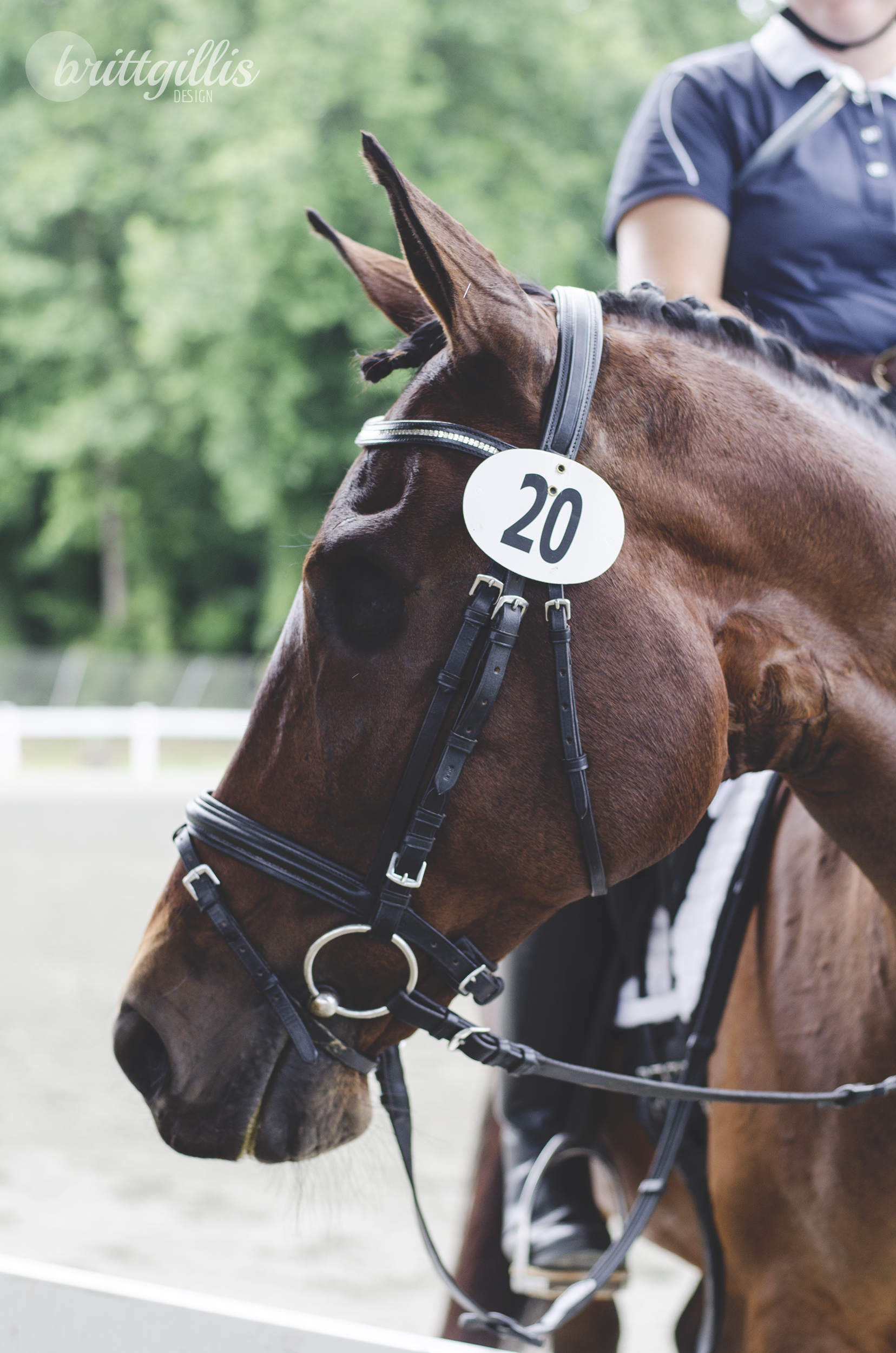
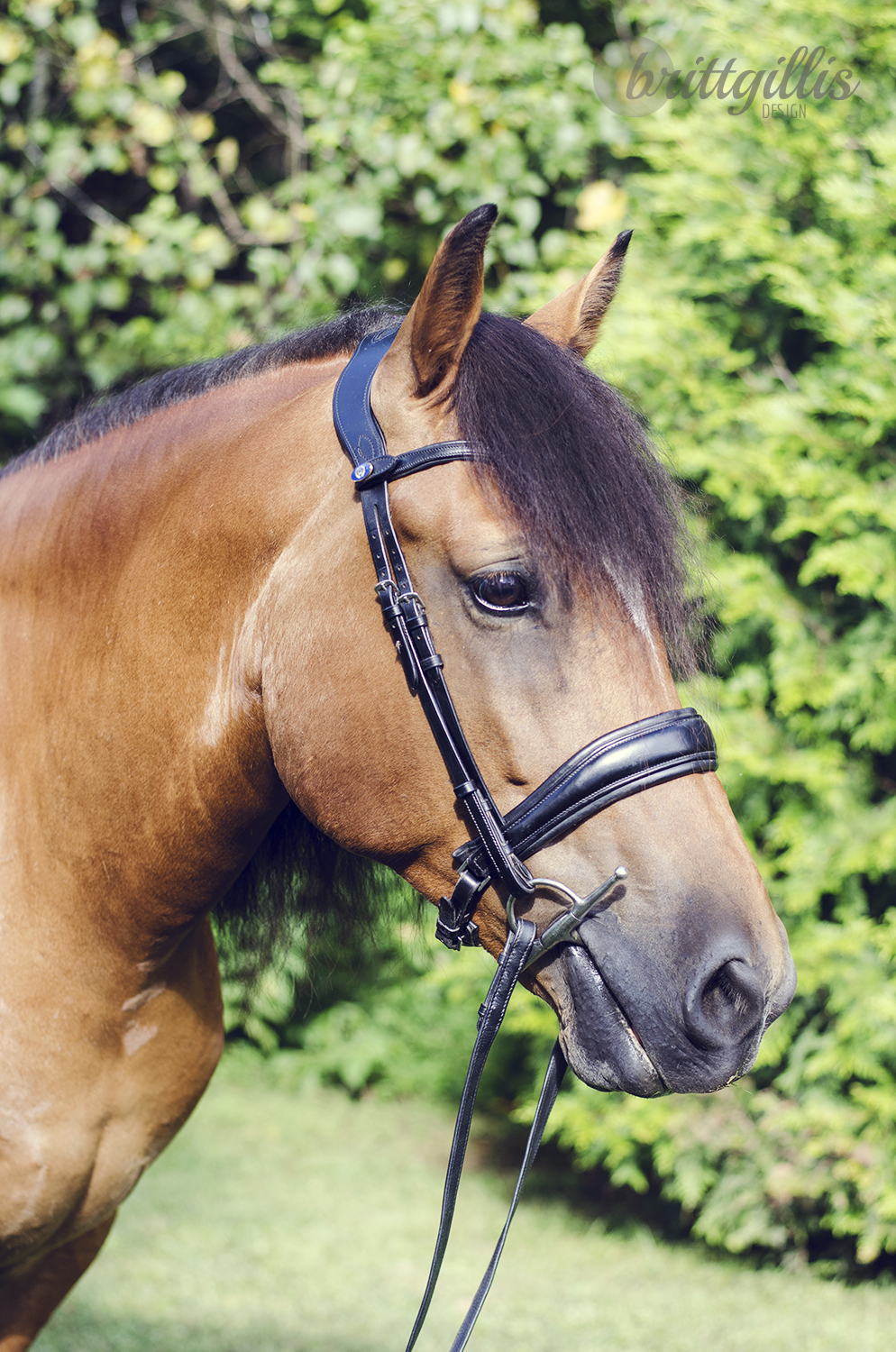
A dressage pony modeling a Micklem bridle
But then there are other controversial nosebands out there. Some people absolutely abhor crank nosebands, reasoning that they invite overtightening. Some dislike a dropped noseband, or a big floofy noseband, or a thin noseband, because of aesthetics or other reasons. For instance, I’m not a huge fan of the way Micklem bridles look with their noseband. But I have no beef with those that use them, since I appreciate that the riders who use them are doing so for the comfort of the horse. Nonetheless, there are dressage enthusiasts who would wish them out of the arena in a second.
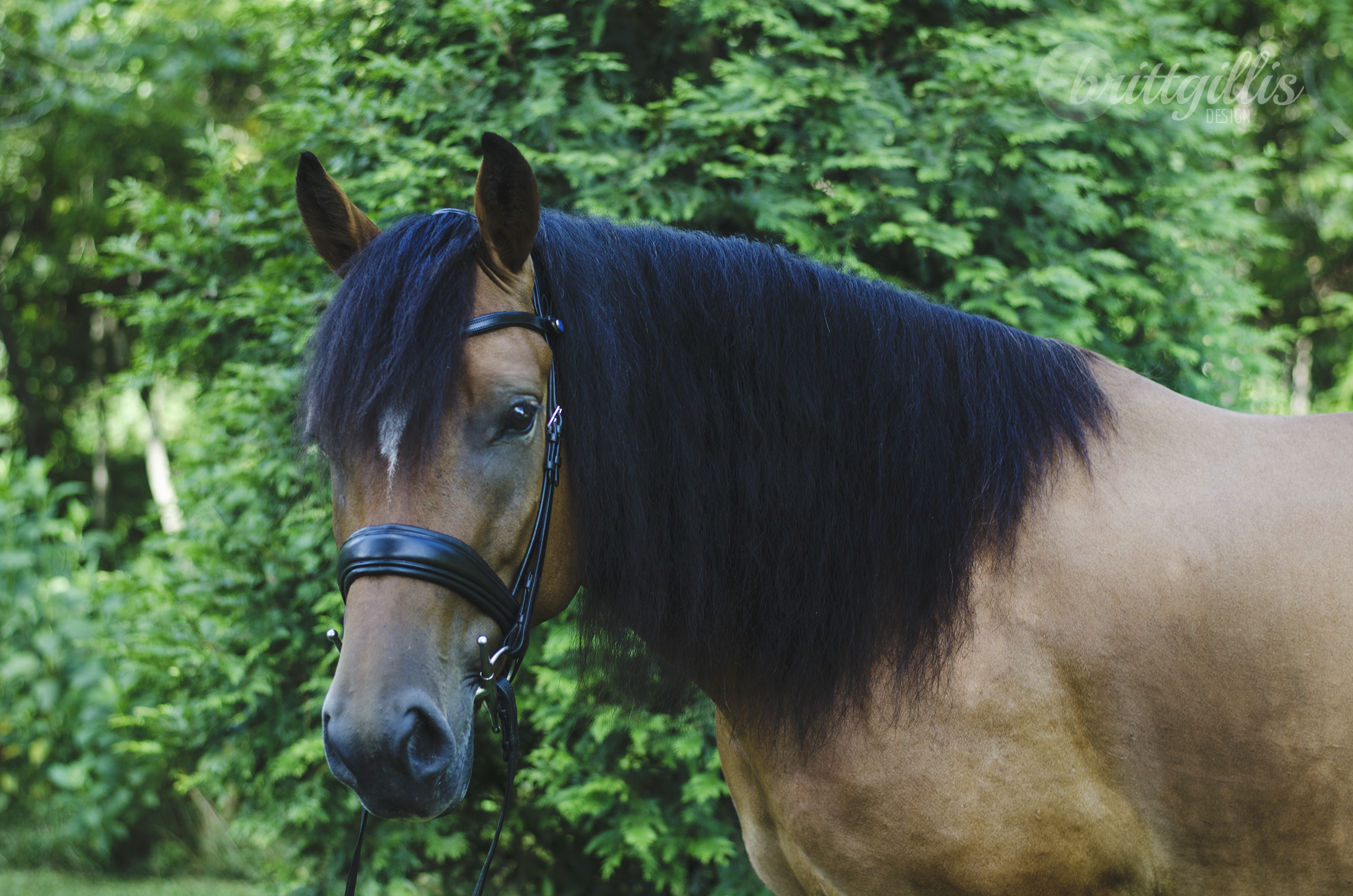
Johnny models a more traditional noseband setup
It’s interesting to me that for such a basic piece of leather, that there are boundless options that elicit so many opinions from horsepeople. Whatever your style, or beliefs, or discipline, I’m guessing you took some kind of consideration into what adorns your trusty steed’s snout.
Or, you know, the naked nose works too!
What do you use on your horse? What is your rule for tightening, if you use a crank or otherwise? What nosebands do you avoid at all costs? What options would you consider other than your current choice?
So, I’m a little late on this, but between the AEC’s, and first outings with the baby pony, it’s been a busy time.
Earlier last month, my friend A participated in a clinic with Phillip Dutton. The clinic was broken into a showjumping day, and a cross country day, and so I chose to come audit the showjumping and see what wisdom the man himself would impart. First impressions confirmed that Phillip is a relatively soft spoken individual, but I was surprised to see him really get after riders, no matter age or experience, if they weren’t getting it done. During breaks he very kindly acquiesced to answering all of our questions and recalling his time in Rio just a week before.
As for the clinic, I watched levels from Beginner Novice up through Preliminary, and each set did basically the same exercise with subtle variations for height involved.
The Warmup
After reviewing their challenged and making introductions with P Dutty, each set of riders had an identical warmup. Trotting on a large (30 meterish) circle, alternating between really collecting and lengthening the gait, following by leg yields on/off the centerline. Then they would canter and again collect and lengthen, getting up in two-point position while lengthening and going for a bit of a hand gallop.
The Exercises All groups but the prelim group then hopped over a little cross rail a couple times, cantering away on landing. Then the fence was raised to a vertical and the work began. The main exercise revolved around a 3 fence combination featuring a straight line to a bending line. Phillip demanded a thinking rider, and asked the participants to put in 5 strides between each fence, and come back and do the same in 4 strides. The bending line caused riders the most problems, and he advised to use your line as well as the pace to set the horse up for the correct number of strides between fences. He also was adamant that the rider not make corrections right before the fence, but that they prepare and stick to a plan and be quick on their feet mentally.
After each group successfully did the entire line, they then had the work on adjustability within the line, doing 4 strides to a 5 stride line, and then the reverse. Again, planning your line and having a rideable horse made a huge difference in how successful each pair was.
Eventually Phillip added in the small corner you can see in the arena, creating a bending line, to a straight line, to a bending line again. Again, each rider was made to vary the number of strides they fit between each element, now with the addition of a skinny fence for accuracy. At that point, the horses were extremely adjustable and most handled it without a fuss.
The Wrap Up
To finish off the day, each pair was asked to try their forward, coming stride through a one-stride combination. The fences were set at a solid height, often at the level above what each rider was competing at. The riders I spoke to were pumped with this accomplishment, and you can see how it would apply to the next day, which was cross country.
Final Thoughts Overall, it was obvious that Phillip is a seasoned pro, as any mishaps were waved off and no matter the size, age, or level of the riders, they were made to come again and do it right. Sometimes this required multiple attempts, but Phillip would press and demand accuracy of each pair. What surprised me the most was that his expectations did not decrease for the lower levels, and riders who had learned to gallop just the week before were nonetheless asked to make the forward pace happen between fences. Based on his amazing save on the Rio cross country course, I would propose that his demands of the participants are nothing compared to what he demands of himself. Each student was pushed slightly outside of their comfort zone and as a result, grew as a combination throughout the day.
With the surveys (or polls, or questionnaires, or whatever you wish to call them) continuing to roll in, and a healthy discussion generated on the COTH forum, I wanted to continue to include any and all rider opinions registered on the AEC cross country course. Eventers are taking note and debating the benefits and potential drawbacks of the facility and course design, and its important to make sure those that actually rode the course get a voice in the conversation.
Was the level of technicality appropriate/expected for your level? I have mixed feelings on this. It was a very different cross country course. One that I don’t think the majority of Novice competitors had seen before. It definitely had a “big time” feel. However, I would think a championship level course should have at least one A/B combination and a ditch or trakehner.
What was the most difficult question on course for your horse?
The most difficult question for the horse was definitely the water, # 7. I THOUGHT 18 to 19 would be but he skipped right through that. But the water was a bit of a “thread the needle” and was very busy. He propped hard as I don’t think he understood he just had to run through. Once he was shown, he happily went back into his canter and carried on.
If you were to give the footing a grade, what would that grade be and why?
B. The footing was made for a barefoot horse to run around with no issue. I think it was still a bit too new and not quite established. Obviously, this will greatly improve with time. There were quite a few slip and falls on Thursday and I was very concerned about that. The buzz phrase was “use big studs”. We did and had no issues whatsoever.
Do you feel there was an appropriate amount of galloping allowed by the course design?
Yes. On the backside of the course coming up the hill.
What was your favorite part of the course?
The aspect that the spectators were able to see a lot of fences. I also thought it had a very nice flow.
Would you return to Tryon for future horse trials? If not, what changes would you want to see before returning?
I absolutely would. The convenience of restaurants and shops being on grounds makes it so convenient. However, I really do not want the events that run at TIEC to hurt the smaller events in the area.
Was the level of technicality appropriate/expected for your level?
Absolutely. These are championship courses and they need to be at a championship level. In fact I thought in some ways they were somewhat easy. I have ridden in other AEC’s, and they were comparable to those. They had very few to no A,B combinations. I thought the terrain added to the question, but I thought it was very fair.
What was the most difficult question on course for your horse?
Not anything particularly. I was hoping for a half coffin, and a jump into or out of water.
If you were to give the footing a grade, what would that grade be and why?
B+ It rained, this is cross country we have to understand that it can’t be perfect footing every step of the way. You put in the appropriate studs for the conditions. My horse did not put one foot wrong! I put in spike studs on the outside and she was great. She felt secure and she jumped that way. It rained quite a bit and I went near the end of my 50 horse division so I thought the footing was okay. If people don’t like it then people should pull out or ride for the conditions if they don’t like them. Tryon’s footing was a clay base, then the footing that was in the arena followed by turf on top. Any type of footing if enough rain is put on it will deteriorate, it doesn’t mean thought that it is unsafe and it doesn’t mean that it can’t be ridden on.
Do you feel there was an appropriate amount of galloping allowed by the course design?
I think that they did a very good job with the land that they had at this time. This is a new venue and I would expect to see some changes next year. I got up a good gallop though and in the arenas and in the derby field I thought I had plenty of galloping area.
What was your favorite part of the course?
The derby field.
Would you return to Tryon for future horse trials? If not, what changes would you want to see before returning?
Yes I will!
Was the level of technicality appropriate/expected for your level?
I felt the technicality was appropriate.
What was the most difficult question on course for your horse?
The most difficult question for my horse was the triple. We got a funny distance and it was hard to get out of the question. It rode nice if you hit the distance correctly. My fault completely.
If you were to give the footing a grade, what would that grade be and why?
I liked the footing. It doesn’t look super nice towards the end of the division. I ran towards the end of my division and i did not have any problem getting traction. He never slipped.
Do you feel there was an appropriate amount of galloping allowed by the course design?
I did think there was a good amount of galloping. It was a tough course to make time on.
What was your favorite part of the course?
My favorite part of the course was all the viewing areas. It felt like you were running at rolex and my horse really thrived off the energy of the crowd. I enjoyed the whole course though. It was quite fun and a very neat experience.
Would you return to Tryon for future horse trials? If not, what changes would you want to see before returning?
I will definitely be returning. Especially since its in my backyard!
Name: Dom Schramm
Level Competed: T, N
Horse Breed: Trakehner and Dutch WB
Was the level of technicality appropriate/expected for your level?
I think so. The only thing that was missing on the Novice course was a ditch but I still thought the courses were big and challenging. The Training level course was as as tough as you would see anywhere all year. I think thats appropriate as every horse at the AECs is competitive at the level!
What was the most difficult question on course for your horse?
Theres a lot more atmosphere then what they are used to and so I thought that might play a role however both my horses didn’t seem too fazed by it.
If you were to give the footing a grade, what would that grade be and why?
9/10 I think the actual feel and give in the footing was great. Also, the way it handled a torrential downpour and almost 2 inches of rain was nothing short of amazing. I can’t think of any other place besides maybe Florida or Pine Top that handles water like that. Most places you would have been riding in bottomless mud after that. Everybody keeps going on about the derby field, I think thats where the footing felt the best. As for the rest of the course, there was one turn as you head down the big hill that was a little slippy and one turn at the bottom of the hill, but I just took my time and neither of my horses slipped once. Cross country is about using your head and adjusting to the terrain. Riders need to accept some accountability for helping their horses adjust to changes in terrain, footing etc.
Do you feel there was an appropriate amount of galloping allowed by the course design?
For sure. In the novice it was ridiculously easy to make the time because of the huge long gallop up the hill. Most of the riders had to really chill out toward the end of the course to avoid speed faults. The Training was a bit harder to make the time. You have to remember that this whole thing is a process and the course will head out onto where the golf course currently is for next years AECs. They have a crazy amount of land back there but they need to move a lot of earth to be able to connect to it. I think it will be a totally different feeling course in years to come!
What was your favorite part of the course?
I just loved having the opportunity to compete at a world class facility. I have been to Kentucky Horse Park, Sydney International Equestrian Centre, Palm Beach International Equestrian Center and to Aachen. I think Tryon is as good if not better than all of them, especially considering they are not even halfway finished! My favorite part was knowing that having a place like this in our backyard is really good news for all of us!
Would you return to Tryon for future horse trials? If not, what changes would you want to see before returning? Absolutely! I think that eventing in Tryon will just continue to go from strength to strength
I won’t lie, I hemmed and hawed about sharing this experience with the interwebs. But in the interests of staying humbleself humiliation sharing, its a story worth telling. Especially since you’ve already seen me do this…
and this…
Fine, fine, I’ll share it again.
what’s wrong with a little more personal shame on this blog?
Some backstory- earlier in the day my friend A (whose “therapy person”/groom/cheerleader I was) wrapped up competing at the AECs. After a big breakfast neither one of us were hungry, so we grabbed some champagne, pimento cheese, and crackers and nibbled away while hollering at watching the Advanced cross country riders. First mistake of the day- being hella tired and having a few crackers chased with champagne for lunch.
So when we got to the competitors’ party that evening (after stalking every horse trailer leaving that day and begging for their arm band- those things came $50 a pop!), we were somewhat famished. Cue piling everything from the buffet onto my plate, and what else? A glass of wine to wash it down. The first drink was free, and I knew I only had so much cash, when the cash ran out, the booze would stop, and that was my safe guard.
At first this was a great idea. We stopped by the charity tent and attempted to bully Bobby Costello into making us a drink as celebrity bartender. We left the booth one margarita, a Bobby lesson in the books, and one total fangirl moment with Allison Springer to the wiser.
Because OMG ARTHUR
A couple drinks on the roof, admiring the view and watching the entertainment, and we headed to find my friend B, would what do you know, was chatting with her friend, who happens to be Buck Davidson’s wife. We made ourselves comfortable, and A went on to remind Buck of his antics when they were both teenagers on the eventing circuit.
PS, the answer is no, he isn’t!
Moving along, I ran into the Paynes, and just had to celebrate Doug’s (many) clear rounds that day. Because anyone who can ride 41,232,017 horses at the AECs and still stand on their feet deserves a drink. And since nobody should drink alone, I joined him in that drink.
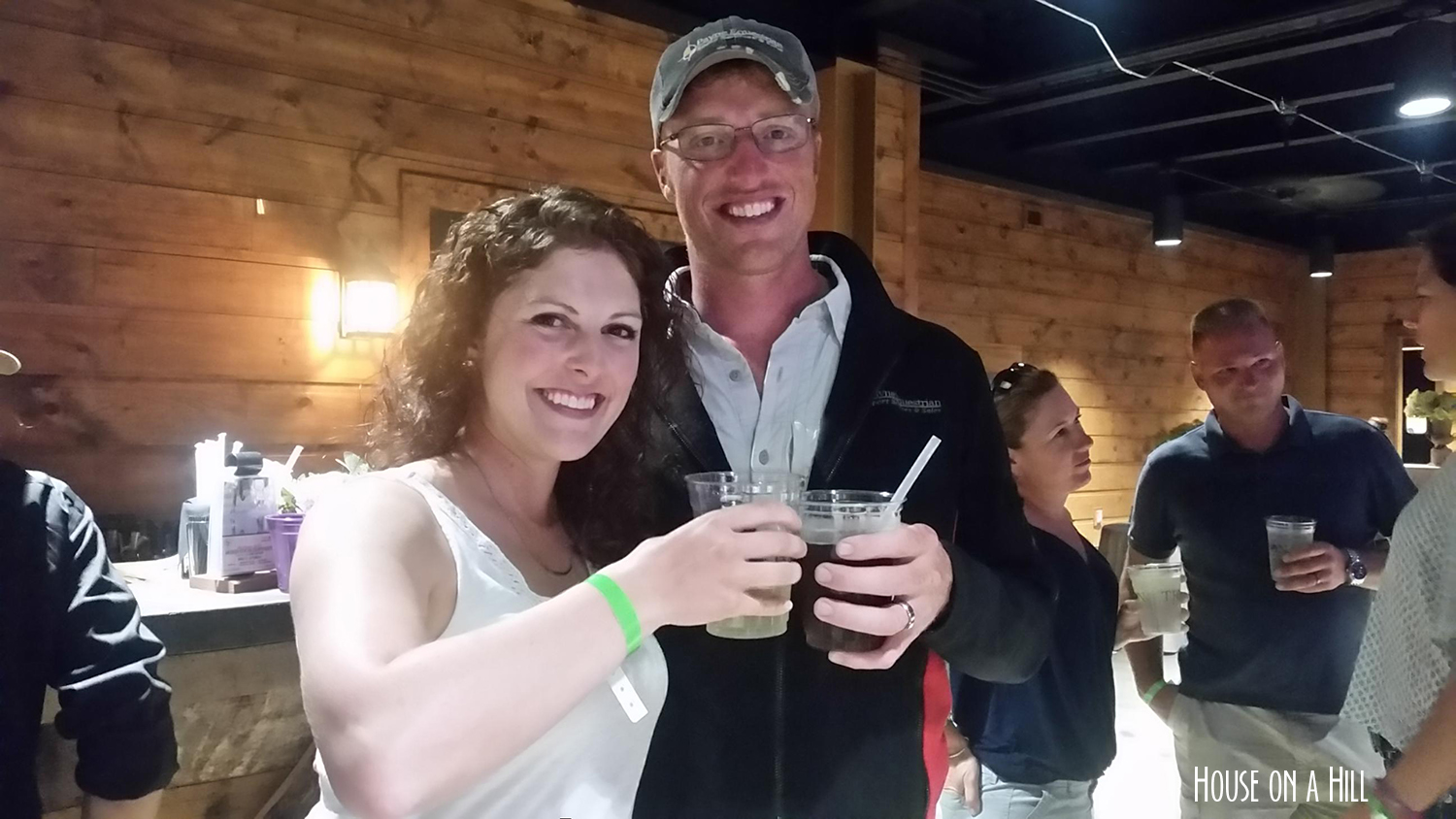
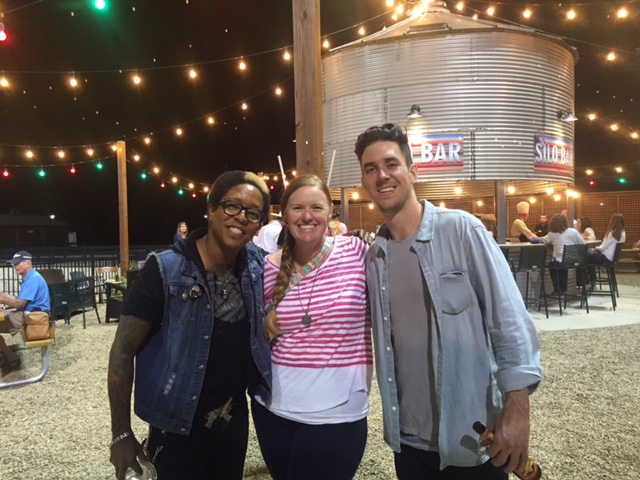
From there, things started to unwind. Doug introduced me to the Devoucoux guy (name unknown?), and Mark Bellissimo, and from there we met the band, and Mark’s son, and toodled over to a different bar.
Me with pretty much everyone
Here’s where it gets a little fuzzy for me. I remember being obsessed with one band member’s hair. I remember bitching about my saddle woes talking with the Devoucoux guy. I remember telling my friends those were sleepy eyes, not drunk eyes.
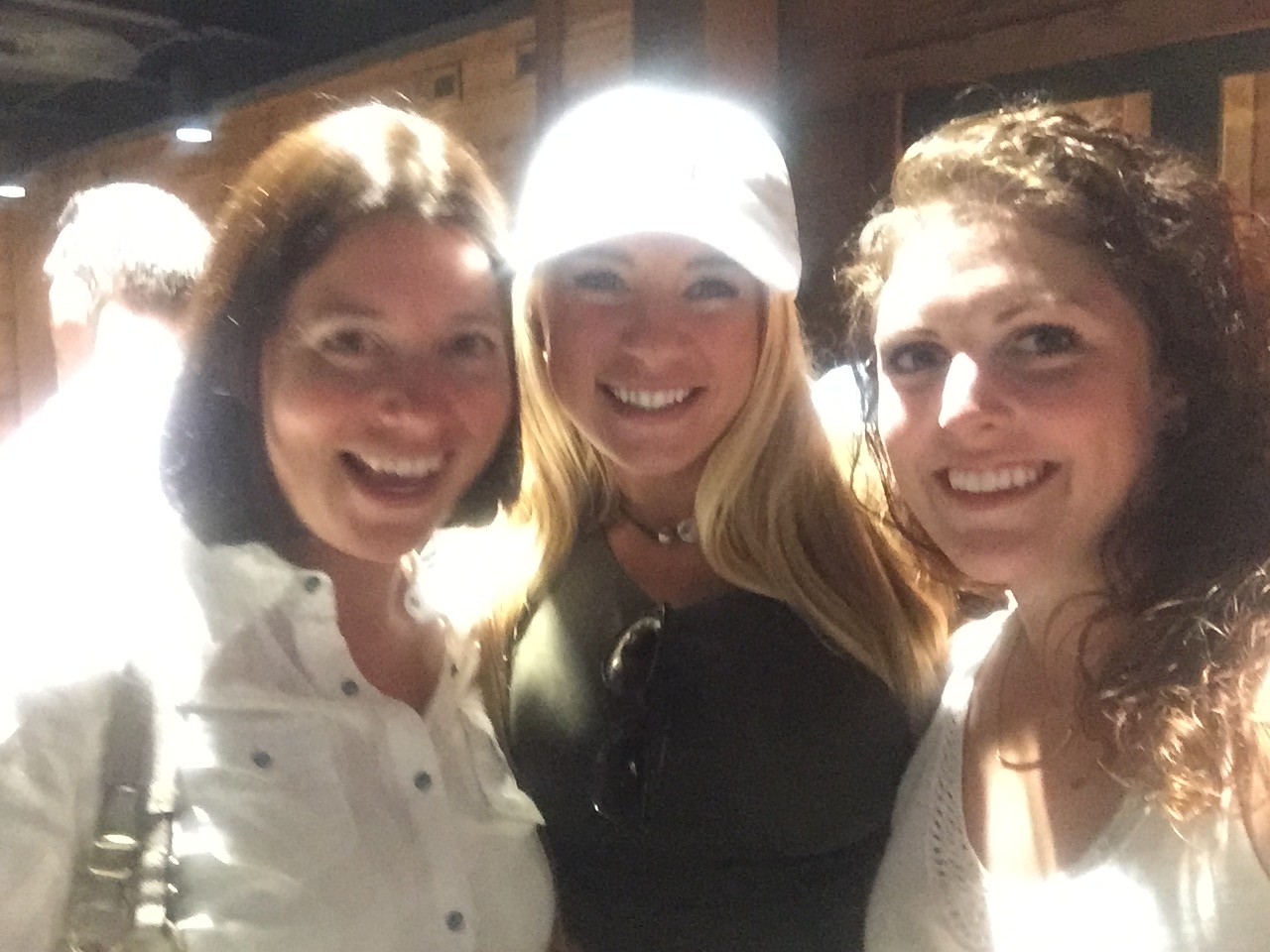
I remember taking selfies, and making friends. I remember talking to Clayton Fredericks and perhaps making things a little awkward between him and his lady friend.
The entertaining part of this story, though, is probably more of what I don’t remember from the evening (and boy, were my friends happy to fill me in):
Telling Lynn Symansky repeatedly that I didn’t realize she was Lynn Symansky
…followed by telling Lynn’s husband that I liked his shirt, and oh I wasn’t flirting with him because I’m married too.
Taking a selfie with Lauren Kiefer
Discussing a hypothetical handlebar mustache on Doug with Jess Payne
Passing the eff out in the car on the way home, then suddenly waking up and yelling “1884!” (The dressage saddle model I’ve been considering)
Checking my phone the next morning like…
So there you go. One magical night at the AEC Competitor’s party. A night to remember, and a night to forget.
Because minis and alcohol?
Shit, let’s not talk about how pale I am, OK?
Selfies with the band’s singer! It was her birthday! (See- I recall this!)
The cross-country course at the American Eventing Championship inspired a lot of discussion among the eventing community. This because the course introduced a sort of footing unlike anything previously seen on cross country, included more spectator set-ups than usual, and concluded in a derby field. While much of this was easy to appreciate given my spectator/groom status, I felt the real judges of the course should be those who had actually ridden it. Given that, I surveyed a small group of riders to gain their perspective. Answers in order of ascending level.
Was the level of technicality appropriate/expected for your level?
I thought it was a bit more technical than anything I’ve seen at BN before. At the same time this is a championship course so it should be harder than BN at normal recognized events. Most of the course was fairly straight forward but I thought the way jump 16-17 was set up (bending line over a mound to a corner) was quite tricky for even Novice let alone BN. My horse jumped it quite well so it rode better than it looked but I still question if it was an appropriate question for BN. [corner shown at 7:25 in below video]
What was the most difficult question on course for your horse?
Evil number 7!!!!!!!! The water crossing was the most difficult for Chimi bc it was very narrow and busy. Trying to fit all 6 levels in a very small space definitely created a challenge for BN and N jump 7 (I think it was number 7 for novice too?) A lot of horses had problems at this jump even if on paper it looked quite simple for the level because all you had to do was trot down a ramp into the water- simple right? Well not really. The difficulty of this jump was the narrow “tunnel” that was created by the Advanced and Intermediate jumps on either side of the ramp. My horse can be quite claustrophobic and asking him to go through two jumps only 10 feet apart (I’m guessing- definitely no more than 12ft but probably closer to 9 or 10′) into the unknown proved to be more than he could handle. We had a stop at the jumps but once I got him past the two tables he was fine going into the water. Sadly him spooking at the two jumps resulted in a refusal and we received 20 penalties for being afraid of the approach not the actual obstacle that was marked. 😦
If you were to give the footing a grade, what would that grade be and why?
A- I felt that overall the footing seemed to hold. My horse seemed to like it but he is also barefoot and I think barefoot horses do better on the footing arena footing and on the grass. Chimi only slipped once on XC and it was a very minor event. It happened right after we crossed over from the arena footing to the grass before jump number 5. It was quite soggy from the rain the day before and he was charging full steam ahead and I don’t think I half halted him quite like I should of with the change of footing. But other than that I thought the course rode really well especially down the really steep hill where I was worried about him potentially slipping (he didn’t and we actually galloped down the hill too!) They did cover the hill in footing from the day before’s downpour and potential rain in the current forecast so I’m not sure if that helped or if it would of been fine without it. Would the course have ridden just as well if it hasn’t rained? Or would it have been slicker because the hooves wouldn’t of dug in to the ground as much and just skated across the top? (Does that sentence make sense?) I do think the wetter footing allowed for the horses to “grab” at the grass for better traction than they would of been able to if it had been dry
Do you feel there was an appropriate amount of galloping allowed by the course design?
For the lower levels… yes… or at least out on the course part. Jumps 15-18 were pretty close together but the turns weren’t as sharp as I thought they would be when I walked the course.
What was your favorite part of the course?
All of it except jump 7!
Would you return to Tryon for future horse trials? If not, what changes would you want to see before returning?
Yes. I do hope they expand the course so you have wider paths especially if you’re trying to put a lot of levels in a small space (I’m speaking about you evil water complex!) I think with the expansion it has potential to feel more like a real XC course than a glorified jumper derby. Only time will tell if they do this (they say they will) but I would go back! Partly bc it is only 20 minutes away 😉
Photo by Brant Gamma
Name: Allison Sandifer
Level Competed: Novice AMT
Horse Breed: OTTB
Was the level of technicality appropriate/expected for your level?
It was a maxed Novice course, I figured it would challenging. It was a true Championship course.
What was the most difficult question on course for your horse?
The bank complex to the corner. I just couldn’t get the turn off the bank that I wanted.
If you were to give the footing a grade, what would that grade be and why?
10 out of 10. I loved it, Baron rode well off the footing. He wasn’t bogged down in deep sand and it had great grip in Stadium. The turf was a little slick but in the worst area on a downhill slope it was well sanded.
Do you feel there was an appropriate amount of galloping allowed by the course design?
I think so. I could have done more to get the gallop between the first 5 fences but I didn’t push it.
What was your favorite part of the course?
Uphill gallop in the back half. I loved every part of that gallop lane.
Would you return to Tryon for future horse trials? If not, what changes would you want to see before returning? I hope they have another event soon, and I will do everything in my power to attend. It was such a fantastic facility. I would recommend that they build more parking around the barns and create several more large hand-grazing paddocks.
Name: Diane
Level Competed: Novice
Horse Breed: Draft cross
Was the level of technicality appropriate/expected for your level?
In some ways I thought it was a little soft. There were no ditches, so no coffin questions. There were no A/B combos. There were only a couple related distances on course. Nearly everything was max height/width and brightly colored and decorated so if that is something your horse backs off at then that would affect the difficulty level. I found it easy to make time on a horse that isn’t very fast.
What was the most difficult question on course for your horse?
The only question that my horse hesitated at was the water. It was a very simple canter in/canter out question, but the entrance to the water was narrow with upper level jumps on either side. The water included a jumbotron, two horse statues, a maze of jumps, bleachers, and a downhill approach. I thought it was a little unfair to the lower level horses. It was a tough question for them to understand. My horse is a xc machine, so if he took a hard look I can only imagine what some greener horses did.
If you were to give the footing a grade, what would that grade be and why?
Ooh that’s tough. I’ll go with a B+. It held up surprisingly well to the downpour we had the night before cross country. They did a good job of laying down footing where the ground was getting torn up. I bought the biggest studs I could find from one of the vendors and had zero issues with footing. With so many horses running over the same track the footing did get torn up quite a bit. I would have been nervous attempting xc without big studs.
Do you feel there was an appropriate amount of galloping allowed by the course design?
Yes, I did. We only had three jumps on the galloping lane after the water, and I was really able to open up my horse’s stride and get up on the clock before the derby field.
What was your favorite part of the course?
Honestly, I enjoyed the whole thing. It rode really well for my horse, other than the water.
Would you return to Tryon for future horse trials? If not, what changes would you want to see before returning?
I plan on coming back for the AECs at Tryon next year. I look forward to seeing improvements on cross county. This was an impeccably run event at a world class facility.
Photo by JP
Name: Doug
Level Competed: BN, T, P, I, A
Horse Breed: mostly Holsteiner Tb
Was the level of technicality appropriate/expected for your level?
All quite good, yes
What was the most difficult question on course for your horse?
In general atmosphere on XC well beyond what is norm, so presented some more challenges for the greener horses.
If you were to give the footing a grade, what would that grade be and why?
8 of 10. Actually got better when cut up, will improve vastly in the years to some. In speaking with Mark Bellissimo they were unable to aerate due to the relatively new root structure. Next year will improve greatly.
Do you feel there was an appropriate amount of galloping allowed by the course design?
In general it was tighter in the derby field, but open on the loops. but again the courses will be vastly different next year. They are doubling the derby field in size and will incorporate the golf course as well.
What was your favorite part of the course?
the finish line 🙂
Would you return to Tryon for future horse trials? If not, what changes would you want to see before returning?
No doubt
Thank you to all of the riders who contributed to this post! If you know/are a rider at one of the levels not represented here and would like to be included, please leave a comment below or email me at brittwgillis at gmail dot com.
I’ve officially owned this tall drink of water for a month, and so it was time to get off property and introduce him formally to a proposed life in eventing. With the help of my friend A, we took a long afternoon with no time constraints to head to a local schooling venue.
Smitty doesn’t appear to have loaded into a step-up trailer before, but after some honest coaxing we got him on and soon enough arrive at the venue. We got him off and I led him around the giant field scattered with cross country fences. With each one he would look at it, snort, touch it, and then immediately nosh on the surrounding grass. After a few minutes of this even a dilapidated pile of wood that once was a corner was no big deal to him.
We tacked up (a two person job without crossties- such the wiggle worm!) and meandered around the field again. When nothing had changed, we went for a big trot and canter. A quick check on transitions and steering and it was time for some “real” cross-country stuff.
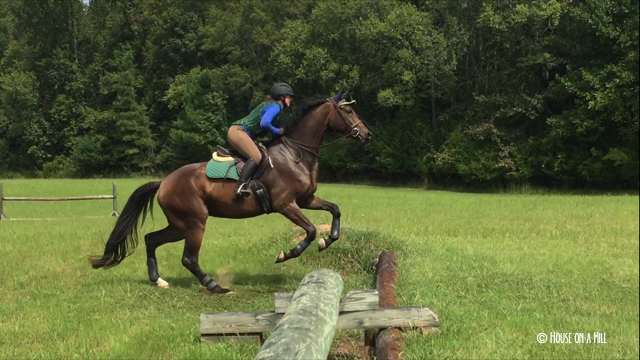
The first was a baby ditch, more like a swale with a ground line. But for a baby eventing horse, it was the perfect introduction. Walking and trotting over this proved to be no big deal, so we progressed onto eventing requirement numero dos- banks. The first attempt, he didn’t understand the question, but on the re-approach went up it like a champ. We trotted up it a couple times, then came back down it at a walk and trot. On landing, he happily cantered off without any drama.
Next up was the bowl, which we used to show him terrain and how to balance himself going up and down the steep hills. Bar one moment of exuberance, this too was no big deal. Onto the water!
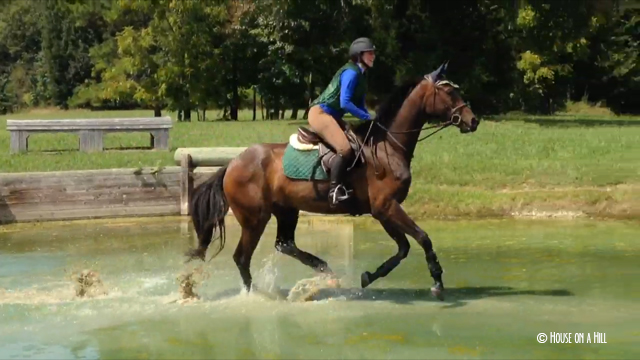
The water was interesting, because in its current state it was obviously home to frogs and dragonflies and a crap ton of algae. It took some minutes to insist to Smitty that it was truly water, and not some kind of toxic sludge. But as soon as he stuck his nose in it you could see the light bulb go on, and he marched through and around it without looking back. In fact, he cracked me up because when we went to exit the water, he took it upon himself to leap out!
To say I’m thrilled with our first adventure is an understatement. Smitty handled everything with as sensibly as a baby can, and really seemed to take to the idea of working out in the open. Now that I know that he can be such a good boy, I can’t help but think up all sorts of things that we can do next!
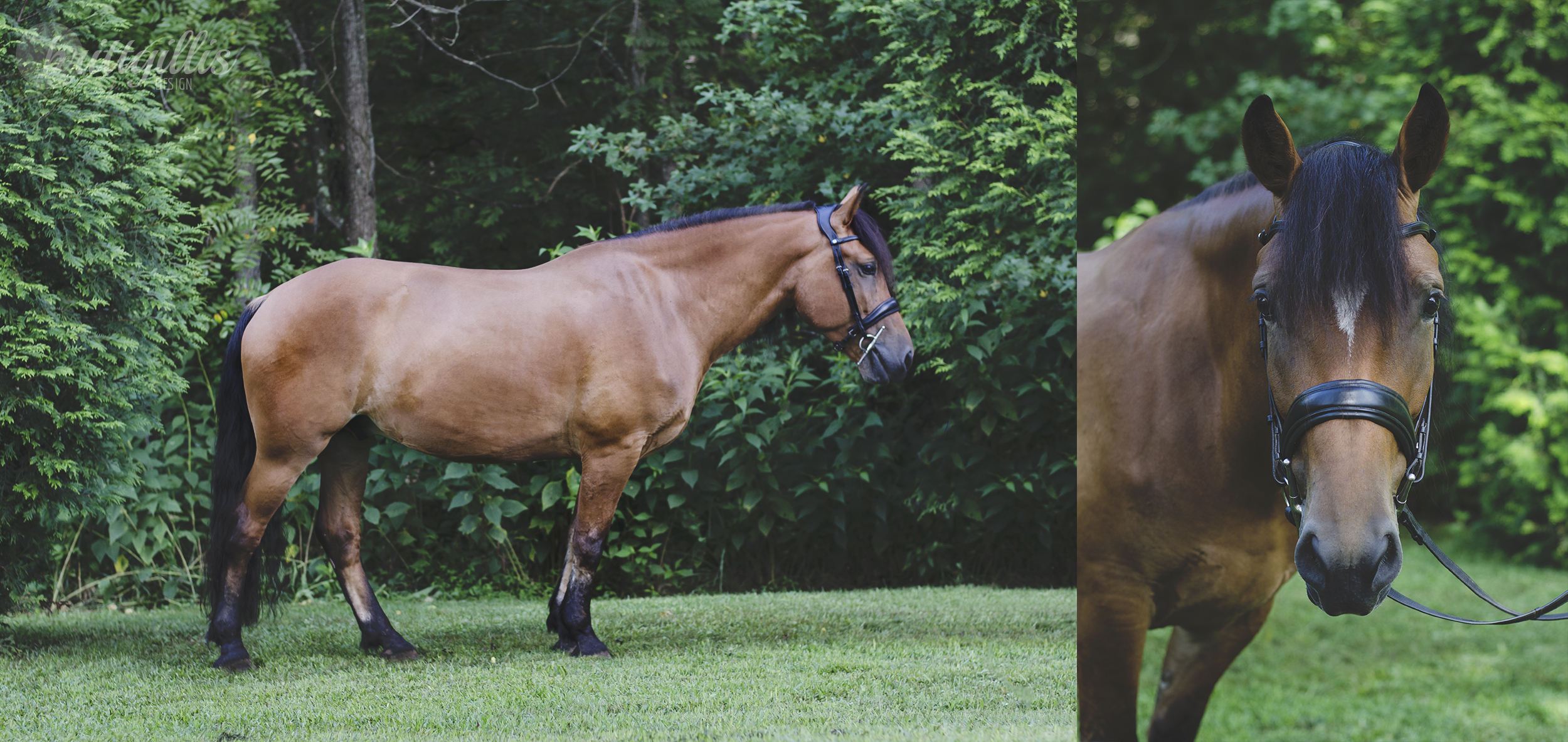
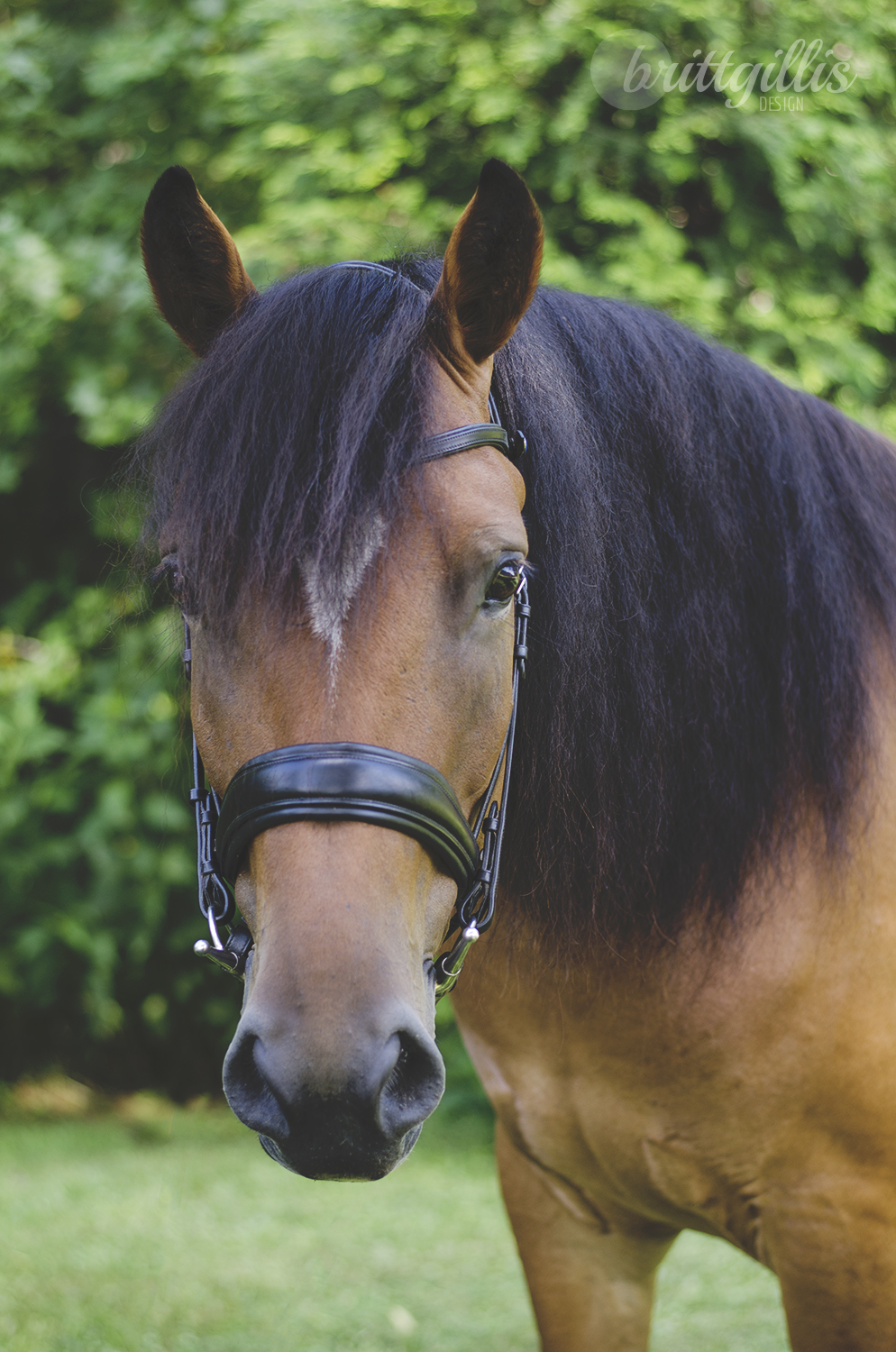
It’s been a few weeks since Riley returned home, and I won’t lie, I do miss this little lion man. Before we loaded up for the journey back though, I popped my beloved bridle on him and we took some photos of him sporting the fancy dressage pony look.
It’s a precarious place at the top of equestrian sports. In the age of social media, anything made public can be fodder to be lauded or reprimanded, and with an especially opinionated audience as we equestrians are, perhaps even more vehemently than the average Joe.
Decisions that elite equestrians make are quickly scrutinized, particularly when it comes to horsemanship, but also in terms of rider safety, as teachers and coaches, and even fashion choices are reflected on by the horsey public. For myself, for instance, I absolutely adore William Fox Pitt’s easy and quiet way of interacting with horses, and believe him to be one of the best riders in the sport of eventing. But his decision to ride in a top hat in dressage at the Rio Olympics, despite being in an induced coma just months prior due to head injury, left me with a poor taste in my mouth. I felt that it was a missed opportunity to be a good example of rider safety for the community, and I hate to say it, but those few minutes tarnished his shining reputation as a role model in my eyes.
Rolex 2012 with Mr. Fox Pitt himself
Those whose stars still shine brightly in my eyes include Charlotte Dujardin, not only for maybe being one of the prettiest ugly-criers ever, but for her obvious devotion to her riding and horsemanship. Doug Payne, as a master of all three rings and for his ability to bring his horses to the top levels of the sport from the ground up. I have role models in local breeders, who select not only for quality and conformation, but also breed for amateur friendly brains and instill great manners and thinking skills in their babies from the start.
Shit, let’s not talk about how pale I am, OK?
Who is your equestrian role model? What about them do you admire, and what example do you think they set that positively affects the greater community?
Now that I have had a couple days to catch up on sleep (14hrs my first night back- yikes!), I have begun to formulate some thoughts on the American Eventing Championship experience.
First off, the show was very well run. Unlike some of the local events I have been to, the Tryon International Equestrian Center was absolutely crawling with volunteers. There were so many scribes that signed up to volunteer that I actually got bumped to bit check, and overflow volunteers went wherever they were needed. The overall atmosphere as a volunteer was really positive, and the faculty made sure to make us feel welcome and appreciated throughout our shift.
Coming into this AECs, knowing that it was Tryon’s first, and the USEA’s largest, meant that growing pains and hiccups were to be expected. But wherever possible, the Tryon team was exceptionally quick to make improvements on the fly. When trailer parking was filled up, bulldozers graded the rest of a scrubby field within a couple hours to allow for more. Anywhere there was an issue with the footing on cross country, you could see that they were putting down sand and gravel immediately. In one instance, where a downward hill caused lots of problems on the first day, we returned the next day to find the entire hill sanded, an effort that probably took the better part of the night to make possible.
We squeezed our trailer into the last spot available (white bumper pull), only to come back and discover the trailer parking area had been doubled
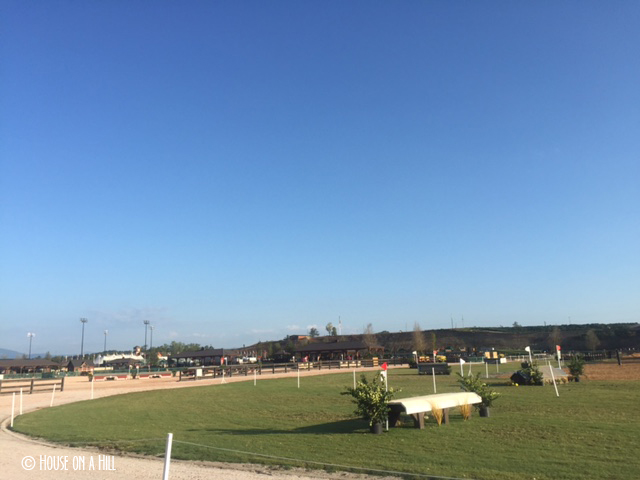
And while I won’t get into my own thoughts around the technicality, etc, of the cross country course in this post, I will say that the even was absolutely spectator friendly. With the help of jumbotrons and grandstands overlooking the derby field, it was well and truly possible to see a lot of each rider’s run. While the giant screens were turned off at the lower levels, it was especially cool to be able to watch the water complex go and still see the majority of each Advanced rider’s course. Say what you will, but there is a pro to this set up, and that’s that it makes the sport more accessible to spectators and the public in general, in that through these new ways of watching the heart and soul of our sport, they can more readily understand and appreciate the tasks we ask of our horses.
Lastly, the main takeaway from the AEC’s is that this wasn’t a dressage show, folks. There was a real shake up in the standings at all the levels after both cross country and showjumping. Time was a factor for sure, but also occasional bogey fences that really tested some pairs. For instance, the unsuspecting table pictured above caused plenty of problems for the Beginner Novice riders if they didn’t keep their horses’ attention after the change in footing. Showjumping had a lot of atmosphere, and demanded a forward and balanced ride. It was obvious which horses were less fit when the rails came pouring down.
While there’s certainly room for improvement, it should be noted that every effort was made to make the competition a true championship. Regarding some of the controversy… more on that in a later post.
So here I am, getting tucked into bed the evening of my first day at the American Eventing Championships. This is a wholly new experience for me, never having been to a championship event, and a new experience for the US Eventing Association. Not only is this a new, unseasoned eventing venue in general, coming attached to the pursestrings of some much discussed political characters, but it also happens to be a record setting debut- at over 700 competitors, this event marks the biggest in US Eventing history.
Because of all this novelty, both personally and as an organization, it’s a little difficult to compare to AECs of the past. But one thing is exceptionally obvious, and that is that this event is very…. pretty.
Karen and Mr. Medicott, Rolex 2012
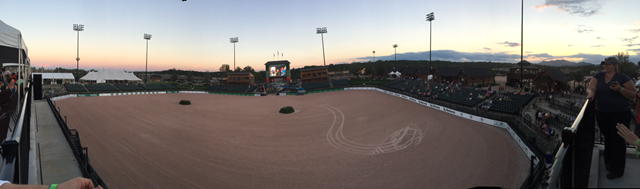
Don’t get me wrong, pretty is nice. Dressage is pretty. Hunters are pretty. But something about seeing an event be so gosh-darned-beautiful is just… odd. The fences are beautiful works of art, the lawns manicured to the nth degree. The water complex sports a jumbotron as its centerpiece. Hell, they served baked brie and beef wellington at the welcome party.
Rolex 2012
But when I think of this sport, I tend to think of the grit, and the sweat, and the tears, and the adrenaline of two hearts pumping as they race across the country. I think eventers are known for embracing a Get ‘Er Done attitude that sometimes doesn’t come across with the grace the other disciplines so easily assume.
Phillip Dutton and Fernhill Fugitive, Rolex 2012
Does this AEC version of eventing still jive with the “eventing culture” (described from my own biased view)? Can eventing be made pretty like some of the more popular [sponsored] disciplines and still retain its heart and soul? For those non-eventers, would you consider eventing if it more resembled the format (cross country derby style) presented in the Wellington eventing showcase? For the eventers out there- would you stay if cross country took on a slightly more technical, and less sprawling and terrain inspired approach? Weigh in!





















 Red on the Right