June Jump Lesson Recap

Sunday I took a lesson with a new (to me) trainer, in hopes of getting some feedback and confidence before heading down to Southern Pines this weekend.

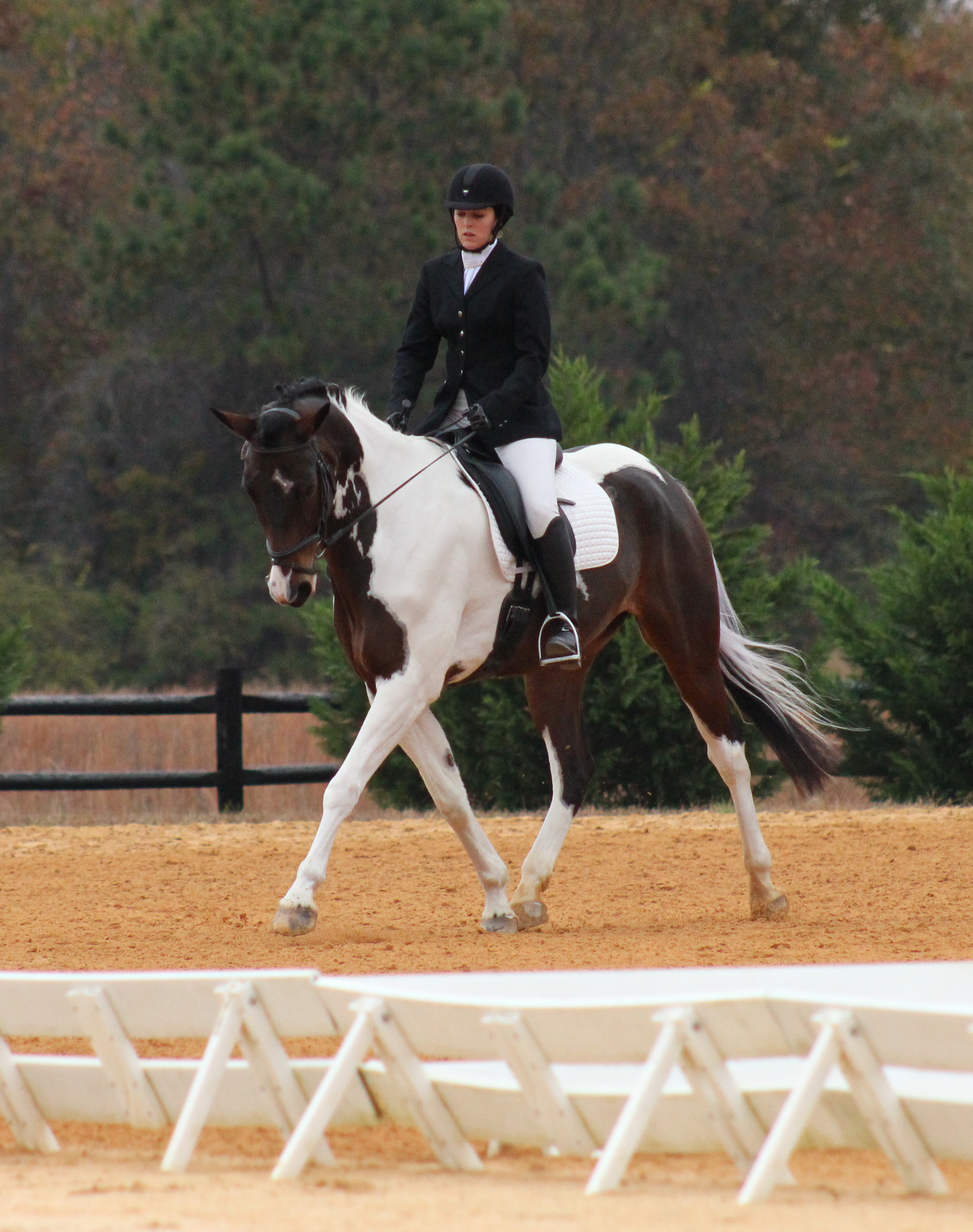
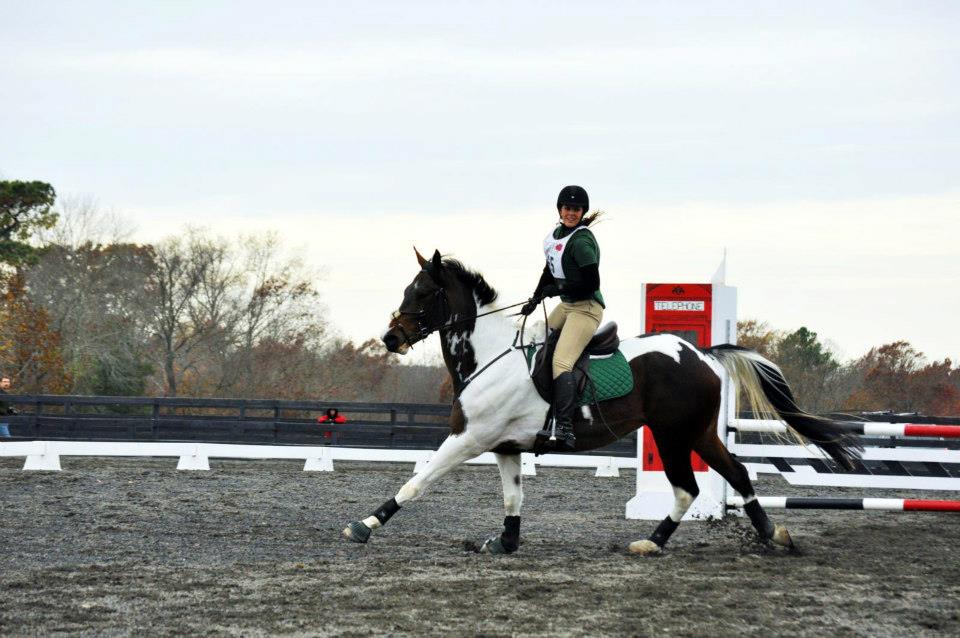
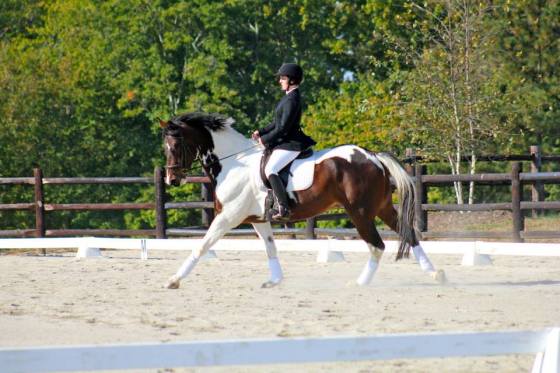
I started by explaining that half the battle is getting him responsive and in front of my leg, so we worked on cantering to walk, and throwing in some turn on the haunches or turn on the forehand before blasting off again. Foster was definitely not responding as quickly as I was demanding, and this may be a good exercise to get him listening right away and thinking about moving forward with gusto.

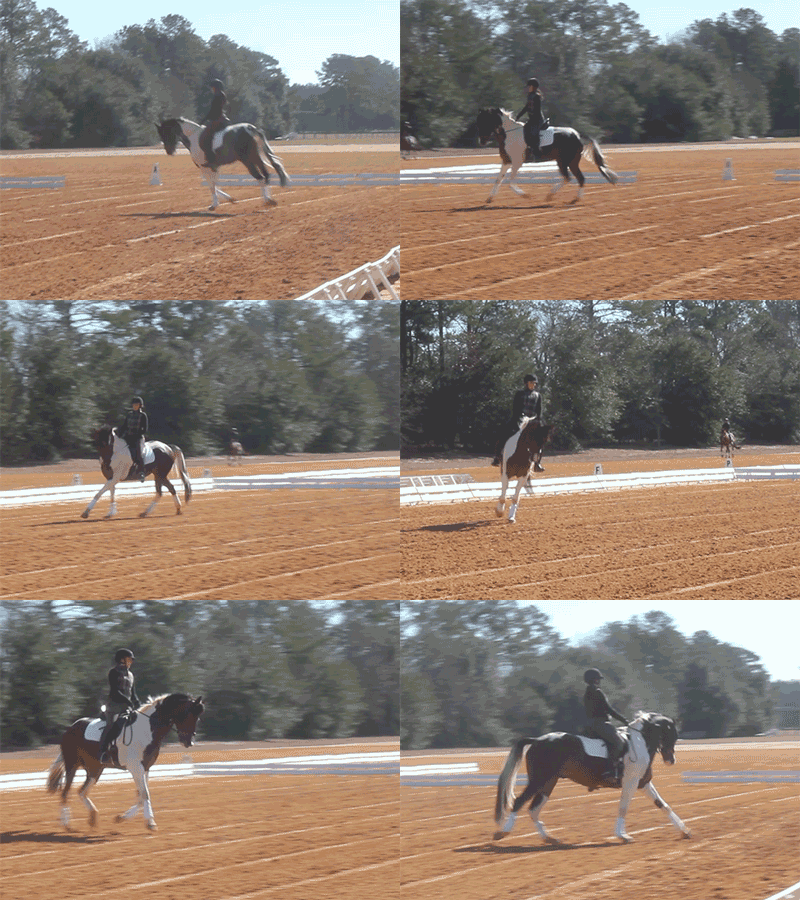
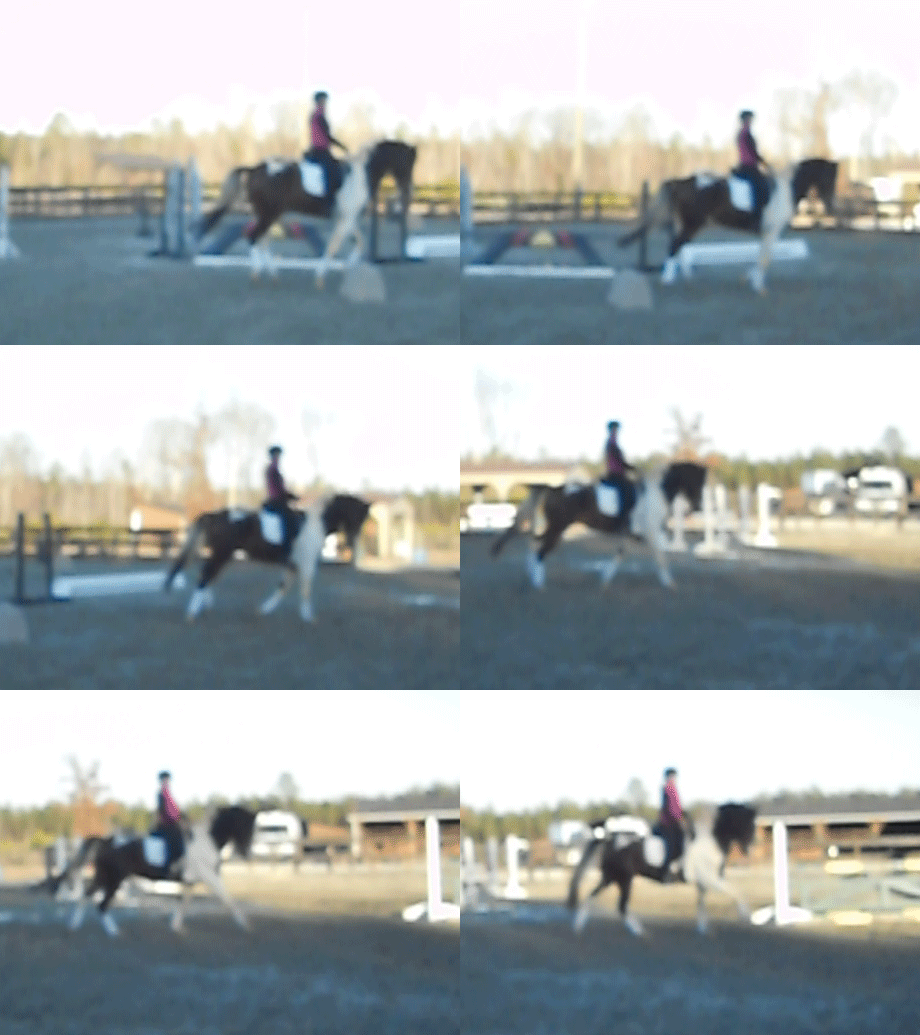
Getting a good canter back in February

Getting a good canter back in February

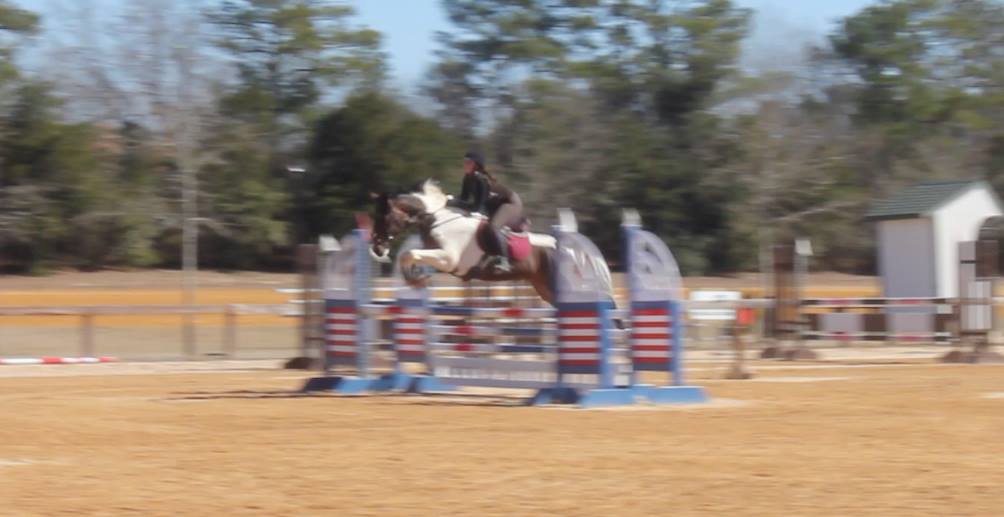
Then we proceeded to making a small circle at the canter over a pole, that then became a small vertical, that then became a larger vertical, and a few things became obvious:

  1. Cantering left, he wants to land on that left shoulder (no surprise there, that’s why we tend to land on the right lead)
    1. To fix, think about leg yielding him over the fence, before and after
  2. Cantering right, he still wants to lean on the left shoulder
    1. …so I need to think about pushing his haunches out, or bringing his shoulders in
  3. When we go straight over the fence, he tends to jump really flat and that’s when rails come down

In order to fix the last grievance, we then moved on to the next exercise:
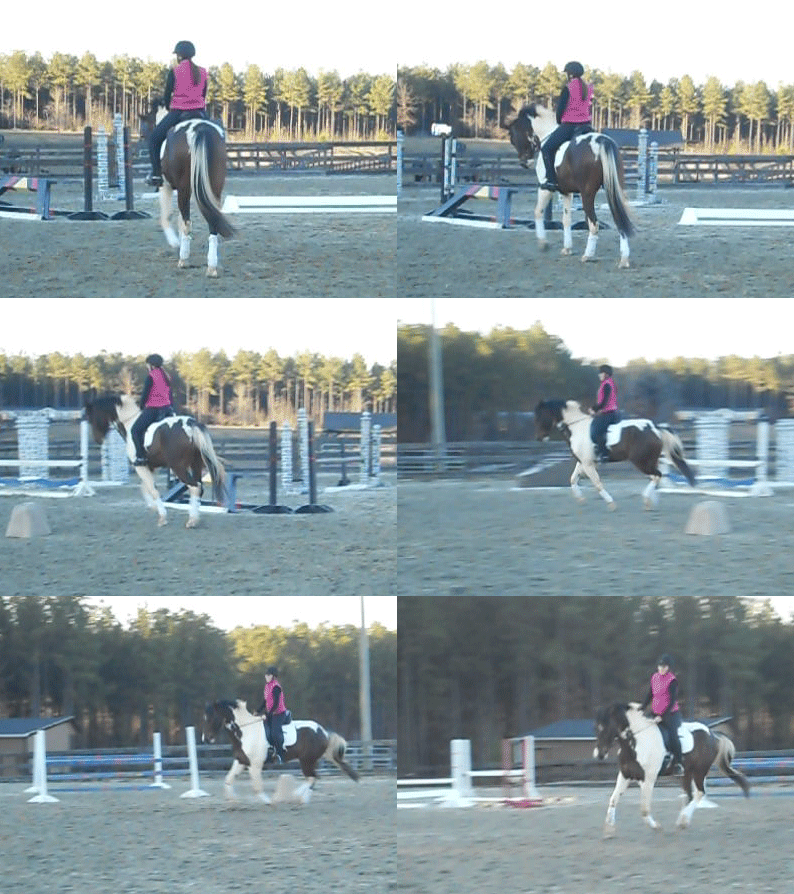
JumpLesson1

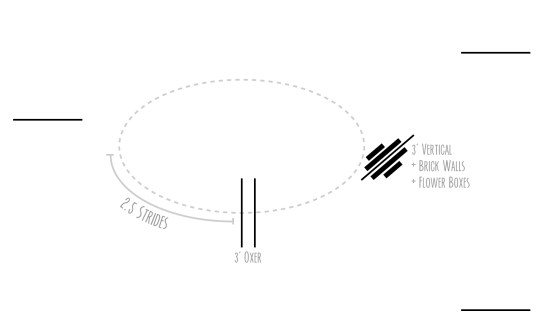
In which I made a very tight circle over an [increasing in size] oxer, opening my left rein to get him to land left so that we didn’t take out the super wide brick wall/vertical amalgamation. The trainer wanted him to be bending and moving over the oxer, thus keeping him from jumping flat and stagnant. And what do you know, it worked.

JumpLesson2

We then added in the above line, whereupon on re-approach to the oxer I would go “straight”, add in a circle around the vertical/brick wall and then back over a 2’9″ – 3′ vertical. This exercise helped me think about my landing, and not let him get strung out or dive between the fences as we are wont to do. Before it was brought up in height he crashed (once) through the last vertical, and we had a nice long talk about how it is Foster’s responsibility to figure some things out for himself, and if he doesn’t react I am to gallop away from the fence, teaching him not to die/not think in front of the fence but to react, preferably in a forward-thinking kind of way.JumpLesson3
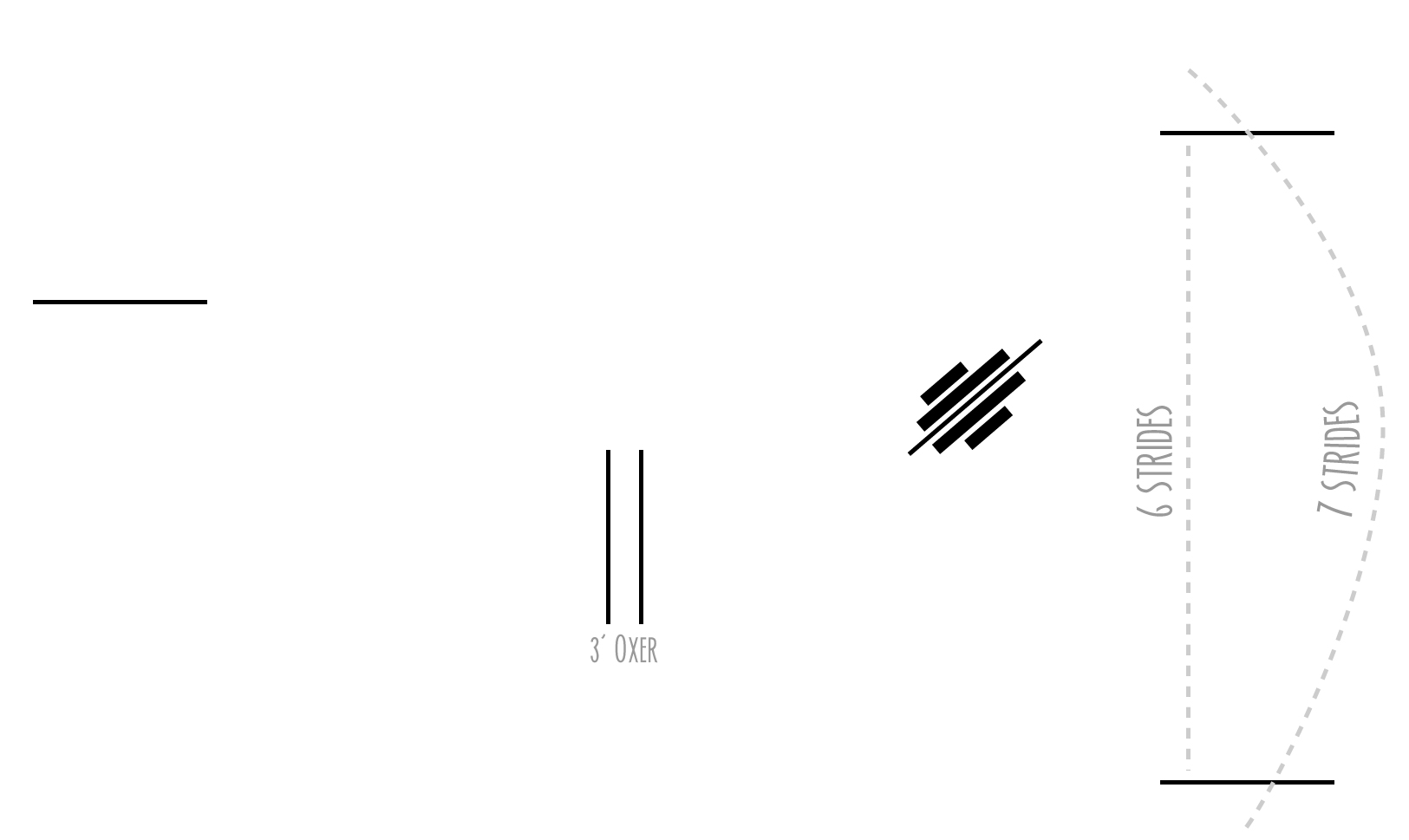
Because bending became the name of the game, we then moved on to putting a line together but adding a bend to it. The quality of the jump remained good over both of those efforts, and while I’m not sure I could realistically do this at a show, it was eye opening to see how much better the ride is right now with bend.
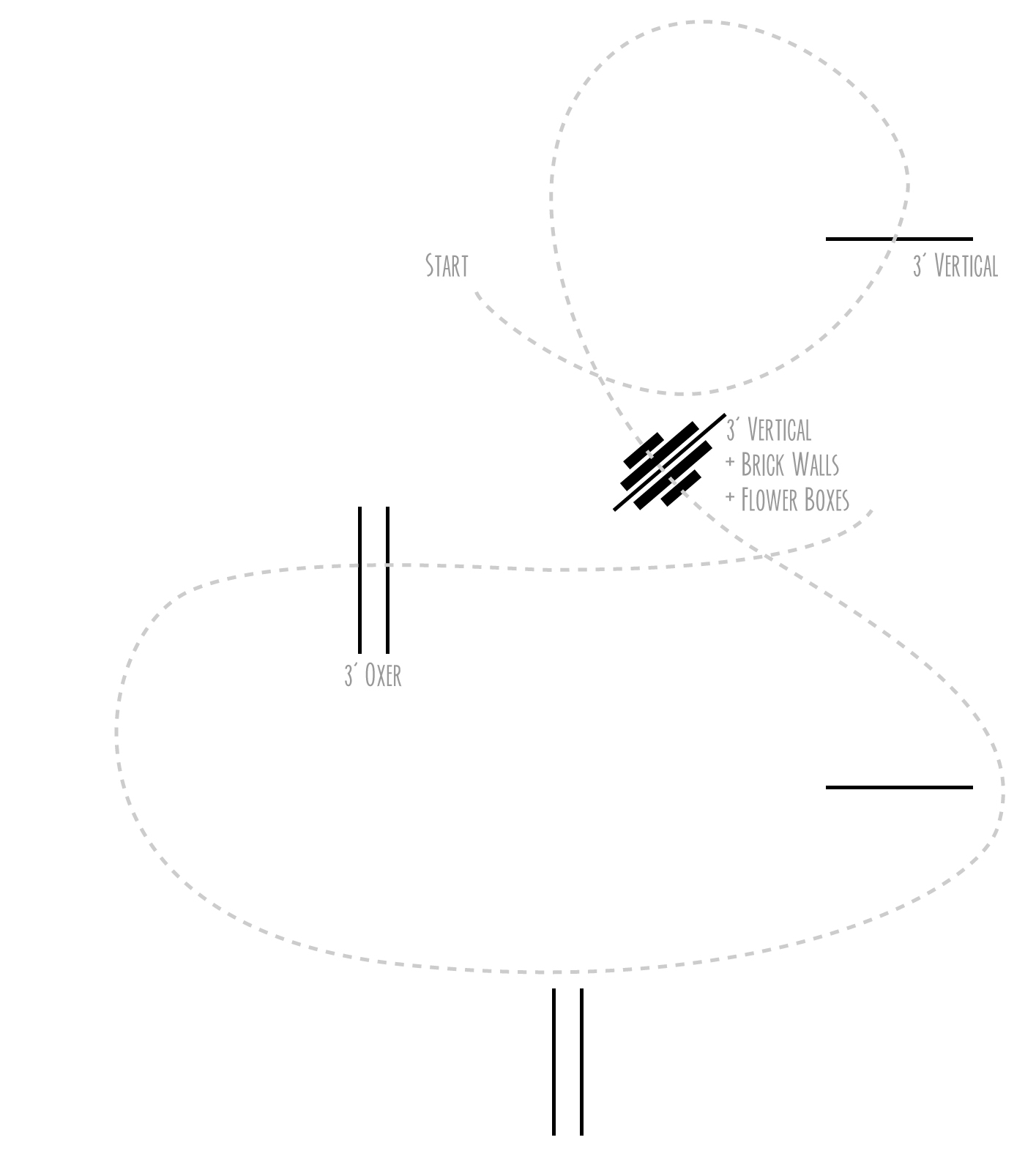
JumpLesson4To finish we did a very bendy course that allowed us to practice landing on the left lead. Going from right to left is definitely weaker for us, but as long as I really prepare it’s starting to happen more and more often. At this point in time Foster was also very in front of my leg, and feeling like he was putting in good effort over the obstacles.

All in all, this was a great lesson for us to check in and see where we are at. Getting a more forward pace is starting to feel more natural, though I’d like to see it on film before deciding if it’s the canter we need to do a 3’3″ course. I’ve realized that I need to be more specific about the landing that I want, and put some responsibility in Foster’s hands regarding the take-off. This was definitely the confidence boost I needed before seeing Bobby Costello this weekend!
 

Summer of Training

As in – take all the lessons!

Oh, you thought I meant that Training? You’re funny.

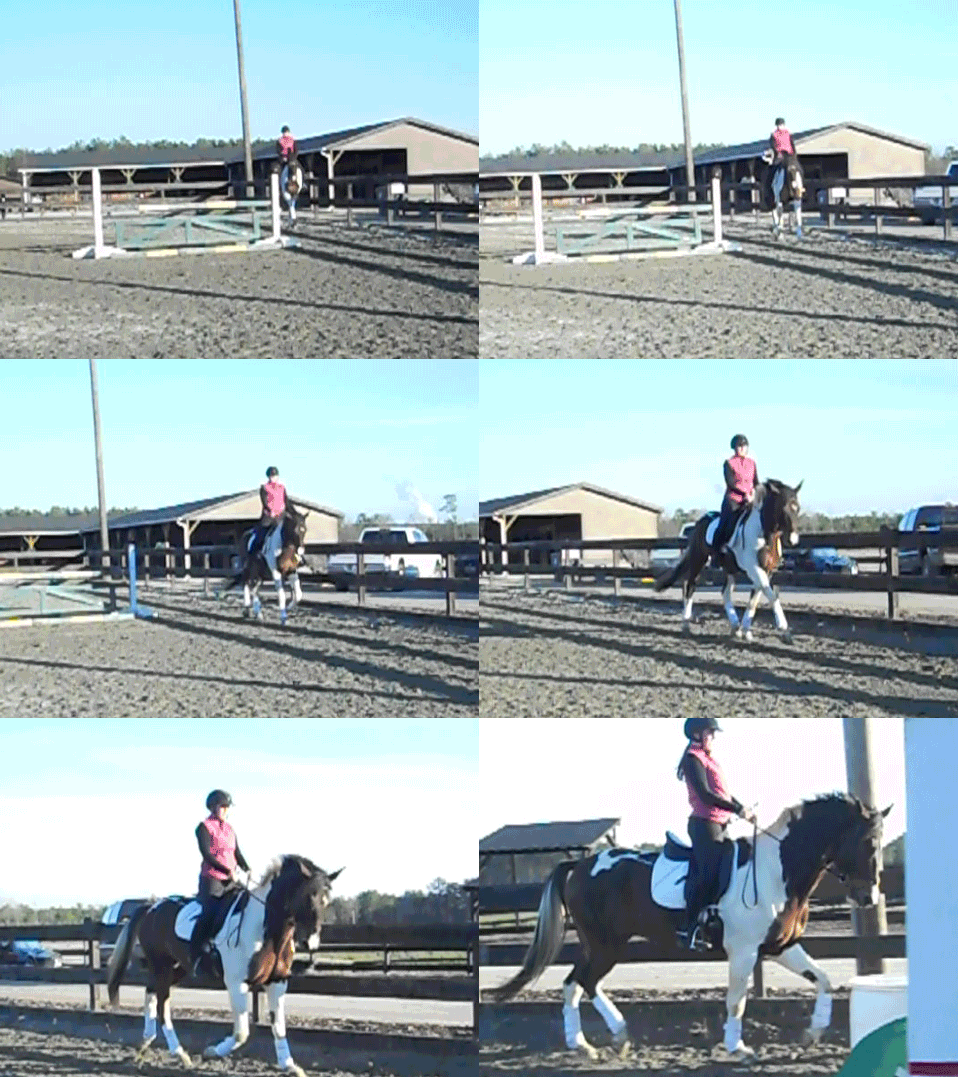
Training screenshot @ CHP Clinic. Feb 2015

Training screenshot @ CHP Clinic. Feb 2015

You remember back in April when I first made plans for the season? My already-revised show schedule looked like this:

  • May 30 – 31 NCDCTA Capital Dressage Classic
  • June 20 – 21 Dom Schramm Clinic (??)
  • July 11 – 12 Carolina Horse Park Schooling HT (Novice)
  • September 4 – 6 Five Points (CHP) Recognized HT
  • October 11 Carolina Horse Park Schooling HT (Training)
  • October 30 – November 1 Virginia Horse Trials (??)
  • November 8 Carolina Horse Park Schooling HT (Training)
  • November 22 MacNair’s CT (2nd level)

Well, take 5 competitions on that list and put a great big strike through them.

  • May 30 – 31 NCDCTA Capital Dressage Classic
  • June 20 – 21 Dom Schramm Clinic (??)
  • July 11 – 12 Carolina Horse Park Schooling HT (Novice)
  • September 4 – 6 Five Points (CHP) Recognized HT
  • October 11 Carolina Horse Park Schooling HT (Training)
  • October 30 – November 1 Virginia Horse Trials (??)
  • November 8 Carolina Horse Park Schooling HT (Training)
  • November 22 MacNair’s CT (2nd level)

Instead, I’m going to dedicate the summer and my pocket book to lessons. This because duh, we need lessons, and I think getting some professional help will be the best way to prepare us for that eventual Training move up. It will be somewhat of a bummer if we really don’t compete until October of this year, but at least that will save me from the potential heat stroke I’ll likely get if I attempt competing this summer- I can barely make it through a jump school right now at the heat of the day!

Our first item on the now-training-oriented-calendar is a two day session with Bobby Costello at the end of the month. Bobby was vastly helpful in helping me get Foster around the Training course at the Carolina Horse Park, and if he can do that in 5 minutes I’m excited to see what he can do in two lessons.

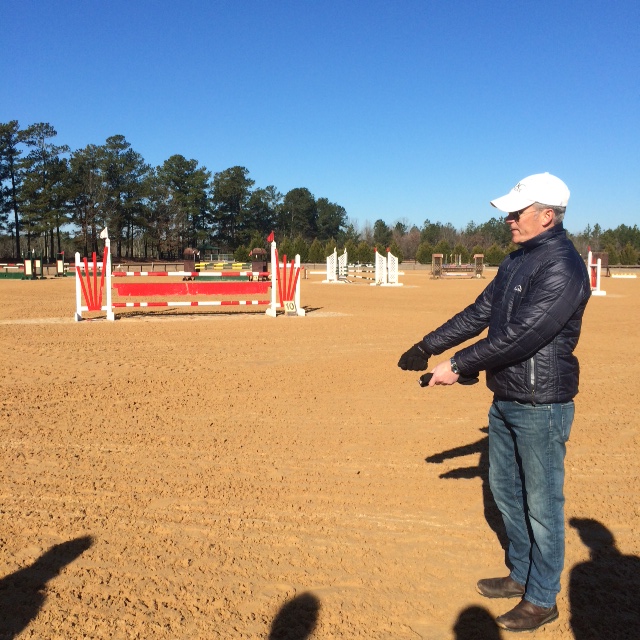
Bobby Costello shows us how to use both hands and outside aids to make a turn to 9

From the Clinic: Bobby Costello shows us how to use both hands and outside aids to make a turn to 9

From there, I’m eyeing a clinic at the end of July with a certain Canadian team coach (maybe maybe), and finding a jumping trainer who can fill the void at home while the Paynes work on eventing-world domination. We will see what happens!

Dressage Lesson Recap: A Checkup and Rein Backs

Monday night we had our first lesson since mid February. Since Foster is starting to feel so much better, I’ve been adding slightly more work and asking a bit more of him with each ride, but continue to feel his hind-end weakness as a result of having so much downtime. So I scheduled the lesson in order to have a professional assess the weakness and the program I have come up with, to see if I am heading in the right direction.

no new media- who wants to come play photographer for me? :)

no new media- who wants to come play photographer for me? 🙂

To make a long winding story short, all is well. After riding him for 15 minutes, Eliza agreed that if you really leg yield him to the left his weakness gets prominent, as he takes uneven steps getting worried about it all. Otherwise though she was happy with how he felt, especially his canter work. She felt that it was exactly right to insist that he do things correctly, and just keep it in short sessions until his fitness returns. It will be hard for him to stay straight for long periods until the strength comes back to that leg, but the only way it will get stronger is if he uses it.

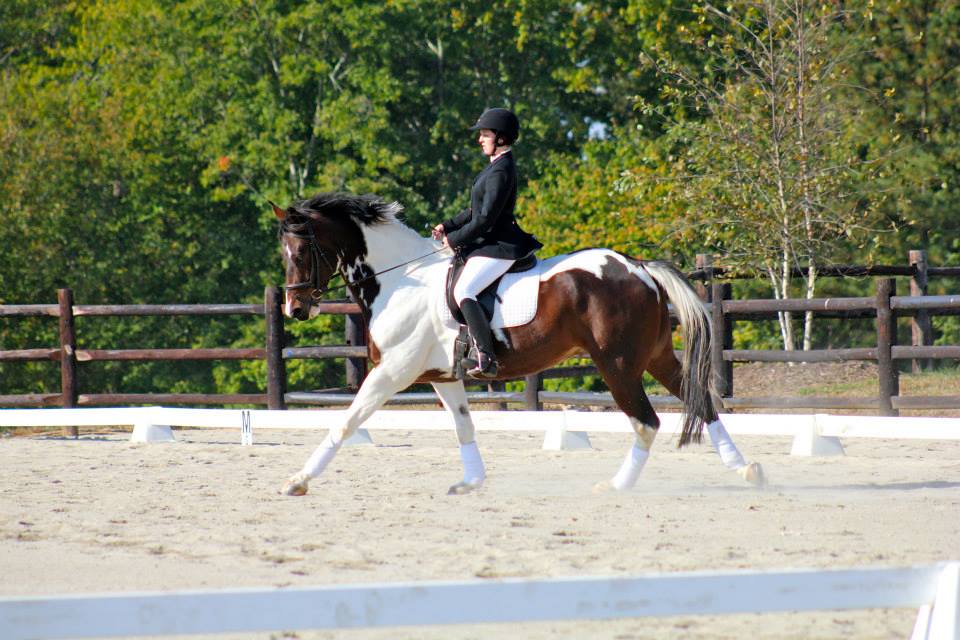
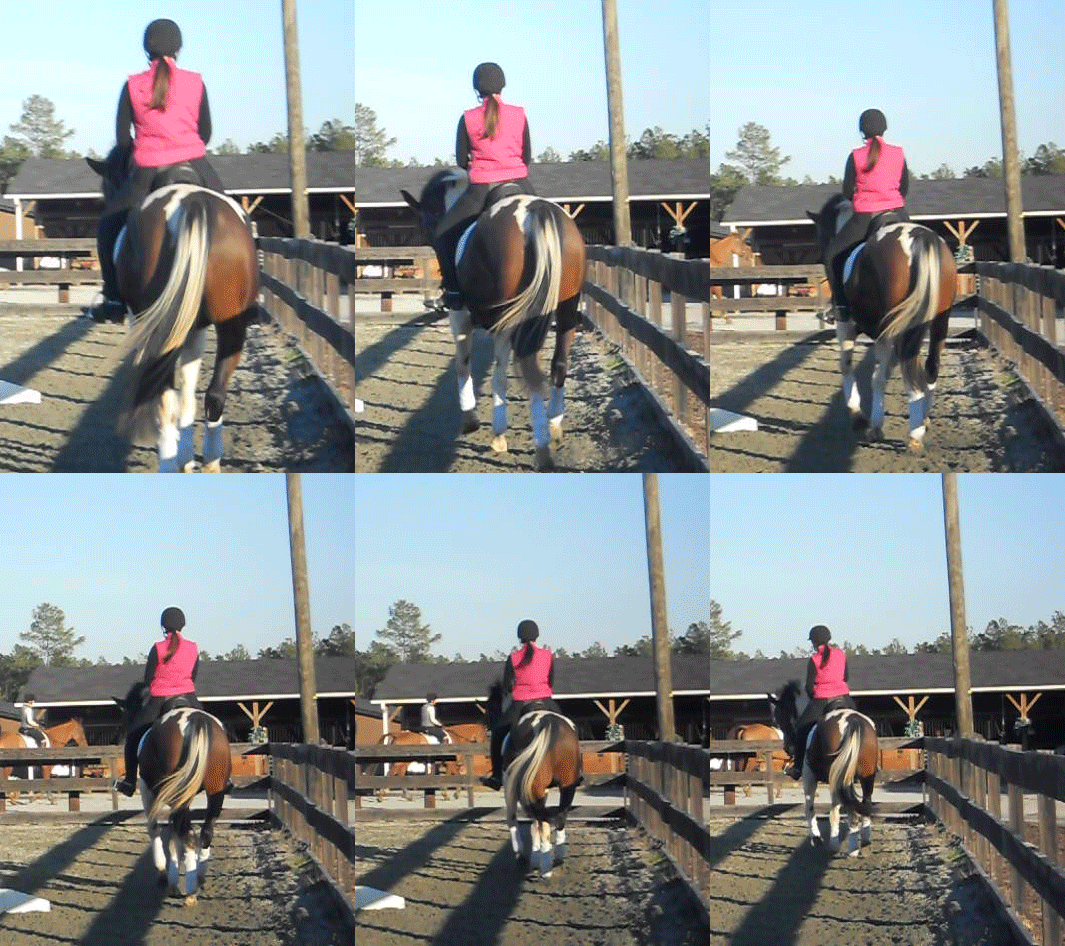
Also worked on making him use his abs at the canter and really lift his back, instead of cantering 'even' like this

Also worked on making him use his abs at the canter and really lift his back, instead of cantering ‘even’ like this

I also got the all-clear to practice walk-canter transitions again, which I am excited to hear. And for now, any and all lateral work at the walk will be great for him. In the past week I had started re-introducing shoulder-in and haunches in at the walk, so it will be fun to practice half pass and renvers in addition to these movements. Rein-backs as well will officially become [a small] part of our routine.

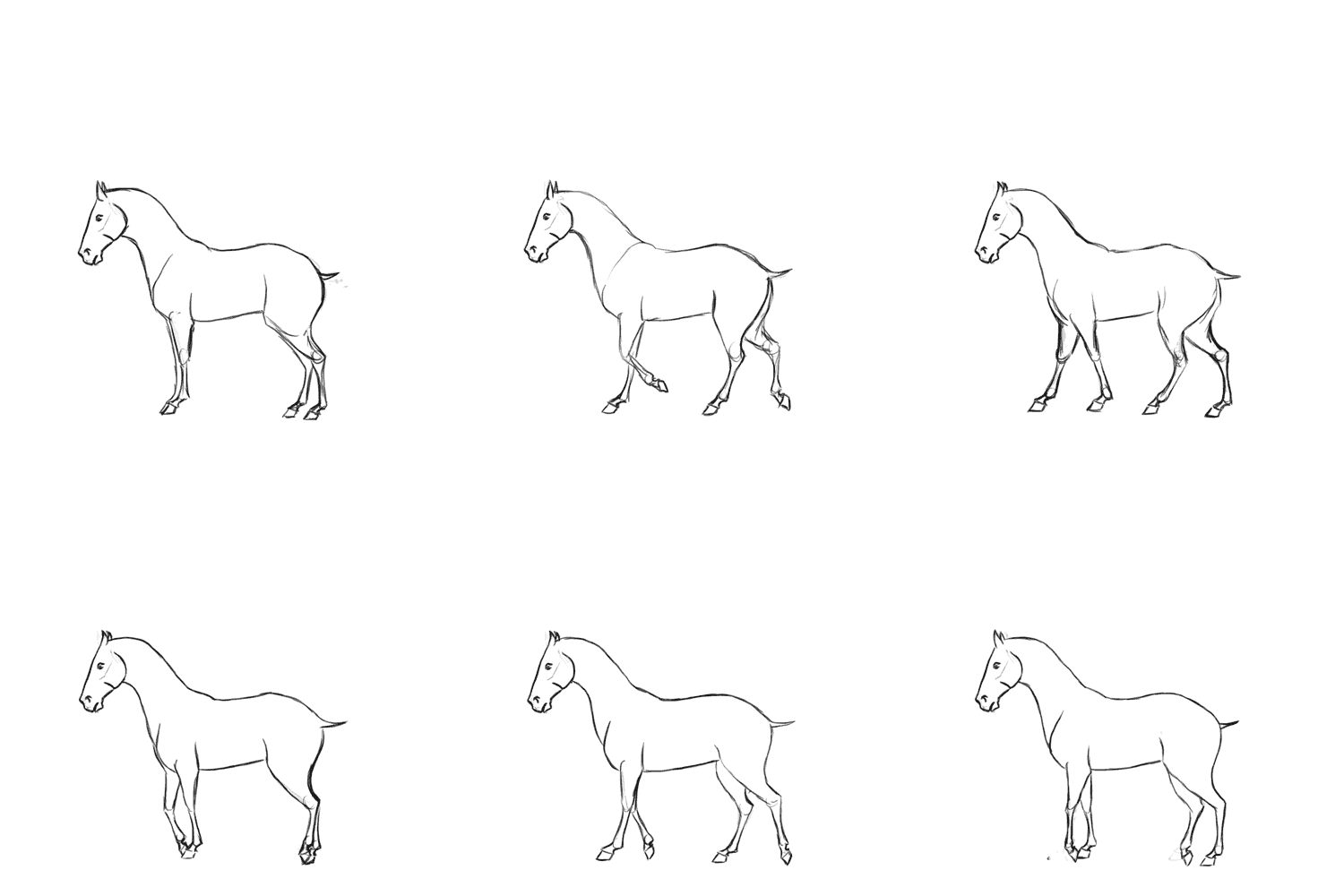
Gif by Citron Vert

The Rein-back. [gif by Citron Vert]

Since it has been, oh, 15 years since I last taught a horse rein-back, and knowing that in a test it is such an easy thing to go wrong, I wanted some feedback on the movement. A rein-back actually starts with a quality walk then halt. If the halt is crap, the rein-back will follow suit. So, square halt, soften then jaw, then put both my legs slightly back and even but light resisting aids with my hands. I’ll have to watch out for him dragging his toes, and staying soft through the jowl. But it was shocking how easily the idea came to him. How is this the same horse that in our early days, would stand with his jaw like a rock and refuse to give in any way shape or form?

Overall I am really pleased with how things are going, and am hopeful that the next scope will reveal a happily ulcer-free pony. Just two more weeks!!

Winter Weather and a mini Dressage Lesson Recap

Winter weather has officially hit North Carolina (and seemingly a lot of other places too), so obviously, pretty much everything that can be closed is closed. And of course the problem with living in a house on a hill is that when said hill ices over, you’re pretty much stuck anyways. So if you want to find me, I’ll be in my sweatpants working from home the next couple days.

The upside to all this is that everytime I look outside I think of this…


… and therefore sing all four parts to my husband, complete with cheesy railroad noises. I like to think I’m adorable, but I’m probably just hurting my chances on getting that next blog post out of him. Whatevs snow snow Snow SNOW SNOW!!!

Before the ice storm hit, I was able to squeeze in a dressage lesson and discuss  the feedback from the clinic. Foster had a couple days off after the clinic, then a long stretchy session to work out any kinks, so even though I hadn’t dressaged yet since the clinic, it was still helpful.

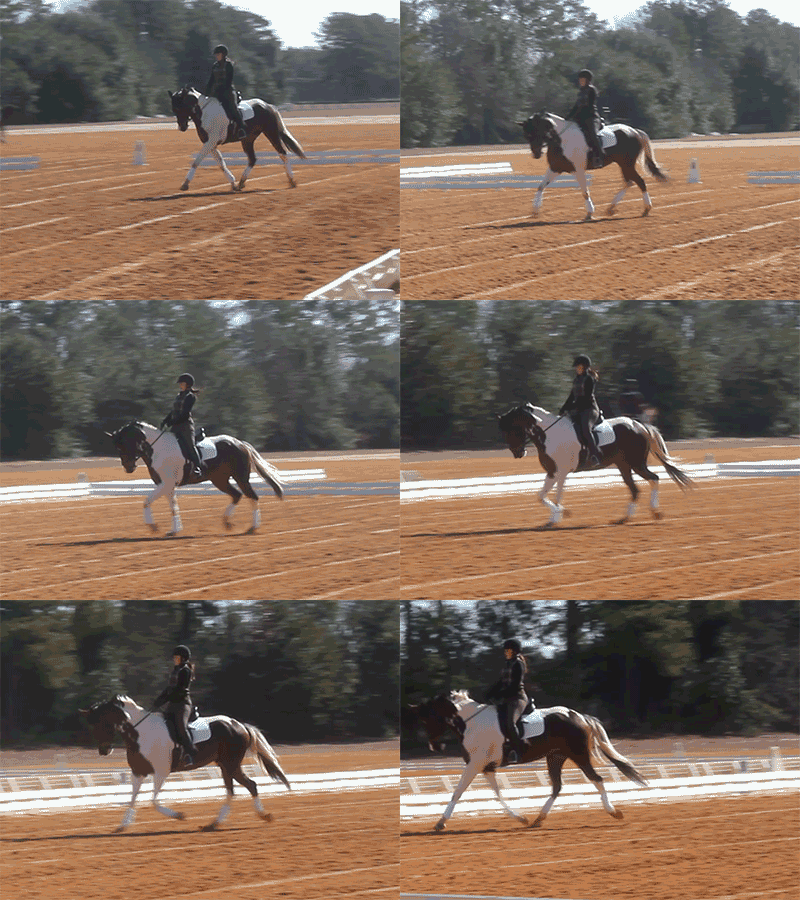
clinic canter

Basically the lesson was a repeat of lessons before in that there was a lot of emphasis on transitions within and between gaits, lateral work in the form of shoulder and haunches in, and more work on our lengthenings. Foster’s still figuring these out to some degree, and part of how he is dealing with the added ‘pressure’ of the lengthening is to curl under, so I’m learning how to get his poll up and keep him going, or for now, come back to the walk then try again.

trotlengthening

One of the most aggravating parts of my test was getting that 5.5 on the free walk, and so we worked on getting him to really take the extra stretch without rooting. Part of solving this problem includes my moving my hands towards his mouth (i.e, pushing my elbows to the fence!) so that he has even more ‘place’ to go. So obviously this is a feeling that I need to get the hang of in order to get the most out of my horse! Funny how habits transcend disciplines!

Weekend Wrap Up: Showjumping Lesson

I decided to be an opportunist this weekend and scheduled both a jumping lesson and a dressage lesson for Fosterpants, before his injections lay him off for a couple days this week. Because our normal showjumping guru has left town for the winter, I tried a lesson with a trainer that I enjoy chatting to in the aisle when she comes, thinking it couldn’t hurt to have a fresh pair of eyes on us over fences.

It turns out I have several habits that were quickly picked up on. Foster is bulging through his shoulders in both directions because I am using more inside rein than outside aids, and my upper body is getting stiff because I’m not breathing.

We started with a trot pole exercises that was deceptively hard- trot through poles set for working trot, then two strides later trot through another set set up for a more collected trot. This got Foster paying attention to my aids quite quickly and placed the responsibility on him to figure it out. Once we were able to go through this in both directions we moved onto gymnastics- a bounce to a one stride, where I learned that I was leaning left, causing Foster to drift, and I need to think about keeping even weight in both heels.

We then altered the gymnastic to just a one stride, and added on a few other fences to make a course. So one stride, then brick wall, followed by diagonal 5 strides combination ending on the pink oxer that I hate so much.

I got a couple deep spots in, which is irritating, and had a discussion about moving forward to the fence and thinking of attacking it rather than letting it come to me and focusing on the distance. I’m hoping to continue building confidence in this mentality and give it a whirl in a couple weeks when we get back to jumping again!

And also, I need to shorten my stirrups. Boo.

Things to Celebrate

A few things to celebrate this week! The first is Foster’s new bonnet he’ll be getting thanks to Amanda from the $900 Facebook Pony, who chose our logo as a runner up in her logo contest!

Runner up logo design

Runner up logo design

Secondly, the USEF reversed the helmet cam ban! Although event organizers can still prohibit the cameras, I’m hopeful that the majority will allow us to record our rides for learning and sharing with others.

And lastly.. Jurassic Park IV. It comes out on. my. birthday. I got velociraptor induced hysterics when I saw the trailer. So scared, and SO excited.

Also on the good news front, Foster was a stellar boy last night. I finally set up some canter poles in an attempt to get us started with cavaletti, and he was golden through them, even though they were a bit further apart than the 9′ I meant to make them, and he had to reach a bit in the canter. Continuing work on the walk-canter transitions as well, which we’re getting about 50% of the time. After watching back the videos (thanks Ali) I need to keep working on my elbows- it’s definitely the thing that goes to hell in a handbasket whenever things get hard. It’s always something though!

blurry, but the canter is definitely improving!

blurry, but the canter is definitely improving!

It’s about to get frigid cold here tomorrow, so I am desperately hoping to get a mini jump school in tonight before everything freezes over. We shall see!

Dressage Lesson Recap: Shoulder-In and Walk-Canter

Let’s just say, if you’re Foster, the last 6 weeks have been kind of cruddy from his point of view. Being left for 5 days, then lame 1, then returning to riding, only to get a chiropractic session and be back sore for 6 days, followed by another slow return to work, then left again for 4 days. Poor Fosterpants.

So it’s no wonder that he’s a little out of shape as a result of that mess. But I was determined to squeeze a Doug lesson in before he heads to the winter eventing mecca that is Aiken. After a casual jump school showed me just how not-in-jumping-shape he was, I decided to try a dressage lesson at his farm.

Hustle, son.

Hustle, son.

After telling Foster he was not going to be a lazy sod, we had a pretty bright warmup before moving into lateral work. Specifically, we worked on the quality of the shoulder-in. Immediately we were called out for getting a little shorter in his neck and in his step. Instead of constantly holding with my hands through the movement, I need to focus on keeping him soft (to inhibit neck-shortening) and think about lengthening throughout so we get more of a ‘swimming’ motion up front, and subsequent follow-through with the hind end. Another consequence of holding with my hands is that he will tend to lean into them, instead of carrying himself (self carriage) like the big-boy dressage horse he can be.

Asking for a bigger trot, then increasing the angle

Asking for a bigger trot, then increasing the angle

A few more notes about the shoulder-in work:

  • Start posting to allow for bigger trot (and less bracing), then start alternating, 4 steps posting-4 steps sitting
  • Put weight over outside hip- think about bringing the whole upper body over the hip, and not letting myself get crooked
  • Keep the inside leg at the girth, should not wander back
  • In a test, one shallow post is a good way to re-incorporate the idea of posting for reach/freedom
shifting weight over the outside hip

Shifting weight over the outside hip

After a brief break where we watched some theatrics from the farm’s residents, we moved on to walk-canter transitions. While we’ve been doing these in a jumping arena for some time, dressage quality transitions are still relatively new to Foster, and so a work in progress. This part of the lesson was somewhat simpler in theory, though just as hard (if not harder!) to execute. The main idea- straightness. We used counter-bend to bring his withers in line with the rest of his body (in the case of him falling to one side), then getting the inside bend before asking for the canter transition. It takes a bit of putting the pieces together before we get a clear transition, but with time and repetition, this is one that I hope will improve quickly. Also, it’s pretty fun to school. Bonus points for fun dressage.

walk-canter-left

Voila, canter.


Overall, the lesson was beneficial in keeping tabs on the quality of the work we are doing. I learned (er, was reminded) of many of the rider habits that I have that I can improve on, and have new visuals and techniques for improving Foster’s balance and suppleness through these more difficult exercises. Now, practice practice practice.

Dressage Lesson Recap – Starting Second Level

No rest for the wicked, as I’ve said before, and after a nice day off after the show, we had a dressage lesson. Now that the season is officially over, instead of doing test run-throughs we can now focus on new material, which will hopefully prepare us for next season and beyond.

Eliza mentioned that she thought we would work on the basics of piaffe this winter, since that is the extreme version of what we have been trying to teach him- to really sit on his hind end and stay active behind and light up front. Since I’ve never ridden the piaffe before, I can tell you the idea of such an upper-level movement is both daunting and pretty durn exciting!

Blue Hors Matine's famous piaffe

Blue Hors Matine’s famous piaffe

Similarly, we will also be spending a lot of time focusing on collection, lengthenings, and lateral work to teach him to lift his shoulders. We set a tentative goal for next year, which is to compete in a dressage show (which I haven’t done in a long time!), aiming to do a Second level test.

IMG_1174

Even though we set these goals at the end of the ride, the lesson did incorporate primarily Second level movements. We worked on collected walk, lots of trot-halt (for half a second)-trot transitions (for sitting back), lengthenings-to-collected trot, and collected canter (gosh this is hard).

Working canter

Working canter

We also spent a lot of time working on lateral movements within the walk. We started with 180° turn on the haunches, really focusing on making it super correct. I need to think about weighting my inside hip bone and keeping his haunches to the inside so he doesn’t leave them behind in the turn, as well as keeping my inside leg back so that he keeps the bend around it. Talk about a lot of coordination! And something new I learned- the turn on the haunches movement allows the horse’s back feet to travel about the size of a trash can lid, whereas the walk pirouette, which we worked on after, keeps the hind legs within the space of a dinner plate.

Since this post is already getting long enough, I’ll combine my other notes in bullet-point form:

  • Work on collection and lengthenings in one ride, suppleness in another – it is very hard at this point in his training to demand both within the same ride
  • Practice square turns at the trot for lifting his shoulders and turning, renvers as well
  • Lots of half-halts, remind him to carry himself
  • The moments in collected canter where he *almost* breaks are the moments where he learns
  • Walk-canter transitions set him up best for collected canter
  • Demand active hind legs from the first canter step

We’ve been busy, and so tomorrow I’ll tell you guys about the exciting cross country schooling we did his past weekend! Are you guys getting sick of all the recaps? Sorry!

Patterns in Training

I ride with two different trainers, one for dressage and the other for jumping. I find both of their methods to be helpful, encouraging, and effective in improving both the way I ride Foster, and Foster’s way of going. However, they have two very different backgrounds, and very different ways of teaching. So imagine my surprise when recently my lessons feel like déjà vu over and over again.

621841_10100806547120019_1491748611_o

A couple lesson cycles ago, the emphasis on the flat and within our jumping canter was on the under neck. Specifically, re-teaching Foster how to balance himself within and between the gaits with a more correct, supple topline. At the same time, again in both lessons, we were also asked to create a much more active canter behind. Coincidence? I think not. Since then, I have been working hard to make his canter ‘bounce’ and not get flat like he wants to do. It was a mark of success to me, then, that when a very talented dressage rider at my barn hopped on him last week while I took a breather she specifically called out the quality of his canter in a complimentary way. An 8 on a canter circle at the last show, and an improved feeling in showjumping similarly confirm some improvement.

Yeah, I'd say our showjumping canter has improved...

Yeah, I’d say our showjumping canter has improved…

Now, in the last week or so, yet again I am hearing similar advice in my lessons. In our jumping warm-up, legthening-to-collected transitions help get him listening and in front of my leg, but I am constantly being told that the transition is not sharp enough, and that he shouldn’t take so long to transition within the gait. On the same note, in my dressage lesson Wednesday, I learned that I need to make him more reactive. Coasting along in a pretty frame is not going to cut it anymore, and I should feel like I have both a halt and lengthening accessible at any point in my ride. Right now, I have those tools, but within a matter of  2 to 3 strides.

580554_10200952033138301_1514424813_n

Seeing these patterns within my lessons tells me several things. The first being that these issues are not to be ignored, and that solidifying these skills will make his job easier whether it be over fences or in the dressage court. The second is a sense of confidence in the training program I have, that there is consistency between the trainers I employ even though we are not working on the same things.

430637_10100950863713409_241253961_n

It is now my responsibility to school him in the way they advise, and raise my standards so that Foster and I can continue to grow together and improve our abilities. Time to expect more from him, and myself as a rider/trainer. Adult amateur though I may be, it’s my influence that will over time have the greatest impact on him, as it’s my butt in the saddle first and foremost. It’s our moment to up the ante!

Another day, another Showjumping lesson recap

Had another excellent showjumping lesson last night. And not only because of the knowledge gained, but also because of the chance to see friends I don’t normally see! Always a great perk 🙂

As in lessons before, we worked on getting Foster sharp to my aids. Go means go now, not ‘get up to speed when you’re ready’. Similarly, collect means come back to me now, and not when it’s convenient for you. It takes me a few attempts to get Foster listening, but when I finally do it makes a huge difference!

Foster thinks GO should be a subtlety

Foster thinks GO should be a subtlety

Once we had warmed up, we started with some rollback exercises. Balancing through the turns became key, and I got schooled in when to look at the fence versus when to turn to the fence. My timing is not great on this, and we had some super squiggly approaches to start! Similarly, after the fences I am in the habit of getting far too blasé about where we go, and planning (and riding) the back side of the fence is just as important. This became the theme of the lesson in many ways- don’t stop riding just because you jumped the jump!

rollback

One rollback, and landing on the wrong lead like a boss

I expressed the need to jump fences that were a little higher (3′ versus 2’9″) because I have felt a niggling anxiety creep in every time I jump something ‘bigger’ these days, afraid that I will get him deep and underpowered to the base of the fence (PS this is a SUPER annoying new development, since we have been jumping 3′ forever, and even up to 3’6″ for a long time). So eventually we worked up to a 3′ mini course that incorporated both rollbacks and long approaches. I was immediately called out on speeding up to the square oxer, as my anxiety took over and I attempted to throw ourselves into the abyss.

It gets said over and over again, because it’s true: creating a quality canter is the key to successful jumping.

So much to practice!