June Jump Lesson Recap

Sunday I took a lesson with a new (to me) trainer, in hopes of getting some feedback and confidence before heading down to Southern Pines this weekend.

I started by explaining that half the battle is getting him responsive and in front of my leg, so we worked on cantering to walk, and throwing in some turn on the haunches or turn on the forehand before blasting off again. Foster was definitely not responding as quickly as I was demanding, and this may be a good exercise to get him listening right away and thinking about moving forward with gusto.

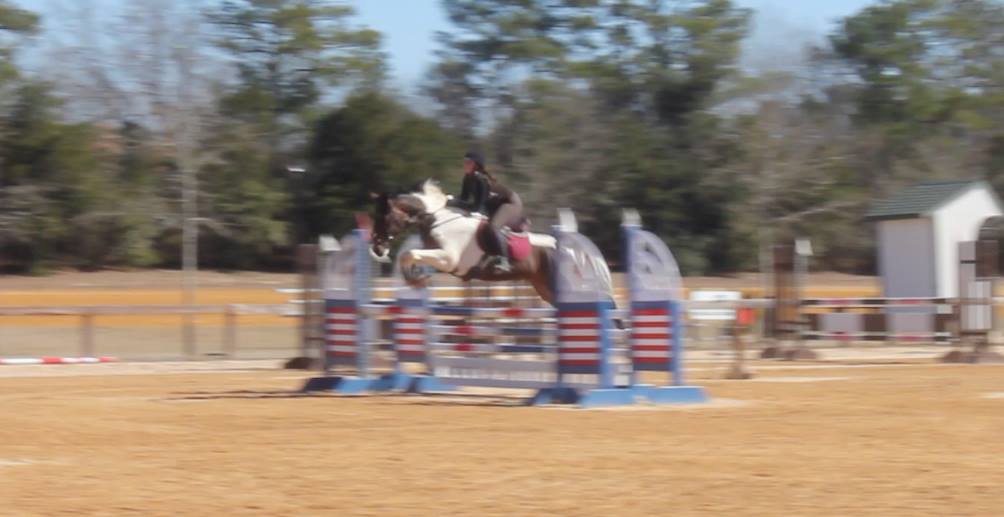
Getting a good canter back in February

Getting a good canter back in February

Then we proceeded to making a small circle at the canter over a pole, that then became a small vertical, that then became a larger vertical, and a few things became obvious:

  1. Cantering left, he wants to land on that left shoulder (no surprise there, that’s why we tend to land on the right lead)
    1. To fix, think about leg yielding him over the fence, before and after
  2. Cantering right, he still wants to lean on the left shoulder
    1. …so I need to think about pushing his haunches out, or bringing his shoulders in
  3. When we go straight over the fence, he tends to jump really flat and that’s when rails come down

In order to fix the last grievance, we then moved on to the next exercise:
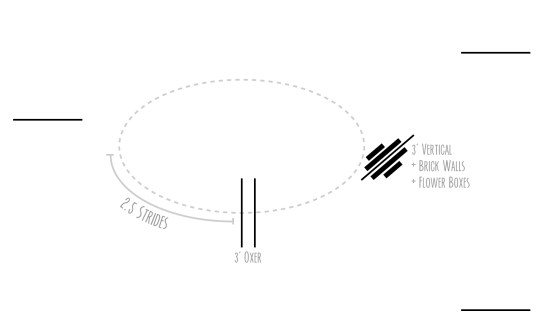
JumpLesson1

In which I made a very tight circle over an [increasing in size] oxer, opening my left rein to get him to land left so that we didn’t take out the super wide brick wall/vertical amalgamation. The trainer wanted him to be bending and moving over the oxer, thus keeping him from jumping flat and stagnant. And what do you know, it worked.

JumpLesson2

We then added in the above line, whereupon on re-approach to the oxer I would go “straight”, add in a circle around the vertical/brick wall and then back over a 2’9″ – 3′ vertical. This exercise helped me think about my landing, and not let him get strung out or dive between the fences as we are wont to do. Before it was brought up in height he crashed (once) through the last vertical, and we had a nice long talk about how it is Foster’s responsibility to figure some things out for himself, and if he doesn’t react I am to gallop away from the fence, teaching him not to die/not think in front of the fence but to react, preferably in a forward-thinking kind of way.JumpLesson3
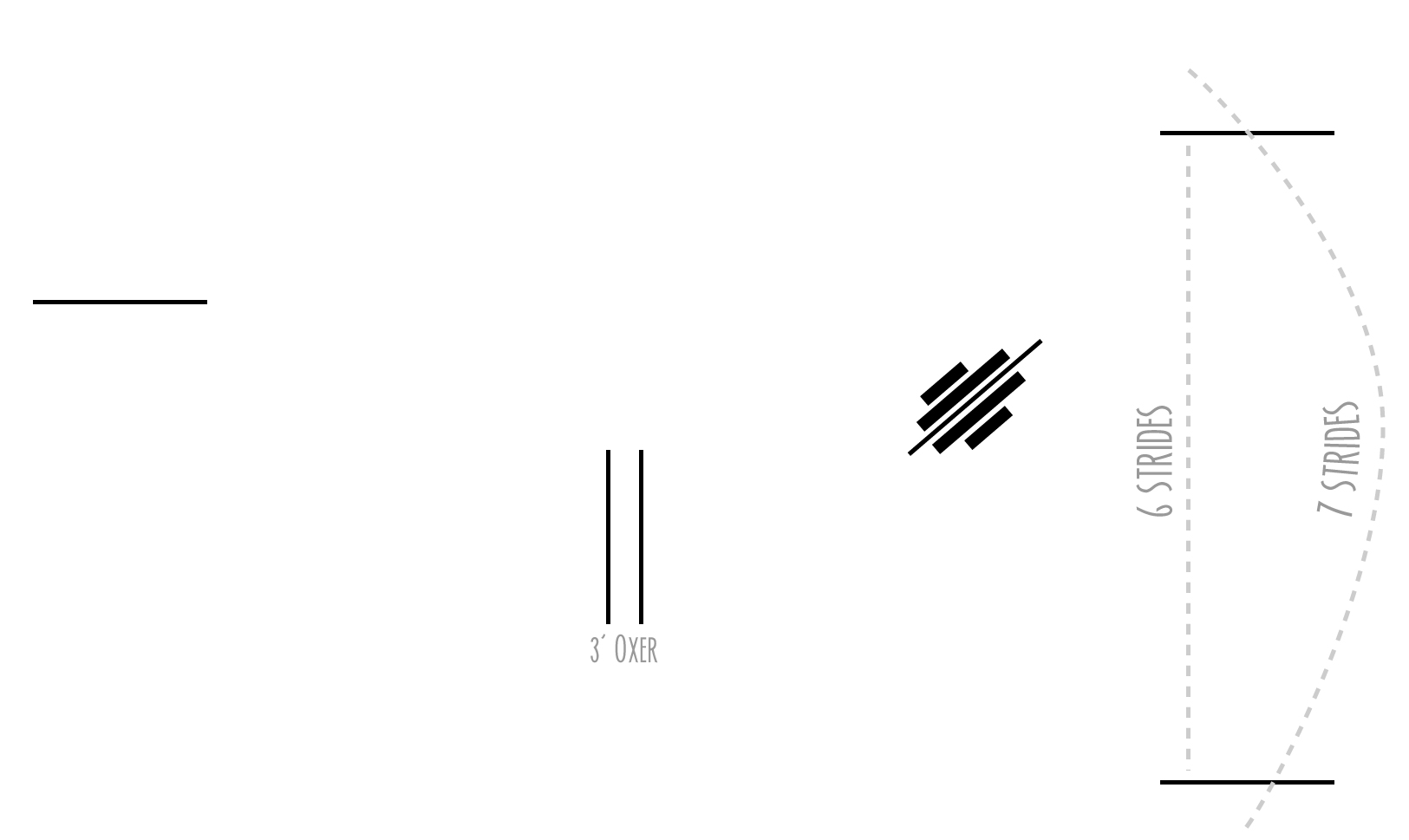
Because bending became the name of the game, we then moved on to putting a line together but adding a bend to it. The quality of the jump remained good over both of those efforts, and while I’m not sure I could realistically do this at a show, it was eye opening to see how much better the ride is right now with bend.
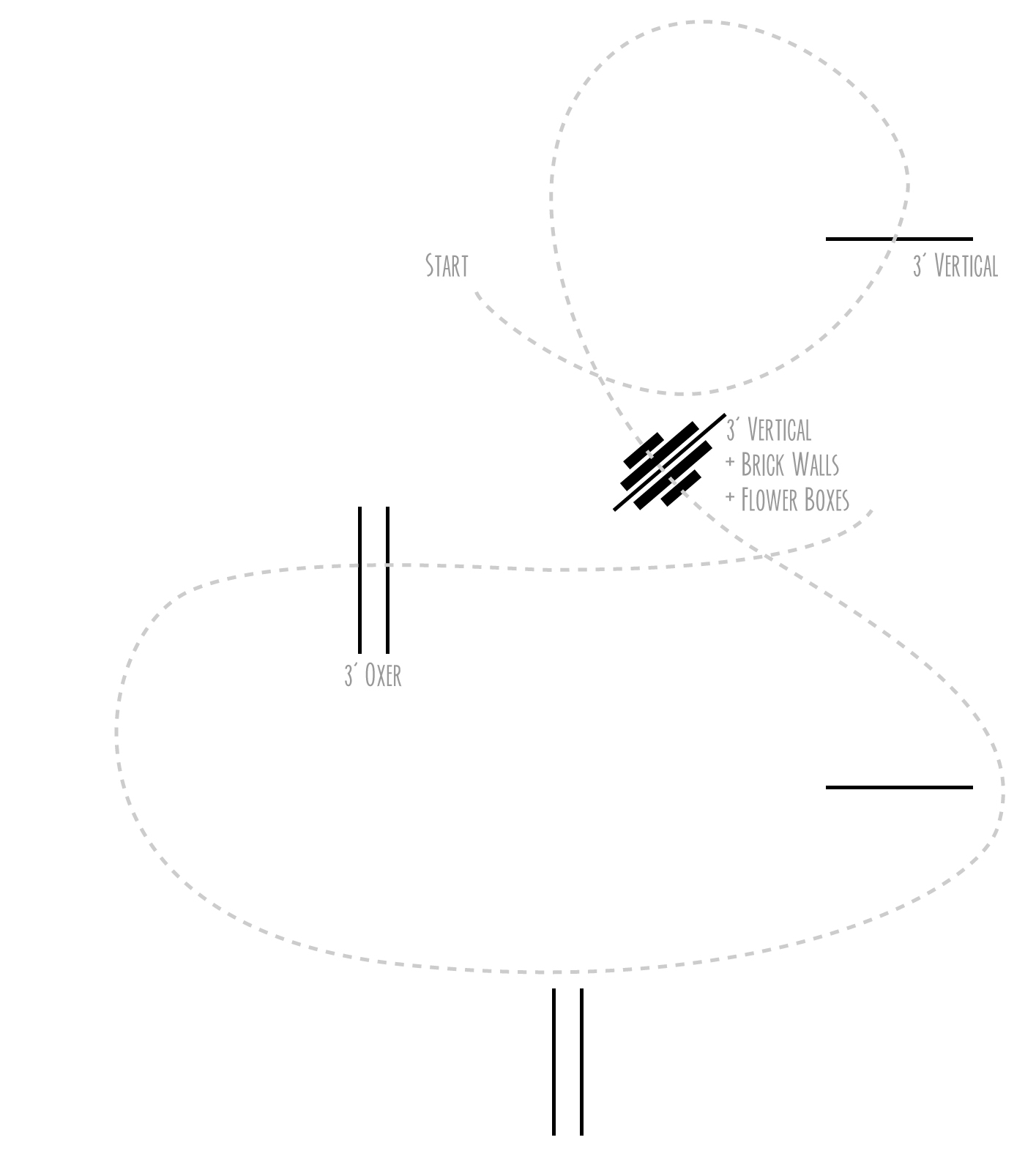
JumpLesson4To finish we did a very bendy course that allowed us to practice landing on the left lead. Going from right to left is definitely weaker for us, but as long as I really prepare it’s starting to happen more and more often. At this point in time Foster was also very in front of my leg, and feeling like he was putting in good effort over the obstacles.

All in all, this was a great lesson for us to check in and see where we are at. Getting a more forward pace is starting to feel more natural, though I’d like to see it on film before deciding if it’s the canter we need to do a 3’3″ course. I’ve realized that I need to be more specific about the landing that I want, and put some responsibility in Foster’s hands regarding the take-off. This was definitely the confidence boost I needed before seeing Bobby Costello this weekend!


Tami Batts Clinic Recap

Saturday I spent the day about an hour away, where USDF gold medalist and “S” judge Tami Batts was giving a dressage clinic at her own Fellowship Farm. I won’t lie, one of my primary reasons for making the trip was to spend the day with an old friend and meet her new Trakehner mare, Rea. Besides investing in my dressage education, the clinic also gave me the opportunity to try out my “fixed” camera- which was wonderful and means that I finally have new [dressage] media!

Tami-Batts-clinic-mare

Unlike the Janet Foy/Chris Hicky clinic I audited a few months prior, Tami spent somewhat less time on theory and put more emphasis on each horse and rider combination’s effectiveness of training. She would also check in with the audience every so often to discuss how we thought the pair would score in an actual test, either for that movement or in the Collective scores, and then work with the pair on how to improve those scores, which was really insightful for those of us watching it happen.

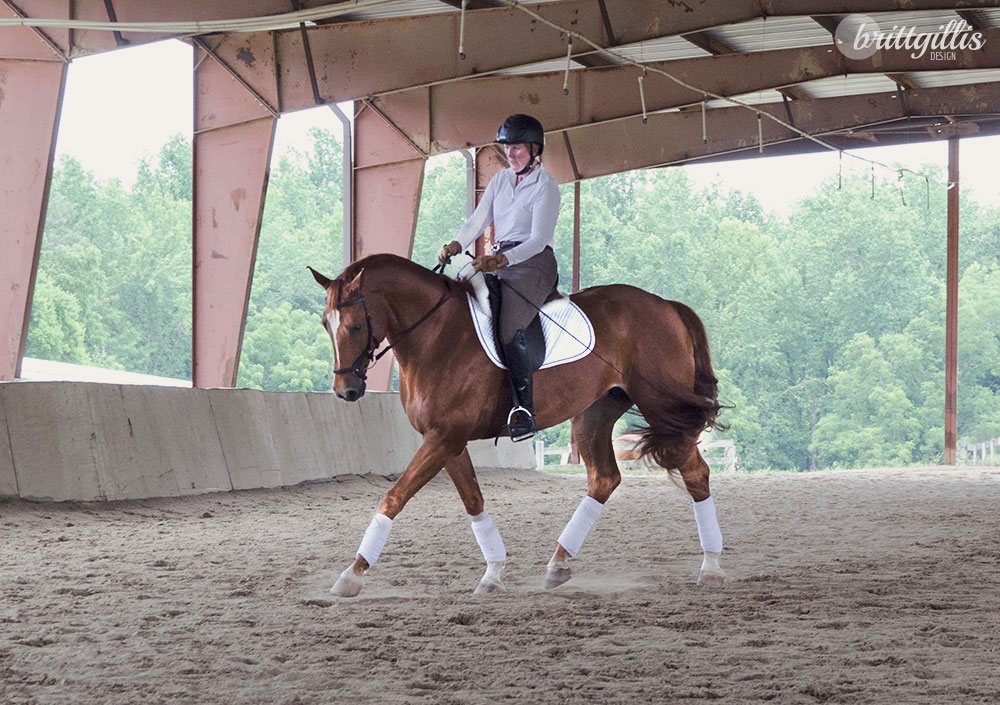
Rea and N in action

Rea and N in action

From each session, I gleaned bits of knowledge that I thought could be applied to most horses, or that specifically could help my own horse. Sometimes this involved the rider’s position or approach:

  • For the canter to trot downward transition (and I quote): Put your crotch in the saddle and sit up!
  • In the half-pass, the inside leg is the smart leg- it keeps the horse bent and keeps the ribcage lifted
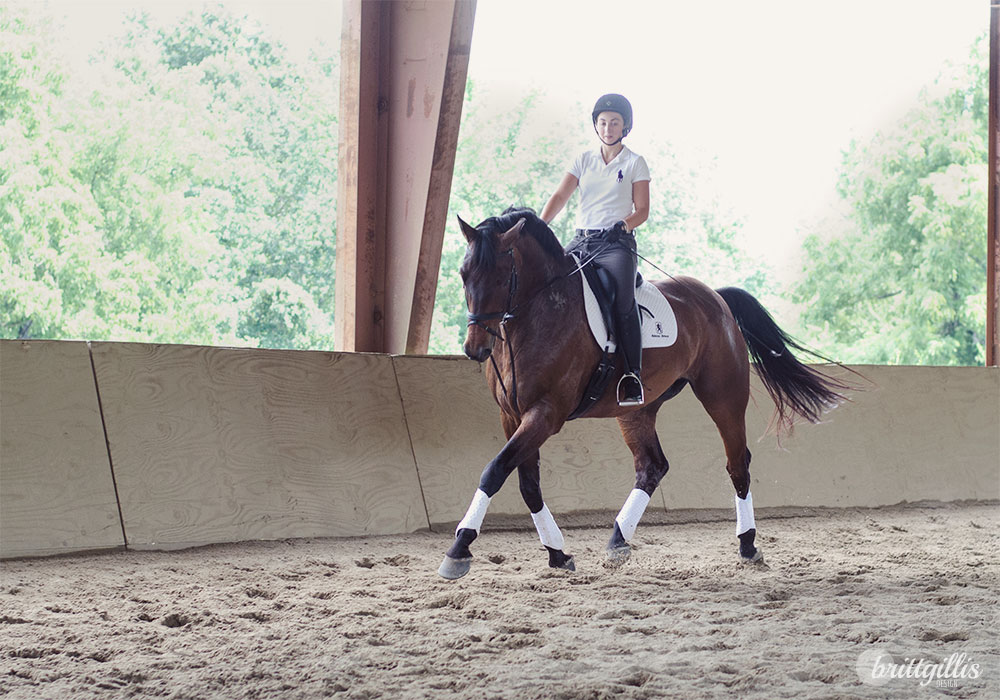
I developed a girl crush on this mare

I developed a girl crush on this mare

Or how to warm up a horse:

  • Think of the warmup like lunging, just getting the trot out
  • Get the horse moving forward until all the steps have push/engagement/bounce from behind

Tami-Batts-clinic-mare2

Sometimes it involved telling when a horse needed correcting or was likely to struggle:

  • Ear tilting can indicated a dropped ribcage on that side
  • A horse that travels faster in one direction is probably falling-in in that direction
  • Confirmationally speaking, a horse with a dip in front of her shoulders can be harder to connect from neck to shoulder

fb_DSC7870

But most of all the feedback centered on how or when to ride certain movements:

  • Use haunches-in to help you bend
  • Use both leg aids together once quickly to prepare the horse for walk-canter
  • When you feel the horse brace you need to relax for a moment
  • For the half-pass, if the haunches tend to lead, try riding 3 shoulder-in steps, followed by 2 strides of half-pass

Tami-Batts-clinic-baymare

With each session, the horse and rider pair improved remarkably. Tami as a clinician and instructor was very positive with her feedback, but kept her expectations high, which left each rider feeling confident and having accomplished something by the end of their ride. It was a great day spent with a great friend, and a wonderful opportunity to meet fellow dressage addicts as well!

2016 AEC’s

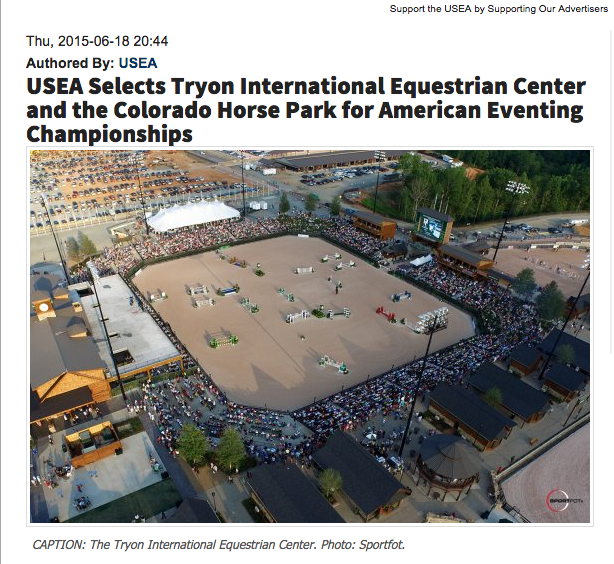
Yesterday the US Eventing Association announced the new venues for the 2016 – 2018 American Eventing Championships. Fellow Carolinians, get excited, because for two of those years the AEC’s will be hosted at the new Tryon Equestrian Center!

Link to the full article here

Link to the full article here

I’ve been showing at FENCE since middle school, but have never had a chance to visit the Tryon Equestrian Center, which has been largely touted as the Disneyland of horse sports. Don’t believe me? Check out this photographic tour of the facilities so far at Meg at. Ever since seeing those photographs, I’ve been trying to find an excuse to get down there and show.

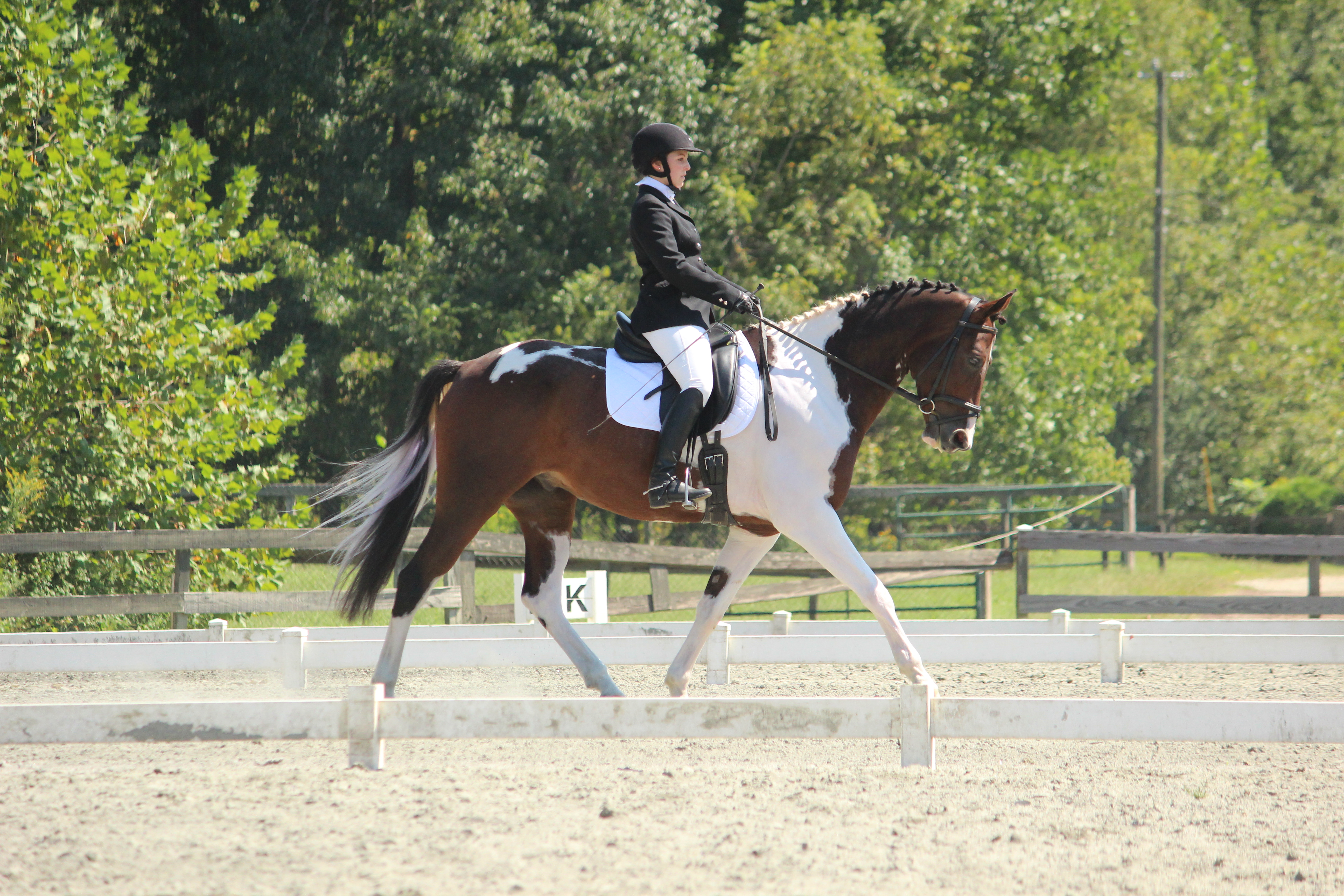
Favorite photo from the FENCE recognized show | PC: Bette

Favorite photo from the FENCE recognized show | PC: Bette

Up until now, rated dressage seemed the likeliest reason to hike down to the facilities, but now?

Maybe, just maybe, we can aim to qualify for the 2016 AEC’s instead.

The qualifications (in a nutshell) for qualifying at the Novice level:

  • 1st or 2nd in any USEA recognized Novice Horse Trials.
  • OR: 3rd in two USEA recognized Novice Horse Trials
  • OR: 1st through 5th in any USEA Novice Area Championship
  • Total of 3 USEA recognized Novice Horse Trials completed without cross country penalties

Something to ponder!!

In other news, between this weekend and next I will have completed 4 different lessons and audited 1 clinic- so prepare yourselves for a bevy of recaps! Have a great weekend!

Flexible is as Flexible does

Last night I took advantage of some beautiful 93* temperature to jump my spotted creature.

Warming up, he felt extremely stiff, particularly to the left, where he was bulging his shoulders against my aids and not flexing at the poll as much as I wanted. My first instinct was to overbend him then in that direction until I got the release, which I would then reward with an instant release on my part. But a couple laps around the arena of this didn’t seem to be making much difference.

Foster neck

Bring on the light bulb moment- instead of trying to add some resistance to the mix and wait for him to yield, I should remove all resistance, let go with my elbows, and make the left bend and poll flexion a happy place to go.

And what do you know, about 1/4 lap later he was chewing and soft and stretching into the contact, and kind of bending left as well.

Photo by High Time Photography

Photo by High Time Photography

Just goes to show that it something is not working, it can be well worth taking a different approach. And that there are plenty of situations where less is really more. How ’bout that.

Every horse is unique in the way it responds to training, so even though we as the rider are a constant variable, we need to be able to adjust to the horse we are riding that day, in that moment. It’s part of the maturing as a rider to be able to recognize the changes that need to be made, and make those changes tactfully and without holding a grudge. I’m definitely still learning, but I’m grateful for the opportunity to ride a horse that allows me to learn from my mistakes.


Product Review: The Sun Shirt Showdown

I never did like tan lines, and I especially don’t like tan lines now that I’m trying to fool everyone in my building that I’m a serious young professional. So when “sun shirts”, or lightweight vented shirts (sometimes) with SPF protection, became trendy and affordable, I threw myself onto the bandwagon with gusto. With every paycheck I try to add to my collection, and now that I have a few brands I wanted to share just how well each shirt holds up.

For comparison purposes, all of the photos were taken on the same day, with the same breeches (Kerrits Flex Tight II) on. All shirts are size Small.

CHP, October 2014 - Sun shirt in action

CHP, October 2014 – Ariat sun shirt in action

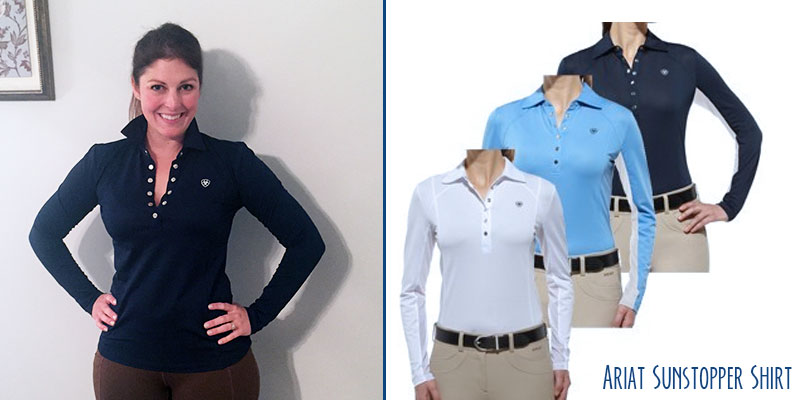
Ariat Sunstopper Shirt ($49.95)ariat

This was my first sun shirt purchase back when I decided to add another color to my eventing scheme (tricolor pony, tricolor human). Immediately I fell in love with the vented under-arms and light weight material. The collar looks high professional though the poppers (rather than a zipper) keep the shirt from being something I would ride down centerline in an actual dressage show. The fit is figure flattering as well- working with my curves rather than hiding them under a bag-like structure, although it still minimizes any muffin-topiness that might happen when folding over the fence. I only have two complaints about the Ariat Sunstopper- the first is the available colors. At the moment I have only seen them in four versions- white, navy, navy with dots, and medium blue. White being impractical for daily (or any real) work around horses, and the navy does seem to warm up a bit faster if you are sitting in the sun. The second biff is that where the vented underarms meets the cloth of the shirt, the elastic is starting to break down in the wash after about 10-15 washes.

No, I haven't decided to go French, that's the elastic breaking down at the seam of this shirt

No, I haven’t decided to go French, that’s the elastic breaking down at the seam of this shirt

Overall, the shirt is affordable so I would buy another, but hope Ariat steps up the color game in the meantime. The Ariat Sunstopper gets a B+ from me!

Ovation EverCool Rider Zip Shirt ($35.95)

Clearly this girl knows how to model a shirt

Clearly this girl knows how to model a shirt

I bought this shirt hoping to save a few dollars on a new sun shirt. And while the price may be pretty good, it is not as breathable as its Ariat counterpart. I find that if I am going out in the evening (low 90s temp with humidity) this shirt is still a good (though not best) choice, but wouldn’t wear it in the heat of the day. I chose the light grey option, which I found out very quickly is not a good option when dealing with a snuggly-alfalfa-mash-eater like Foster. Armed with Shout though the shirt washes out nicely. The only part of the shirt that has gotten rather dingy looking are the sleeve-ends, which are thicker than the rest of the shirt and wider than the Ariat and Riding Sport models, and so seem to collect all the dirt and nastiness that summer riding brings. B- for this pretty cool counterpart.

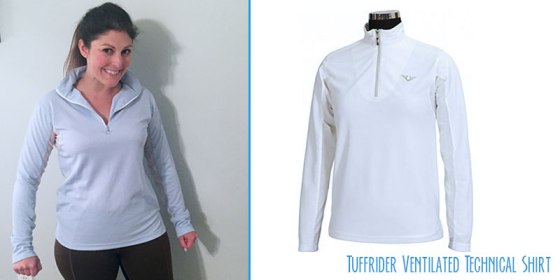
Tuffrider Ventilated Technical Shirt ($39.95)tuffriderDespairing once again for my wallet, I decided to try again with this affordable shirt by Tuffrider. Once again I had a hard time choosing a color that I thought would not be too hot (black sun shirts? why, just why?) but wouldn’t stain too easily. So, going against years of UNC prejudice, I bought the baby blue option. Like the Ovation shirt, the thicker sleeve-ends have also become dingy in just a few rides. And as you can see, this shirt is the least fitted of the bunch, which while it will hide the many Cheese-Its eaten at the show, is somewhat less than flattering in my mind. The real kicker to this shirt though is the fabric, which is easily the thickest sunshirt I’ve seen. After a few rides in it, I really don’t consider this shirt to be a great summer option if temperatures in the mid-90s are the norm. Rather, this shirt would be reasonable in late spring/early fall when the sun is still strong but you won’t die from overheating. Therefore the Tuffrider Ventilated Shirt gets a C- from this Wolfpack fan.
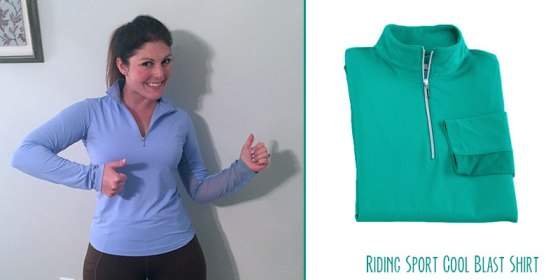
Dover Riding Sport CoolBlast Shirt ($59.99)ridingsport
Hearing good things about these shirts, I picked up two of them on sale at the local store. Even still, the price tag hurt a bit at $50 a pop. However, this shirt definitely makes the cut as a credible summer riding option. It’s lightweight, and although just a hair less breathable than the Ariat Sunstopper, the very thin mesh definitely allows for air circulation and comfort. The shirt has a fitted look, and with the thin material won’t hide lumps and bumps as easily as the dark material of the Ariat, but the colors available are also part of this shirt’s charm. Besides the lilac color (yes I swear it’s Lilac!) I’m wearing in the photo, I also bought the green option pictured. That means that these shirts also became best friends with Shout, but is worth taking the extra minute to launder them. The Riding Sport CoolBlast shirt gets an A- in my mind, with price being the main reason I don’t have 5 more in my collection.


Let’s Discuss: What’s in a Boarding Barn

Often I have to remind myself that the reason I have bounced around to 8 barns in the area is not because I am that boarder.. Or at least I hope not. Two of the barns closed down entirely while I was there, two I left because they were either no longer a good fit for either myself or my horse, and the other three I left because the care was less than acceptable.

This place- peaceful, and you know, great for engagement photos

This place- peaceful, and you know, great for engagement photos [PC: Robyn Van Dyke Photography]

I’ve come to realize that no boarding situation is ever perfect (although if you’ve found the magical perfect boarding barn, do tell!). So it’s up to us as the boarders what compromises we are willing to make. Personally, these compromises tend to be about my actual riding time. For instance, I would rather share a small arena with a couple other riders (a facilities compromise) than compromise on how much hay my horse is going to be fed. (true story)

[PC: Robyn Van Dyke Photography]

Foster and I loved this place. [PC: Robyn Van Dyke Photography]

So if there was such a thing as a perfect boarding facility, what would that look like? Since we’re dreaming, I would love for it to have the following:

  • An excellent barn manager
    • who knows his/her stuff
    • who alerts boarders to any unusual behavior/physical nuances
    • who genuinely cares for the horses
    • but does not micromanage boarders
  • 2 arenas
    • one jumping
    • one for flat work
    • both with great footing
    • that I don’t have to share with kid lessons
  • Tip-top care
    • Good hay
    • Good grain
    • Good pasture
    • Safe facilities
  • A good atmosphere
    • Happy, friendly boarders
    • Peaceful, not-chaotic
    • Bathroom available for boarders (made this mistake at the last barn)
    • Zero drama

It’s a long wishlist, and still there’s plenty else I’d probably add to the list in due time.

We all have horror stories. Horses losing tons of weight, unnoticed blood running down legs, barn management trying to ride your horse… you get the deal.

What are your priorities in a boarding barn? What are your must haves, and what are you willing to compromise on?

In which Foster has a CTJ moment

In general, Foster’s a pretty quiet dude. He’s very settled at competitions, quietly watches paddocks of horses go galloping around, and is A-Okay with being a couch in the arena.

However, he does also have a spook in him. Sometimes it’s legitimate, like when a bird suddenly flies in his face, or if a dog comes flying around the corner to bark at him (let’s talk about that in another post). Sometimes it’s not (like when he spooks at the unmoving dog he didn’t see before and damn near concusses me).

In both the arenas at the farm, Foster has ‘spooky’ corners, mostly related to blind spots in the paths where horses approach the arena. In the outdoor arena, this terrible-awful-no-good-corner also coincides where two rather large, barking dogs hidden behind a wall. It’s an occasionally frustrating environment, but it’s just a part of what we have to work with right now.

Yesterday, the dogs’ owners took them out briefly and was walking behind the wall and around the dreaded corner. Although often in clear sight, and although the dogs were quiet as could be, Foster was distracted. I asked him for his attention back, and he gave it about 75%.

I know it was only 75%, because when a twig snapped (cracked quietly?) about 20 feet away, he jumped sideways.

Spooking at something you are scared of is one thing. Being distracted by unusual stimuli is also one thing. Looking for things to spook at, well that’s something else, and that’s where I draw the line.

So I introduced Foster for the first time in a long time to the concept of a Come to Jesus moment. We went straight to work, doing simple changes on a 15 meter figure 8 until he was no longer bulging his shoulders away from where the spook happened. Then we repeated in the dreaded-awful-no good corner, until he was coming back to me and even anticipating the change, in which case I would mix up the size of the circles and keep his brain engaged.

It wasn’t punishment, but I wanted my message to be clear- we are not to go looking for things to spook at, and if that is your tactic for avoiding work, well, you will now understand that it will not work.

We finished by cantering around the arena in both directions, sending him forward and back for 4 strides at a time. Then we cooled out and practiced rein-backs (need to get these on video, I think they are coming along!) so that I could give him lots of praise for being obedient and listening.

Obviously his ego was not damaged in the least, because he continued to be his adorably cheeky self in the cross ties and lingered by the gate until I walked away upon turn out. But even knowing this, those come-to-Jesus rides will never be my favorite.

Have you had rides like mine? What was the spark to your most recent CTJ moment?

There goes my money

If you didn’t catch it in yesterday’s post, I have been considering a clinic as part of our summer of training. And not just a little clinic- a 3 day clinic, dressage, showjumping, and cross country, with the head of the Canadian Olympic Eventing Team- Clayton Fredericks.

This being officially the biggest (read: most expensive) thing I have done with Foster since our recognized show last year. No big deal. (Read: It’s a big freaking deal!)

So of course I went youtube stalking on his previous clinics to see what to expect. What was immediately obvious is that the man loves him some canter poles. You know who doesn’t like canter poles? Foster. So, that’s one item we will be working on between now and the end of July. We started out with 5 on the ground (which I thought was soft versus Clayton’s 8), and took a few attempts to get through without leaping and flailing.

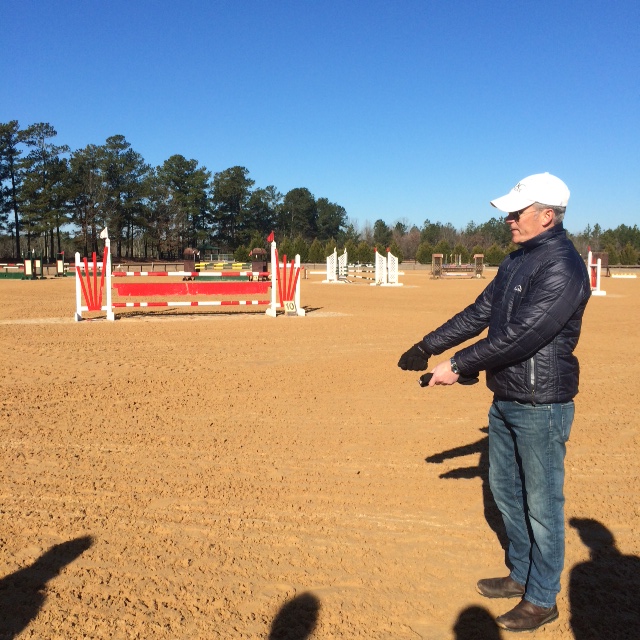
I also set up the ‘box’ angled fences as seen in his clinic report on Eventing Nation.

Credit: Eventing Nation

Credit: Eventing Nation

In reality, I probably set the placement poles a little close to the 2′ vertical, but Foster went through in both directions without fuss.

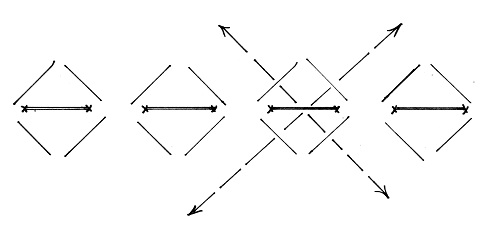
Since the theme of the day was apparently footwork and technicality, I also took him through the thread-the-needle exercise as seen on Evention:

Although instead of 4 verticals set one stride apart, I used 3 set 2 strides apart. Obviously this was too easy for Foster, and he went through it with nary a waver. Next time they’ll be one strides, buddy.

Take-away from our little jump school? Skinnies- no problem. Angled fences- no problem. But canter poles? Well, we’ve got work to do.

No problem- almost 2 months to prepare!

Summer of Training

As in – take all the lessons!

Oh, you thought I meant that Training? You’re funny.

Training screenshot @ CHP Clinic. Feb 2015

Training screenshot @ CHP Clinic. Feb 2015

You remember back in April when I first made plans for the season? My already-revised show schedule looked like this:

  • May 30 – 31 NCDCTA Capital Dressage Classic
  • June 20 – 21 Dom Schramm Clinic (??)
  • July 11 – 12 Carolina Horse Park Schooling HT (Novice)
  • September 4 – 6 Five Points (CHP) Recognized HT
  • October 11 Carolina Horse Park Schooling HT (Training)
  • October 30 – November 1 Virginia Horse Trials (??)
  • November 8 Carolina Horse Park Schooling HT (Training)
  • November 22 MacNair’s CT (2nd level)

Well, take 5 competitions on that list and put a great big strike through them.

  • May 30 – 31 NCDCTA Capital Dressage Classic
  • June 20 – 21 Dom Schramm Clinic (??)
  • July 11 – 12 Carolina Horse Park Schooling HT (Novice)
  • September 4 – 6 Five Points (CHP) Recognized HT
  • October 11 Carolina Horse Park Schooling HT (Training)
  • October 30 – November 1 Virginia Horse Trials (??)
  • November 8 Carolina Horse Park Schooling HT (Training)
  • November 22 MacNair’s CT (2nd level)

Instead, I’m going to dedicate the summer and my pocket book to lessons. This because duh, we need lessons, and I think getting some professional help will be the best way to prepare us for that eventual Training move up. It will be somewhat of a bummer if we really don’t compete until October of this year, but at least that will save me from the potential heat stroke I’ll likely get if I attempt competing this summer- I can barely make it through a jump school right now at the heat of the day!

Our first item on the now-training-oriented-calendar is a two day session with Bobby Costello at the end of the month. Bobby was vastly helpful in helping me get Foster around the Training course at the Carolina Horse Park, and if he can do that in 5 minutes I’m excited to see what he can do in two lessons.

Bobby Costello shows us how to use both hands and outside aids to make a turn to 9

From the Clinic: Bobby Costello shows us how to use both hands and outside aids to make a turn to 9

From there, I’m eyeing a clinic at the end of July with a certain Canadian team coach (maybe maybe), and finding a jumping trainer who can fill the void at home while the Paynes work on eventing-world domination. We will see what happens!

Mentally Riding Combinations

Another failed cross country schooling attempt this weekend (although this time my fault) left me itching to jump something, come hell or highwater. And not just jump about aimlessly, which tends to happen when I inherit someone’s jumble of standards and put them up in places corresponding to how much energy I have that day.

So I determined that I was going to work on combinations, and specifically riding in with energy, and making decisions about my path through the fences.

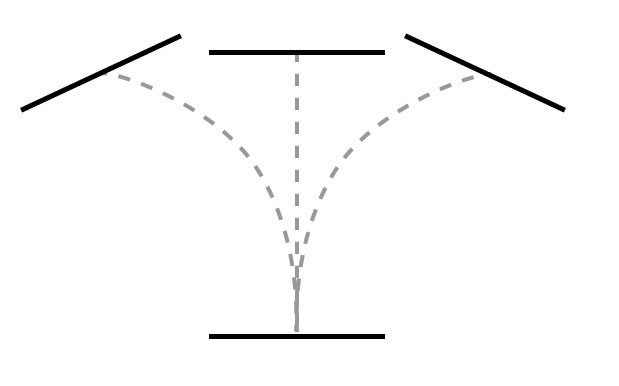
threestride_combo

So I set up this configuration of roughly Novice sized verticals, based on something I remembered from Emma of Fraidy Cat Eventing‘s blog. My version was three strides no matter the path, just enough time for me to plan my lead out.

[old screenshot] I also worked on putting my hands down!

[old screenshot] I also worked on putting my hands down!

The key to the exercise was definitely getting his shoulders straight to the first element while maintaining a forward canter (I rode with my dressage whip to really enforce the “go” which seemed to work), then balancing through the three strides and thinking about which way I would go after the ‘out’ element. Sometimes I would take the bending line left (single to top left option), then turn roll back right and take another bending line left (top right to bottom single fence), or continue left and circle back around, or take a single fence by itself… I found that this combination of fences gave me a lot of options and things to think about.

[old screenshot]

[old screenshot]

I ended the session when I felt like Foster was listening to my aids and getting the correct lead each direction. At that point in time it was also unfortunately quite hot, about 90*, and I was getting light headed and Foster was seriously puffing.

[old screenshot]

[old screenshot]

Overall I was really pleased with the day, and especially felt like we made strides in finding a more forward pace for Foster (damn why can’t I bring my dressage whip to the jumper ring- suggestions anyone??) and for myself, picking less to the fence and mentally riding every stride.

The exercise was so helpful, I think I’ll be setting it up again soon!