Sorry for the Radio Silence

This week has been BUSY.

Also, I decided a great thing to do in the middle of a busy week at work was to go visit my parents and spend a day purging 30 years worth of equine-related nonsense. So smart. So dirty. So many things came back with me that shouldn’t. (shh- don’t tell the hubby)

But beyond all the things crammed into the bed of my truck, I wanted to share with you guys this:

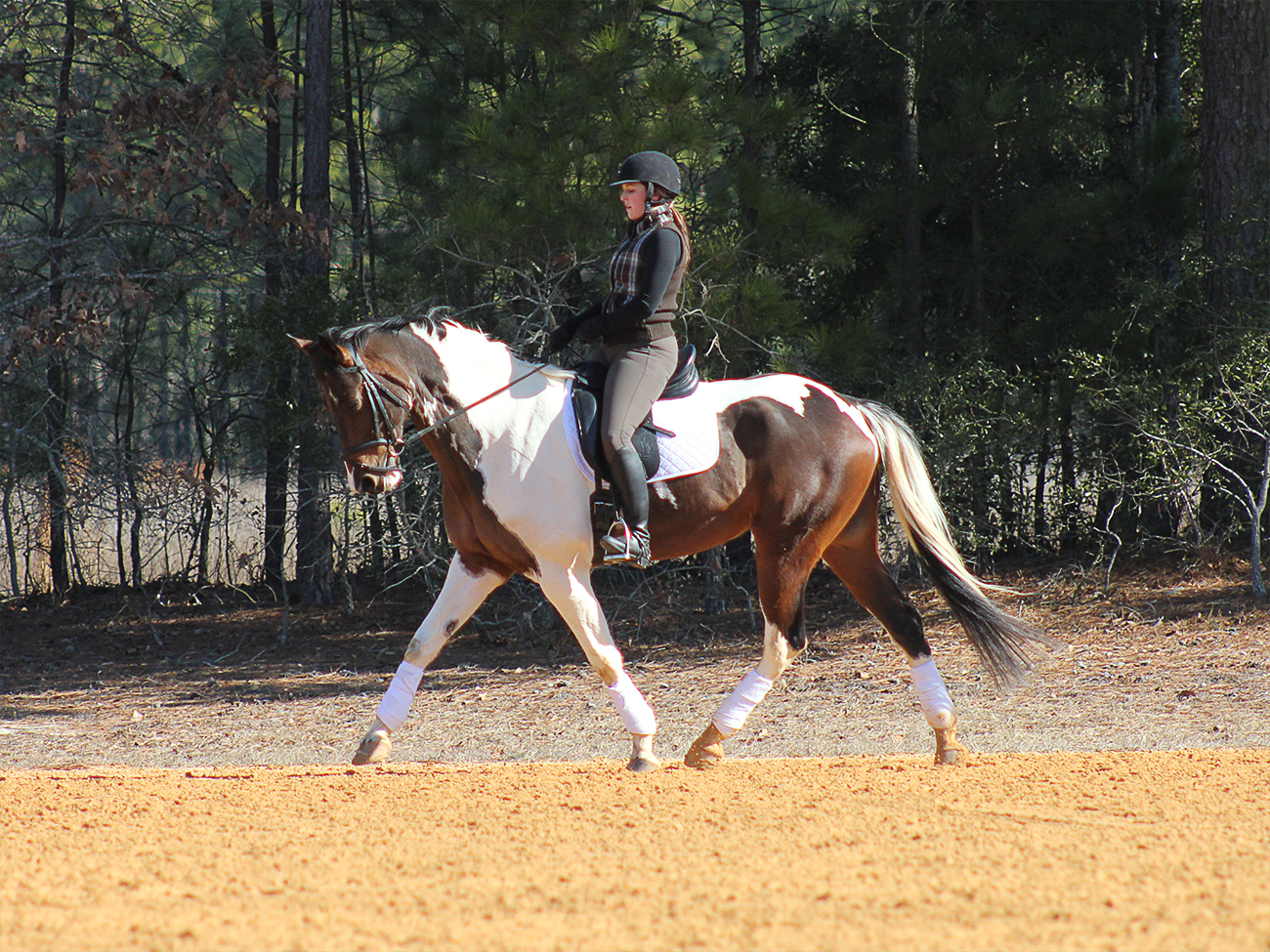
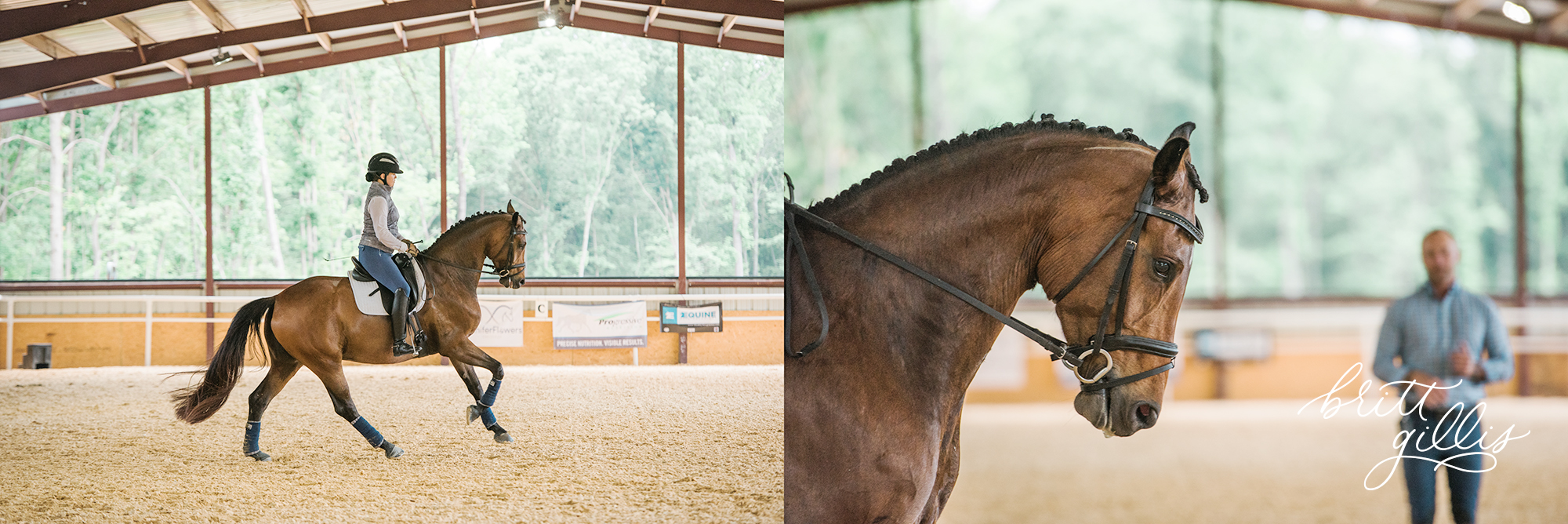
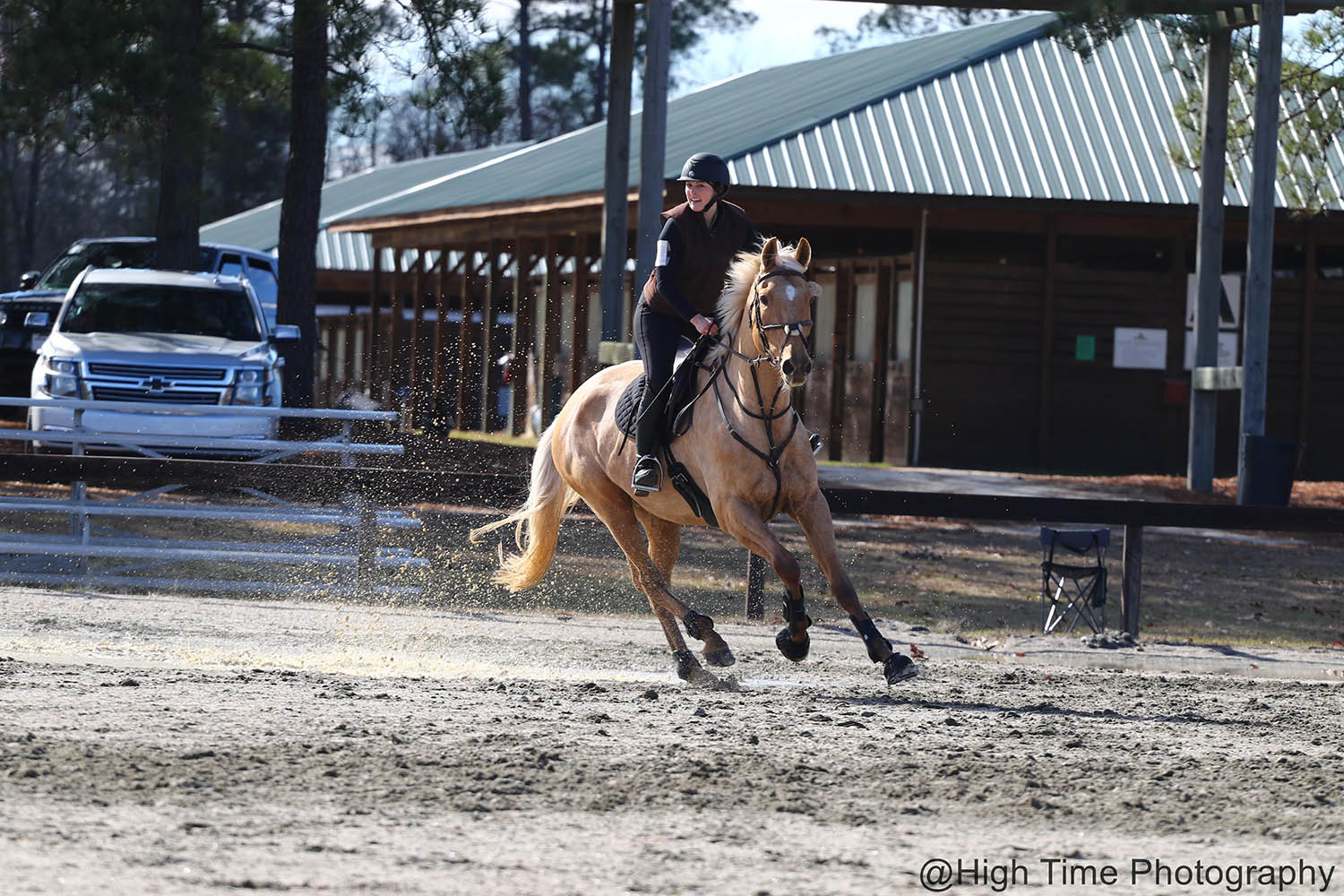
I’m so excited, and grateful for the opportunity to talk about equestrian photography with a community of horse-lovers from around the country. It’s an exciting little adventure!

If you want to read the article, check it out HERE!

Let’s Discuss: Heels Down and Heels

Due to a range of ever-changing circumstances, I ended up being on Jack for a lot longer than anticipated. As a result, my calves have been basically screaming in agony for the last 3 days.

Now, recently I have come to the light-bulb conclusion that dressage does not exactly require heels down- and that my over-elastic ankles actually made for a bracing lower leg that brought my leg forward. Since having this epiphany, I am working to allow my leg to simply hang, focusing on making my knee point downwards and bringing my heels under my hips. That’s made going back and forth from dressage to jumping, which definitely requires heels down, that much more tricky. Hence sudden anguish after lots of jumping.

~2014

Which brings me to footwear. At work, I reside in the same building as the executive suite, and so the common wardrobe tends to skew towards the more business-side of business casual. Most women wear heels, skirts, dresses, and in general more ‘done-up’ than you would find elsewhere on campus. But most women don’t have a hobby that requires their heels to flex down. I pretty much wear some version of flats (or boots in the winter) every day, and it’s easy to feel a bit under dressed surrounded by these magazine worthy creatures who occupy the same space. And after this weekend, and the constant calf stretches I have been doing to ease the pain, I have even less desire to up my footwear game to fit in.

That would be me, on the right.

So I want to know, other equestrians with office jobs of the world: does your hobby effect how you dress for work? Do you struggle to get your heels down in general? Does riding influence the footwear choices that you make? Inquiring minds want to know!

Winter Schooling Day Recap

This weekend, the Carolina Horse Park put on the most amazing schooling day, giving Jack and I the opportunity to get in and out of the showjumping ring over and over with absolutely no pressure to perform. We paid for unlimited rounds, and with a prepared course got to go in at a roughly allotted time and get ringside assistance from the trainer- all good things for us!

Round one was at 2’6″, and for me I attempted to micromanage Jack’s anxiety that comes with this ring (meanwhile warmup continues to be a relaxing snoozefest). I had to use my bat to get him down the final outside line since the stack of poles just outside the ring was terrifying to the BDH, but overall it was a better round still than what we’ve had before. We decided to go back in for another round and work out the kinks, and Holly wanted me to get a straighter, more forward ride out of the blonde beastie.

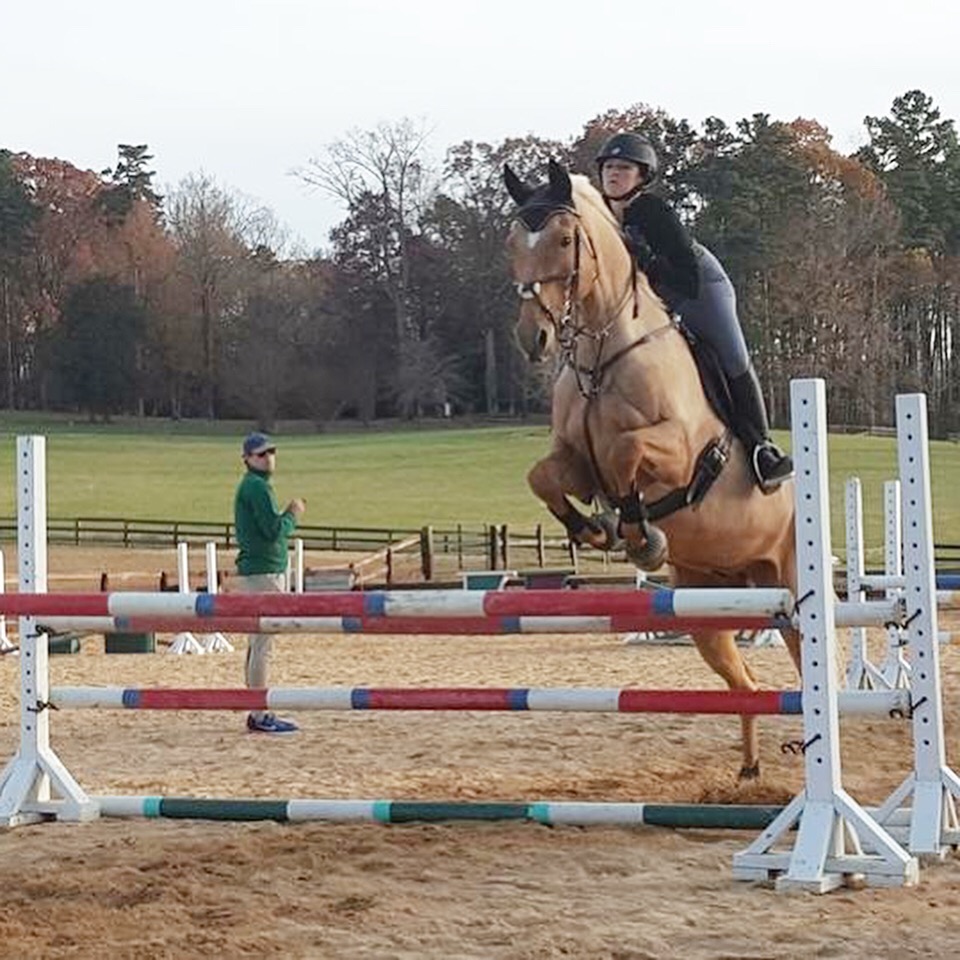
What resulted ended up being our best round to date. It’s amazing what can happen when you sit up, think, and ride. Could he be softer through his outline? Totally. And ya know, he basically canters some of these fences instead of jumping, but whatever. I was thrilled coming off of this ride, and we decided to wait around for the 3′ course and school at that height as well.

It’s a little sticky, as you can see. I think at this point we were both a bit tired, and I needed a lot more of a forward ride. I’m not used to jumping the max width of some of these oxers, and so I need to adjust my position to stay with him when he puts in a bigger effort. And I’m so annoyed about that last distance, and was tempted to circle back to it had the next rider not entered the ring. But I was told to shrug it off and be pleased with our first full course at this height.

Overall it was a great day. My friend A was then able to do a cool down flat in the dressage ring and Jack got to also learn that there’s nothing scary about the sandbox. They ended with a super stretchy session that had to feel good after all the waiting around of the day.

When you consider that the video below is where we were just 5 months ago, it’s pretty amazing how far we’ve come. My trainer and friends keep reminding me of that, but I need to keep it in perspective. And really, it makes me even more excited for what’s to come!


Changing Trainers

The comments from the discussion about finding the right trainer brought up some really great points- including having a trainer that understands your beastie’s brain, trusting your trainer to make good decisions for your development/safety, the trainer’s education, and more. Amanda also addressed the reality of having to change trainers, a really interesting topic that I’ve thought about a lot myself.

I don’t consider myself a trainer-jumper, but I have worked with lots of different folks for all sorts of reasons. In high school, I tried out a couple programs for a couple years before moving on. In that case, one program was so lax as to barely constitute riding lessons. The other was with a ULR whose occasionally drill sergeant ways didn’t jive with my then-fragile nerves. I eventually found a trainer who was the right match, and though that program didn’t really benefit me from an equitation perspective, I learned the most and still appreciate her guidance in those formative years.

Shameful photo of me jumping Merry in a dressage saddle circa 2007, very much not equitating

Since college, my focus has shifted. After getting Foster I worked with a trainer who was very-very supportive, but eventually I felt that I needed a more rigorous program than her style afforded. I remembered Eliza from my working-student interview with her (a post for another time), and set up a lesson. Since then, when it comes to dressage, I haven’t looked back, and that was roughly 7 years ago.

The fun days with Foster and [sort of] attempting piaffe

Finding the right jumping coach has been a completely different journey. There aren’t so many eventing trainers in our area, and I found that some of the local H/J trainers had a hard time empathizing with either my dressage-theory discussions, or I didn’t trust them to advise me in a safe way that translated to XC. I got lucky in having access to Doug Payne for a while, who is brilliant, but sadly he hasn’t come back from Aiken for some time. Since his departure, I bounced around from trainer to trainer desperately.

Rare moment of having my ish together in 2015

Since Smitty didn’t end up doing a lot of jumping while I had him, and obviously Foster hardly jumped at the end of his career, I was all out of sorts trying to get a professional opinion by the time I was horse searching again. But I knew I needed help, and I was finally able to find a trainer who met all of the requirements. She’s been around Rolex on multiple occasions, finishing as high as 8th place. She’s tough, which I need to get me through my years and years of lost and misguided attempts at equitation. And she gets Jack’s occasionally squirrely brain, and has the balls to help the hamsters get back on the wheel when needed (see below).

Right now, I feel like I have the perfect team to support Jack and I in our attempts at greatness.

What has prompted you to change trainers? Have you ever gone down a road with someone and realized you needed to about face? What is it about your current trainer that you appreciate most?

Let’s Discuss: The Right Trainer

Chatting with a friend who had just witnessed the KY Charlotte Dujardin clinic this weekend, I quickly came to the conclusion that despite forever having my respect and admiration for her program and her riding, I don’t think I would ever want to train with the top dressage rider in the world.

Picture of my BFF because she’s badass and because we have this convo all the time.

That’s because in some many ways, I’m totally comfortable admitting my “amateurness”. I’m never going to be a full-time professional rider (though I wouldn’t oppose to the full-time aspect). I enjoy being a dual-discipline (bi-discipline?) rider with the comfortable recognition of likely never reaching the status of Ingrid Klimke. Therefore, I have different needs in a trainer.

Though there’s a lot more that goes into it, here are a few of my main priorities when choosing a trainer:

Understanding the Typical Amateur’s Schedule
I have a 9-5 job. Sometimes that turns into a 8-6, or 9-9 job, depending on the day or the week. My trainer needs to understand that and respect that. Some prospective trainers I’ve met only offered lessons during normal working hours, and weekend lessons were a rarity. Quite frankly, that will never work for me. And since the job not only limits my availability, but also pays for said lessons, that makes this one a non-negotiable.

Photo of my trainer, getting trained

Balance of Praise and Criticism
This is probably where most people differ. Personally, I am not interested in the trainer that praises my for 45 minutes and then is done. But some people need a holding hand and a cheerleader in their trainer for where they are, and that is more than fine. I tend to do well with a trainer who holds me accountable, and consistently pushes me to be better than I am, but also tells me when I am doing right. Too much one way or the other, and I tend to check out stage-right, either mentally or with my check book.

Having a trainer whose accomplishments you respect is also helpful. Enter: Boyd Martin (not my trainer)

Working with Goals
Here’s a tough one. Sometimes a client, aka rider, has completely unrealistic goals- for instance the rider who has never competed at second level who is determined to compete in the Olympics (do you know one of these? I do!). On the flip side is the talented, or talented-enough amateur rider who has lost so much confidence that they limit themselves to the lowest-of-the-lowest levels. A good trainer will be able to assess their client (and the horse that they ride) and be able to adjust expectations, make sub-goals, and lay out an honest and achievable path that brings about growth in their client. To me this is the hardest thing the right trainer must achieve- because sometimes well-meant honesty and judgement is a difficult endeavor, requiring not only honestly but a little bit of faith as well.

Yup, never going to do this and that’s fine by me.

Appreciation of the Less-than-perfect-Beastie
Let’s face it- most amateurs have a less than infinite budget, and a sincere lack of sponsors. Therefore, the horse(s) we have are what we’ve got to work with. And an understanding trainer gets that. Sure, sometimes there are glaring mismatches, in which case once a trainer understands all of the above requirements and sees that the fit is less-than-ideal, they can make recommendations. But firing a horse because it will never be their Valegro is just unreasonable. We spend so many hours financially and mentally on our horses that we need a trainer who is onboard too. In the best of worlds we can even find a trainer(s) who will help us find said beastie, but in different scenarios a great trainer will work with what we’ve got, and in accordance with the above section, work to set realistic goals.

What are the qualities that you look for in a trainer? What are the aspects of your trainer that you are most thankful for? Have you have experiences with trainers that simply weren’t good fits? Why? What made you choose your current trainer?


Let’s Discuss: Rein Recommendations

For the past few months, every time my dressage trainer hops aboard Jack she comments on how strange my floppy reins feel. But for the past few years, those PS of Sweden Softy reins have been my absolute favorite. They are thin, felt comfortable in my small hands, not rubber (since I was in the habit of riding gloveless) and needed no breaking-in.

My beloved PS reins

But after getting a pair of Lund Eventer Series rubber reins, part of the best logo prize package ever,  I have started to see the benefits of rubber reins for dressage. My infant-sized hands have gotten used to holding the thicker width and whether it’s the bit (a double-jointed wonder bit) or the reins, I can attest that Jack seems to enjoy a steadier connection with this set up.

And the also beloved Lund bridle and reins

So, if I were to venture into the territory of dressage rubber reins… are there any reins out there that people just love? I’d like something quality that will stand up to both the (currently) frigid temps as well as the nasty humid heat of summer, that doesn’t need breaking in, and that won’t break the bank (less than $100 ideally).

Any suggestions?


Pipe Opener Recap: Jumping

Expanding on yesterday’s dressage recap, after dressage I was slightly meh about my test, but determined to still give a good go of the showjumping. I paid in advance for an extra round, with the expectation that he would be his normally spooky self in the show arena (which he was) and give him a more confidence building experience the second time round.

Since Jack started out being looky at the lakes puddles that dominated the facility that day, I purposely got his feet wet over and over again in the warmup ring- not hard to do when the “puddles” are almost 20′ wide. This gave me hope that I wouldn’t be swimming once we got into the arena proper, since there was literally no approach from 6B to fence 7 that avoided a splash zone.

After confidently navigating the water, we had a beautiful warmup, thanks to friend C channeling the trainer’s words from Tuesday’s lesson. I actually felt like my leg was under me, and for the most part that my shoulders were back, and Jack felt lovely and supple and relaxed. Where is that horse for dressage??

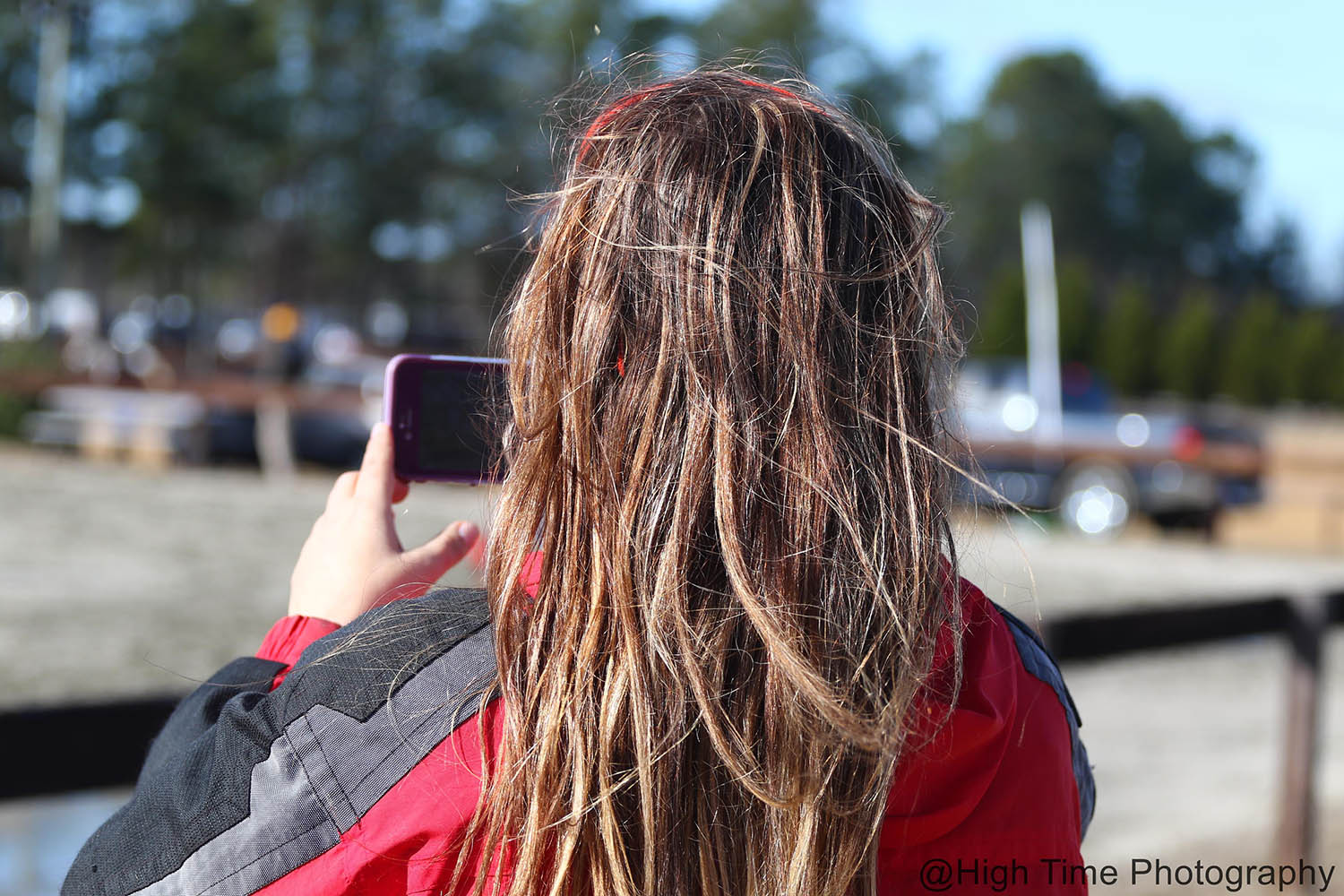
She helps me tack, warm up, and video- also her hair is fabulous!

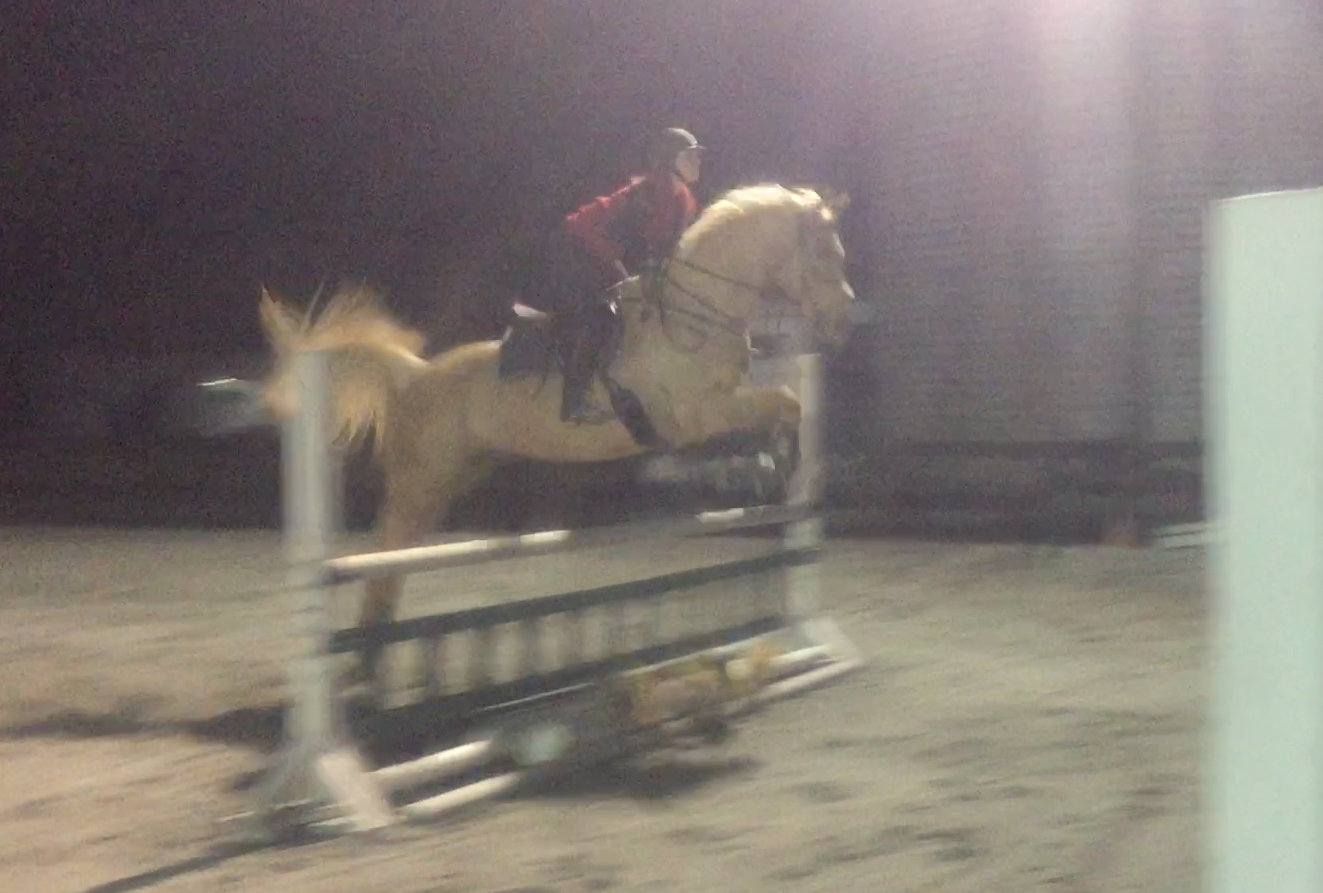
But all that relaxation went away as predicted the moment we stepped into the competition ring. Just like all the previous times, he would basically ping off of all the fences while I tried to assure him these were fences of the non-horse-eating variety. Enter again lots of verbal praise to calm the big weenie.

Accurate representation of Jack on course

Beyond that, we had a decent go.

Except for this. Right here. On the last fence, and the last foot over- cost us a rail that moved us from a potential 3rd place to tied for 7th.

Oh well.

We sat around for 20 minutes and came back in for our schooling round, and I was shocked to find Jack more spooky on re-entry than before. I can only figure that he was tired at this point and backed off. So we really didn’t get to smooth anything out until after fence 4. You’ll see in the video that he comes back to a trot, and I think the adrenaline wore off and I actually was able to give him more of a decent ride than before.

Overall, I’m really happy with the big blondie. We got all our leads, and even though we got a couple wonky spots (including a deep one I asked him for- sorry buddy but waiting is a thing), in general it felt way smoother than our last time there in November.

I believe the plan is to shoot for Novice height at the next SJ outing at the end of January. We’ve also got a cross country schooling this weekend if the weather cooperates! All the things!!!

Pipe Opener I Recap: Dressage

My goal with this first show of the year was to put in a solid test, aiming for a 30 if we could replicate our efforts at home. Spoiler alert- we didn’t. But we got close!

I think a lot of what’s to blame is that I haven’t figured out the key to unlocking the warmup. We tend to have very relaxed showjumping warm ups, but dressage lacks the suppleness and relaxation that should be there. Despite the warmup area being fairly calm, he was holding a lot of tension through his back and was super stiff through his right jowl. I tried going forward, lots of canter, figure-8s… but none of this accomplished what I was after.

Skeptical about the dressage ring

The test then was a bit of the same. There are moments where he takes a deep breath and relaxes, but the centerlines and canter transitions bely the underlying tension. Take a gander to see what I mean:

Overall we scored a 31.4, putting us in the upper half of the 20+ competitors that day. Jack scored a 7.5 on gaits, and I got a 7 on my rider score, which were a big help towards our score. Things I wish we could have fixed obviously include the canter transitions, and being able to get more push in the trot without breaking into the canter (which we got dinged on).

I feel that if I can get the relaxation in the warmup for dressage, these pieces will come. Tomorrow, onto showjumping!

Showjumping lesson recap

Tuesday we had our first showjumping lesson post-holidays, which meant about 3 weeks since our previous session. Thankfully there was a break in the frigid temps, and at a balmy 50*, this ended up being a godsend, since Jack came out thinking the devils were lurking in every shadow, pole, and different-colored-dirt-patch.

We’ve come to learn that this horse doesn’t tend to do well coming back from a break. While eventually he settles in, that first ride is a bit of a roller coaster, and it doesn’t take much to convince Jack he’s under duress. Case in point:

Eventually we built up to going between two (gasp) flower boxes to the itty-bitty fence, and once we conquered that we moved on to actual jumping.

YAY JUMPING

My position was definitely a bit weak, and I had trouble getting my heels down and shoulders back. My other go-to moves include A) making a move with my shoulders when I get nervous B) not staying folded long enough on the backside of the fence and C) turning too soon on landing instead of staying straight (which probably also relates to point B).

mental note: shoulders HERE. legs HERE.

We wrapped up with a fairly simple course, staying quiet down the lines and working on the afore mentioned points. The video below is the last of the evening.

My game plan for Saturday’s CT is to trot fences until he settles, stay straight through my landings and keep my shoulders back. We intend to also do a second jumping round as a hopeful confidence boost.

At least that’s the plan!

A Jack Update

Jack and I are gearing up for our first show of the year this weekend, a Combined Training event at Beginner Novice. What I thought would be a small show actually has ~25 competitors in my division (maybe they’ll split it? probably not), but I’m hopeful that we’ll be competitive. I hope I’m not jinxing myself right there.

The dressage test is pretty straight forward and flows nicely with the exception of that stupid first centerline. A enter working trot, then at X turn onto a half diagonal to M? That’s right judges, because the best way to make a good first impression is by starting to exit stage right halfway into the arena. I’ve been starting to repeat the pattern with Jack, but each time it catches him off guard. Probably because centerlines were only recently becoming an obvious thing for him, now we throw him for a loop.

Overall Gaits
Our canter transitions are starting to come along, and though there’s tension in the depart, he no longer goes totally inverted like he used to. Once in canter he is so much more balanced, and I can start to maneuver his shoulders more and more. I haven’t gotten to asking for more jump in the trot, but in general he is steadier in the connection.

No idea what height this was,?

The Fun Stuff
In my last lesson, my dressage trainer [gladly] kicked my butt, and we introduced half-pass as well as tuning our renvers, shoulder-in and haunches-in. We’ve also come back to the walk-canter departs, something we avoided in order to establish the trot-canter depart (which didn’t exist before with any quality). Jumping-wise, we’re working on related distances, getting the correct lead on landing, and not snowballing down lines in general. Fences are creeping between the BN and N level depending on the technicality.


Weight Woes
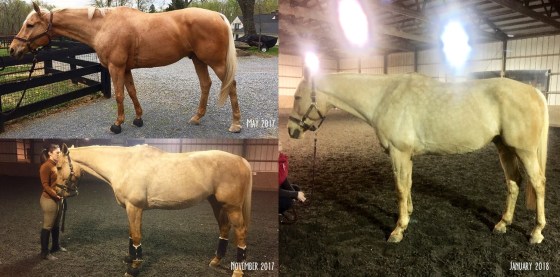
The above picture was taken December 22. The temperatures started dropping around then, and my guess is that the lack of grass, cold/thin-skinned TB part of him, and the regular work schedule just took its toll. Lest you think he’s neglected or abused in any way- Jack eats almost twice as much as any other horse in the barn. He’s a big guy at just a hair under 17h, but with the coldest months just getting started I really want him chunky. After discussing with my vet, homeboy is now on:

  • 2 flakes compressed alfalfa once/day
  • 3 quarts Pro Force Fiber 2x/day
  • 1.5 quarts Empower Boost (fat supplement) 2x day
  • 1 quart alfalfa pellets 2x day
  • Free choice orchard hay at night (~5 flakes)

And finally in the last few days he’s starting to look like a normal horse again (see below picture on right). I’m hopeful that the return of grass in the spring will mean we can back off some of the new additions to his meals, but we’ll obviously do what it takes to keep him in good weight.

That’s the latest on everyone’s favorite Barbie Dream Horse!