Dreaming of Gold Medals

Haha, just kidding.

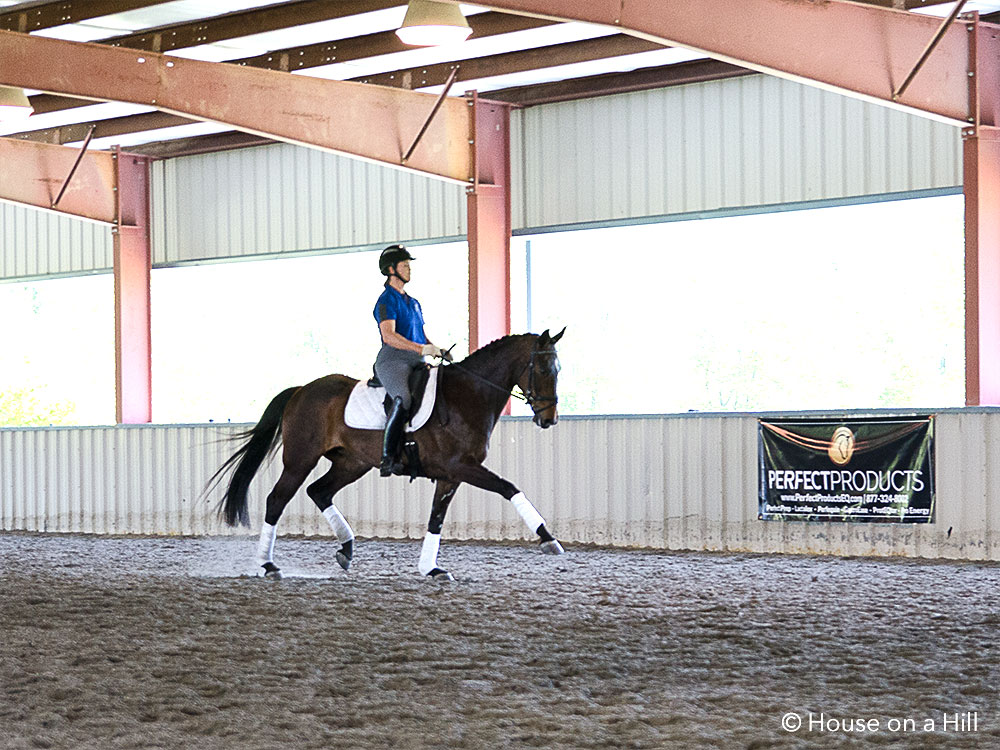
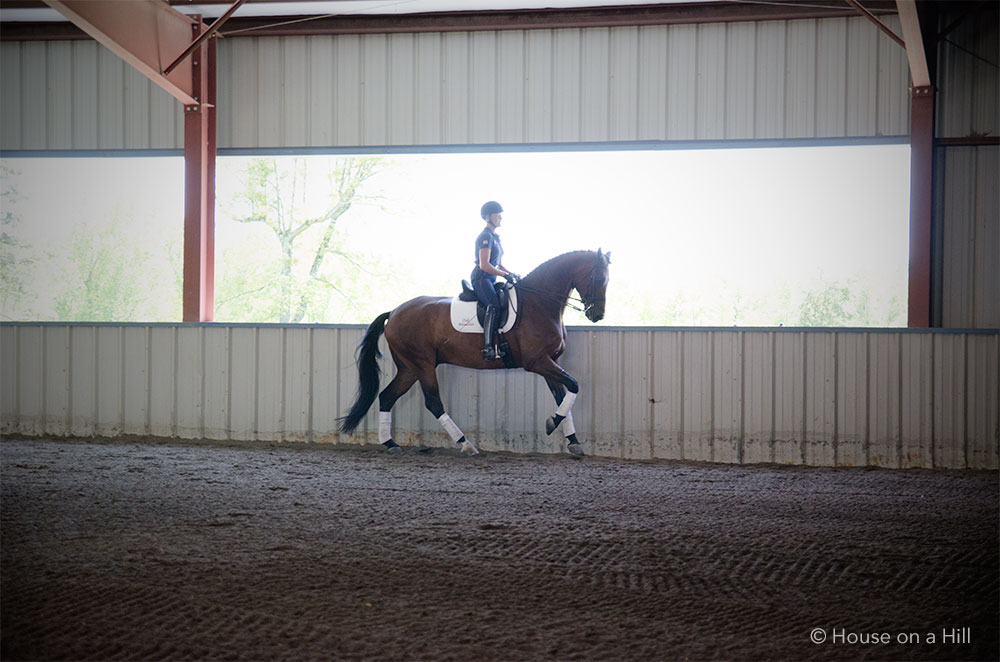
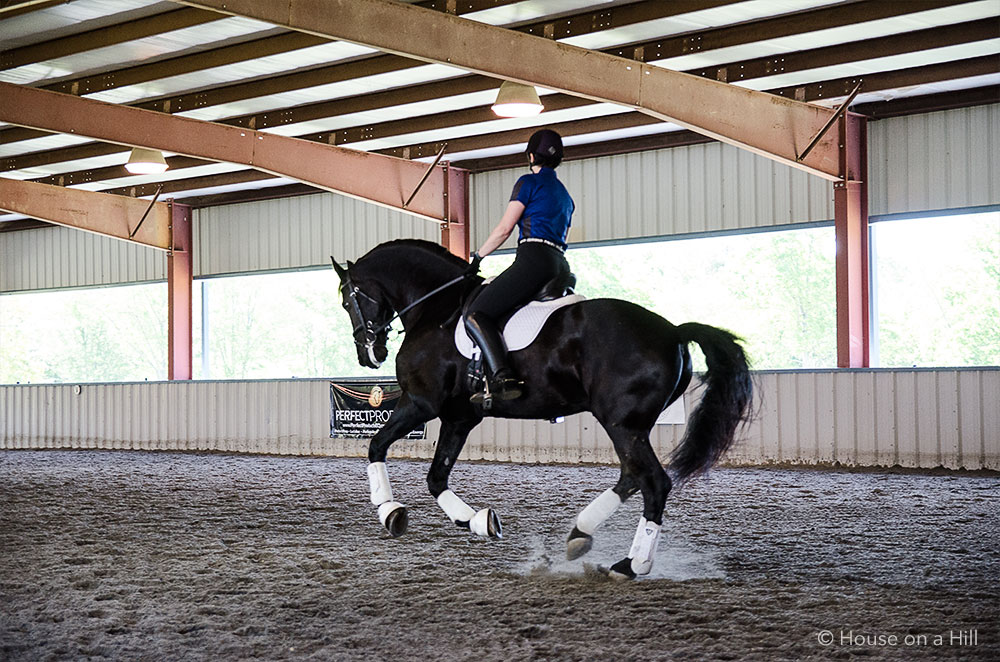
But I have been thinking about medals recently. Not gold ones- bronze. As in two scores over 60% for First, Second, and Third level tests.

See, for the first time in my life, I’ve realized that Third Level might be possible for us. If you didn’t catch that, emphasis on the might.

reinback


Not anytime soon, or even in the next couple years, really. I just think this is one of those bucket list dreams that could be accomplished. At least at the moment, it seems far more likely than my dream of riding a camel. Any of you guys know a camel I can sit on? Didn’t think so.

camel

In the last 6 months we’ve made progress towards the goal of completing a Second level test, which as a reminder introduces the following movements:

  • Collected trot
  • Collected canter
  • Medium gaits
  • Shoulder-in
  • Rein back
  • Walk-canter-walk simple changes
  • Counter canter
  • 10 meter canter circles

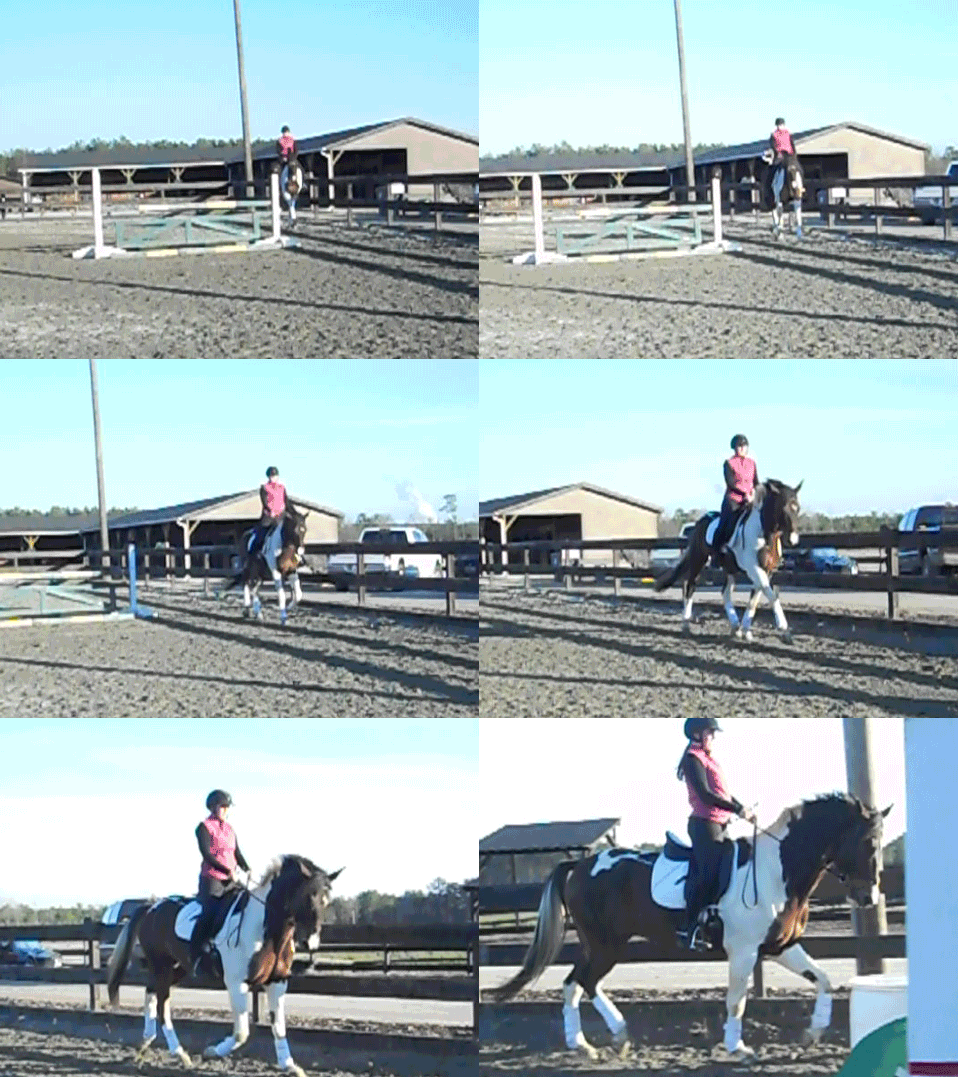
All of these have been started, with the exception of canter-walk transitions, which we will start once he is really strong again. The rest will need some major polishing in order to be test-ready, but I don’t mind a bit of polishing. But even in our lessons, a few of the Third level movements are coming up for discussions. When changes were mentioned, I was flabberghasted. Me? Changes? Other movements we are actually practicing. Half pass and turn on the haunches happen in our lessons more and more often.

halfpass


It will take a village to get there, but it’s awfully exciting to this eventing DQ to have a long term goal added to the list.


PS this post marks the 300th post on A House on a Hill! Woohoo!

Ode to the Horse Friends

pond riding

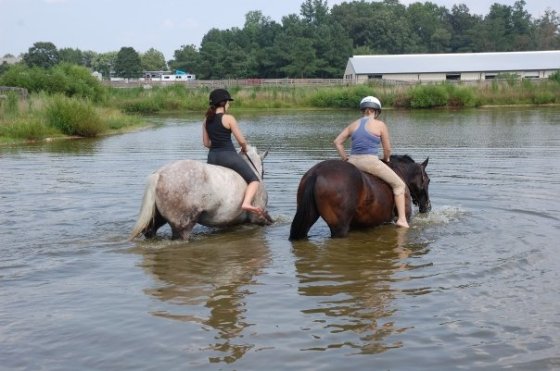
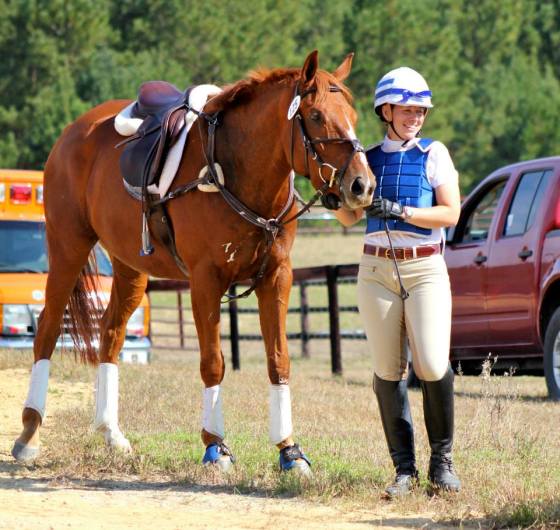
I’m going to make a lot of guesses in this post. I’m guessing that, if you were like me, you probably didn’t have many girl friends growing up. “Typical” girls didn’t understand your competitiveness, your drive to succeed, your connection to ‘a dumb animal’, your need to be strong and your willingness to get your hands dirty, literally, to achieve your goals. If you did have girl friends, they were likely other “horse girls”, or strong women who recognized your ‘ganas’ and respected them instead of fearing them.
1390526_10200952115660364_1423298268_n

It’s no surprise that we as horse women relate so well to other horse women, and less to the domestically correct ideals of old that society continues to offer us. Cook dinner every night? Maybe when I get home from the barn. Keep everything spick and span? Ha, have you even seen my car? Smell like roses all the time? If the name by which a rose also goes is Foster, sure.

Antonia and Bob

Still, to say that all horse people will immediately befriend one another is to paint that picture using only rainbow colors and maybe those fuzzy animal stickers we coveted as children. Many of us are sportsmen as well as horsepeople, so there is always going to be an array of opinions and competitiveness that makes everyone being everyone else’s best-friend-forever just impossible.
Alex Bo Barn

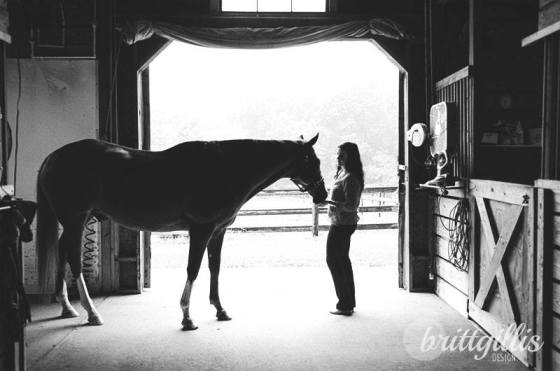
So when we find another horsewoman (or to be fair, horseman) that then becomes our best friend, well, that’s something special.
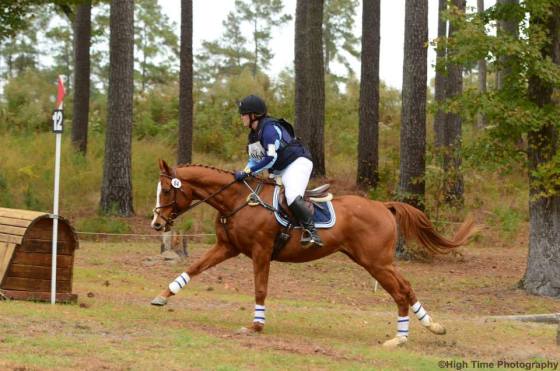
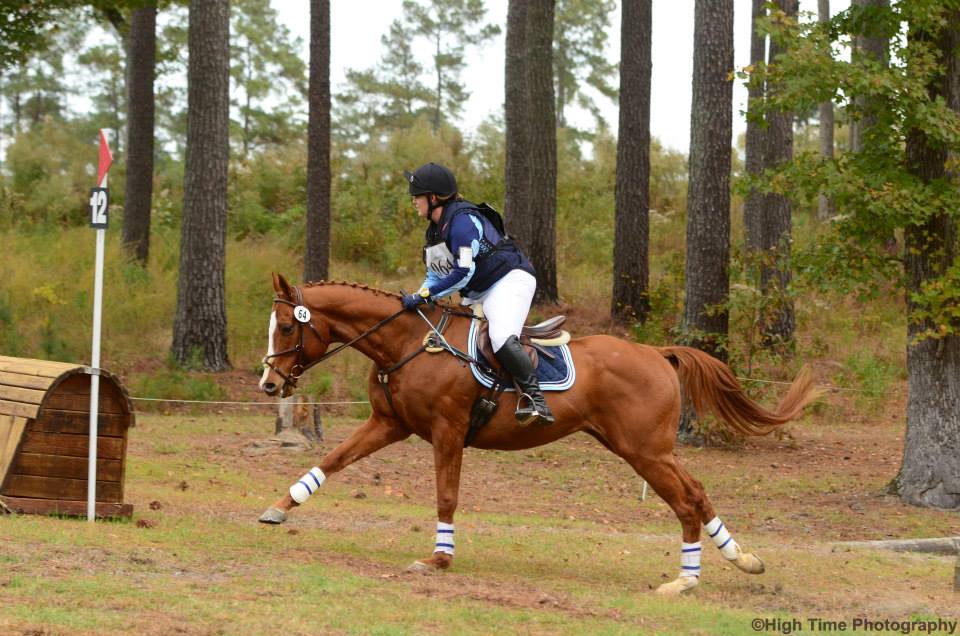
Photo by High Time Photography

Photo by High Time Photography

It takes a special person to not only put up with, but enable hours of conversation on one subject (duh, horses), supports you in your many goals on your path to personal equestrian world domination, and then still probably won’t judge you for the mysterious stains or smells you bring to the party. That person that makes the effort to watch your rides at shows, and hollers and whoops at the end of your dressage test, even if their ridiculous jubilance draws looks from passersby. And if that person can’t be there, you know they are going to call you the second you get done, that they care enough to want a play-by-play of how a line rode, or your iffy canter transitions, even if that stuff will bore most people to tears. And you would do the exact same for them.

Nikki Star Dressage

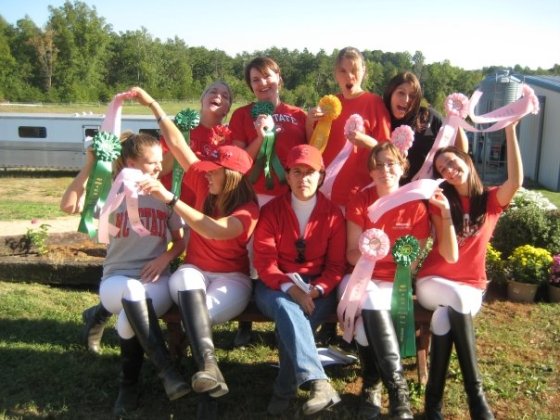
It wasn’t until I was an adult that I really discovered this rare breed of ‘horse friends’. Much of that I owe to my collegiate dressage team, which first introduced me to the concept that collegiate or not, being an equestrian is much better when it is a team sport. 10 years later I still keep in touch with those girls, and the memories of silliness and bonding are more important to me than any show of my college career.
1931046_597719178929_3208_n

When I left college, bought Foster, and moved to new farms, I thought those kind of relationships were unique to the college experience, and so a thing of the past. But once again I found kindred spirits, and started new adventures, and with those people I made new memories. We have cried, we’ve been scared, we’ve been brave, and we’ve (I’ve) certainly embarrassed ourselves a few times, and it’s been glorious. The only thing that makes these different than the days before is that now we are old enough to imbibe in an adult beverages to celebrate, or drown our sorrows, or attend the local schooling show.

1928778_525028656319_8808_n

Being an equestrian is not easy. And I don’t mean just that riding horses isn’t easy. Living with and loving animals so breathtaking, and yet so fragile, means that we constantly are living lives of highs and lows. The ride will always be sweeter when you find someone to join in the journey.



Feel the Burn

This post’s cliché title brought on by my thighs and calves, which are somewhat unhappy with me after my attempted jump school this weekend.

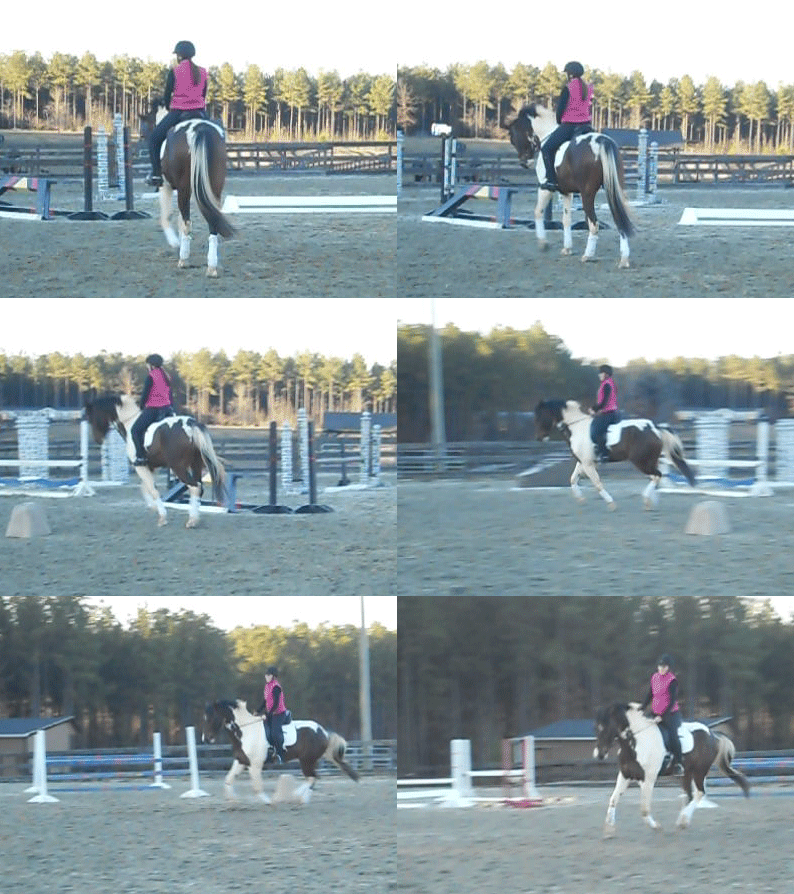
But first, let’s recap. The last time I actually jumped was February 11th in the winter clinic at the Carolina Horse Park. The last time I kind-of-attempted-jumping was March 16, in which my calendar entry for that day (anyone else keep a ‘diary’ of their horse’s activities?) says “Foster jump no good”. And I remember that ride- it was the day after I scratched the CT due to his bad attitude and likely ulcers, and I wanted to try jumping just itty bitty things to see if even that would improve his attitude. News flash: it didn’t. We couldn’t jump a 2′ vertical on a 30 meter circle successfully.

Looking derpy with his noseband off center

Looking derpy with his noseband off center

So almost two months later, and a crap ton of gastrogard, we tried jumping again.
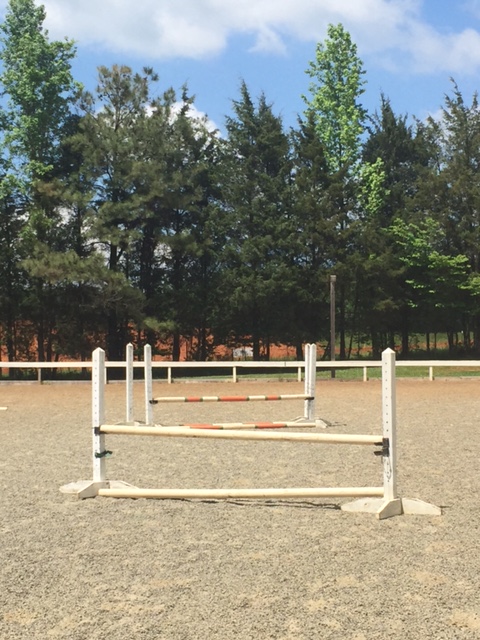
I was a bit schizophrenic setting up the arena, as I knew I wanted to keep it small but couldn’t decided how small to go. So I left the cross rail intact, made a somewhat soft angled two-stride line out of two 2′ (2’3″?) verticals. There was a one stride to a two stride made up of 2’6″ verticals in the arena that I left up, but it walked long, so I was a bit skeptical of it but left it up for kicks anyway.

For whatever reason, it took me about 15 minutes of walking around in my jump saddle before I felt comfortable enough to get going. Let me tell you, after being a DQ for the last few months, those stirrups felt really damn short. I also really feel like I (or my saddle, but it’s probably just me) slide left far too easily. I got over it though, and focused on weighting my right heel, warmed up, and took the cross rail.

I swear it was angled, really

I swear it was angled, really

Well, I won’t go into a ton of detail, but he was great. (Me- not so much, yikes where is my leg?) From the X we made a figure 8 over the small verticals before taking the angled line, which rode like a dream. Will definitely make be making the angle more severe for next time. After that I added in the 2’6″ brick wall fence, and really felt Foster bloom- he lifts his tail, he canter becomes active, and you can just tell he’s enjoying himself. We did that a few more times and then added in the 2 strides to another 2’6″ vertical, which as predicted rode so long that I didn’t bother with it again.

After about 20 minutes of actual work, Foster was puffing, I looked like a tomato, and on top of that was actually getting a bit light headed from the exertion and the heat. Called it a day and gave the pony lots of praise and attention for being happy and not killing me.

The jumping session really cemented how much he has changed thanks to the Gastrogard, but also served as a reminder of how much we (I) have to go to get back into shape!

Photography Friday: Mother’s Day Edition

Mum trophy

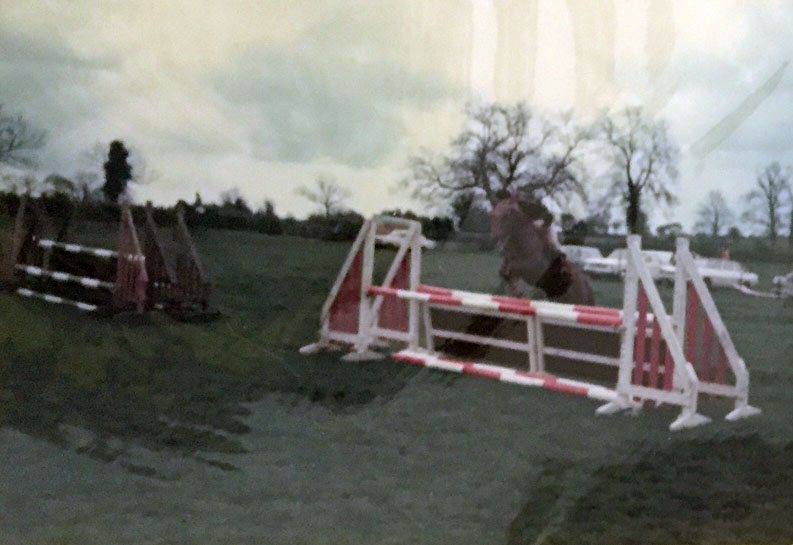
In the past, I have mentioned that I have a lot of respect for my mother’s opinion regarding horses. As a horsewoman, breeder, and entrepreneur, much of her life has been spent around horses. Growing up in England, she competed in showjumping and other English disciplines, before coming to the states and starting a business in reselling off-the-track thoroughbreds. She then started a breeding business, standing stallions of varying breeds- including but not limited to Belgian Warmbloods, Trakehners, Connemaras, and more.

Our main stud, Hadrian, taken at the old farm

The cornerstone of her breeding program, Hadrian

Even though growing up on the farm I got to see much of this first hand, it wasn’t until a conversation we had earlier this year that really opened my eyes to her success. While not in her nature to name-drop, we started talking about many of the people she has had business with over the years, and the list was impressive. Susan Beebee (eventer) and Jim Koford (dressage/Art Deco) both boarded stallions at our farm at one point, and she regularly dealt with and sold a couple horses to Daniel Geitner (showjumping/hunters), just as examples. So here are some images documenting the bi-continental journey of one horsewoman! Thanks mum, for teaching me so much and infecting me with the horse bug.

Starting young (middle child) at a horse show in England

Starting young (middle child) at a horse show in England

Showing as a kid

Showing as a kid

Pony jumpers

Pony jumpers

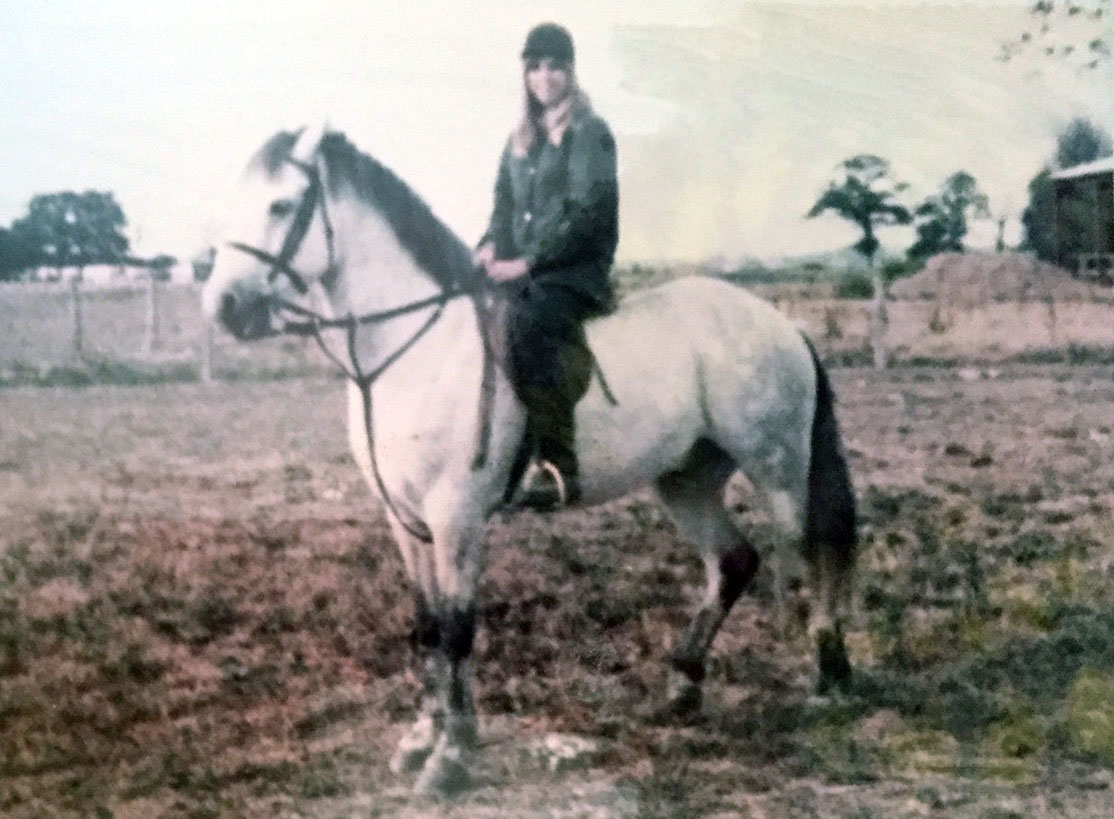
A handsome Grey in England

A handsome Grey in England

Competing alongside her sister in England

Competing alongside her sister in England (left)

late 80s perm and a cute bay

Late 80s perm and a cute bay

chestnut

I’d take this chestnut home if I could!

Another family love - german shepherds

Another family love – german shepherds

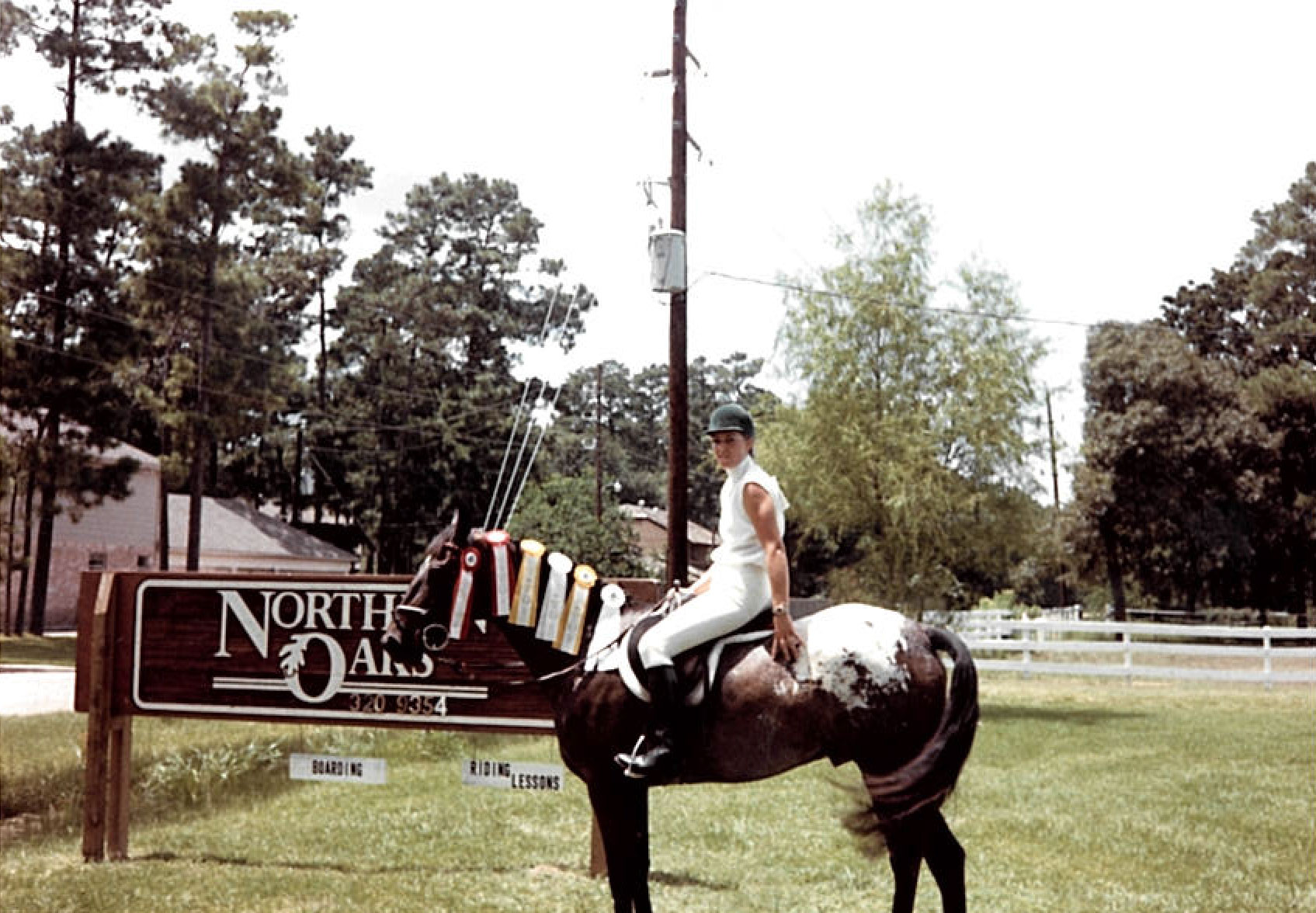
Ribbons with one of her favorites, Blue Boy

Ribbons with one of her favorites, Blue Boy

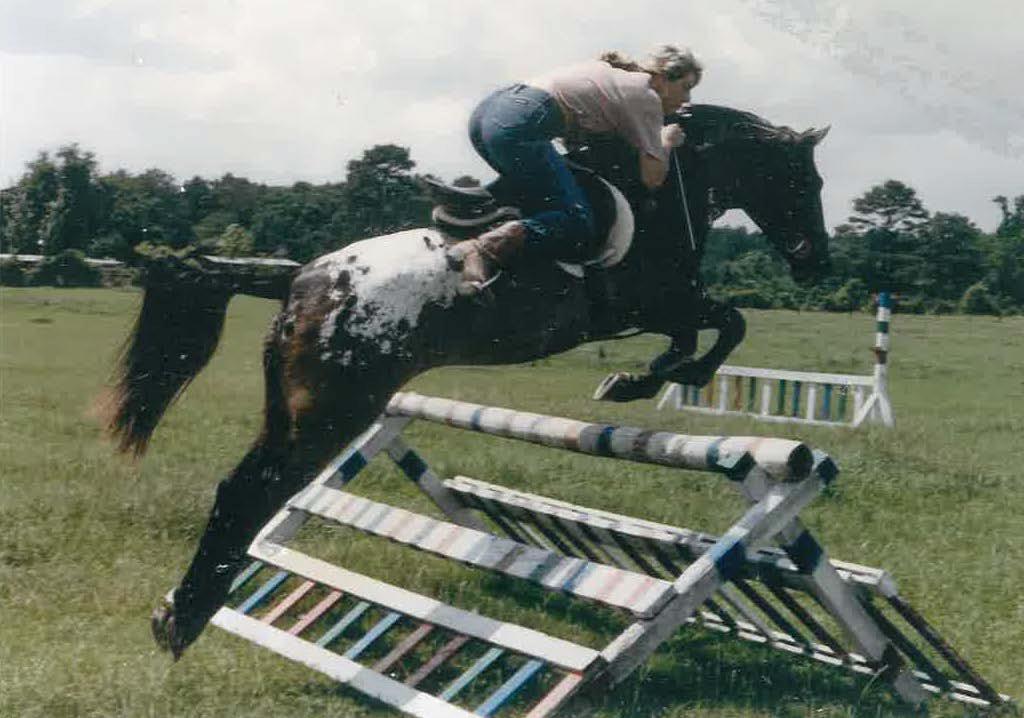
Schooling Blue Boy

Schooling Blue Boy

Schooling Blue Boy

Schooling Blue Boy

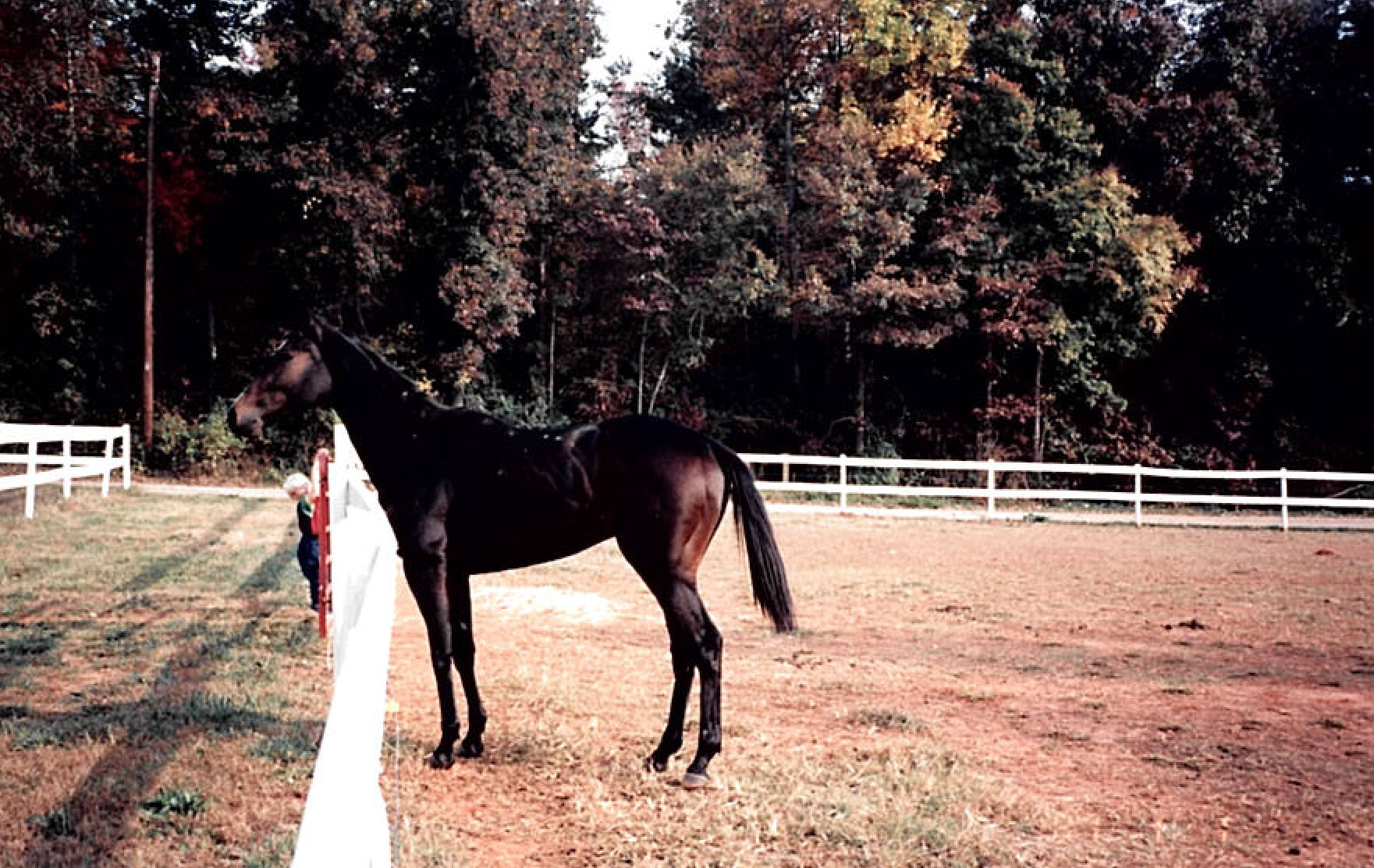
OK, so not of her, but of one of the OTTB's, and my brother hanging on the gate

OK, so not of her, but of one of the OTTB’s, and my brother hanging on the gate

New Millenia, New Discipline! Dressage on her own Bud Light

New Millenia, New Discipline! Dressage on her own Bud Light

Another current family horse, Cochise

Another current family horse, Cochise

Happy Mother’s Day, and have a great weekend!

Dressage Lesson Recap: A Checkup and Rein Backs

Monday night we had our first lesson since mid February. Since Foster is starting to feel so much better, I’ve been adding slightly more work and asking a bit more of him with each ride, but continue to feel his hind-end weakness as a result of having so much downtime. So I scheduled the lesson in order to have a professional assess the weakness and the program I have come up with, to see if I am heading in the right direction.

no new media- who wants to come play photographer for me? :)

no new media- who wants to come play photographer for me? 🙂

To make a long winding story short, all is well. After riding him for 15 minutes, Eliza agreed that if you really leg yield him to the left his weakness gets prominent, as he takes uneven steps getting worried about it all. Otherwise though she was happy with how he felt, especially his canter work. She felt that it was exactly right to insist that he do things correctly, and just keep it in short sessions until his fitness returns. It will be hard for him to stay straight for long periods until the strength comes back to that leg, but the only way it will get stronger is if he uses it.

Also worked on making him use his abs at the canter and really lift his back, instead of cantering 'even' like this

Also worked on making him use his abs at the canter and really lift his back, instead of cantering ‘even’ like this

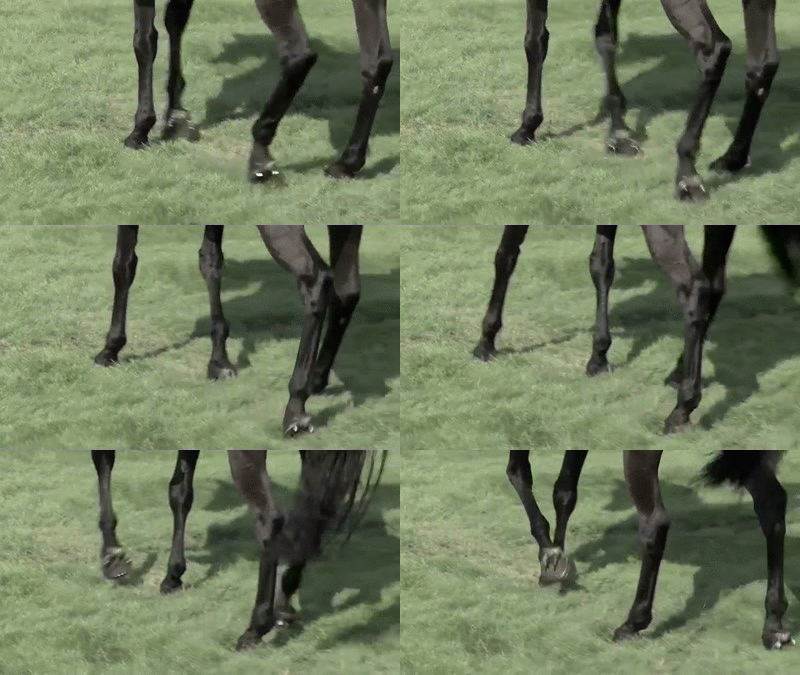
I also got the all-clear to practice walk-canter transitions again, which I am excited to hear. And for now, any and all lateral work at the walk will be great for him. In the past week I had started re-introducing shoulder-in and haunches in at the walk, so it will be fun to practice half pass and renvers in addition to these movements. Rein-backs as well will officially become [a small] part of our routine.

Gif by Citron Vert

The Rein-back. [gif by Citron Vert]

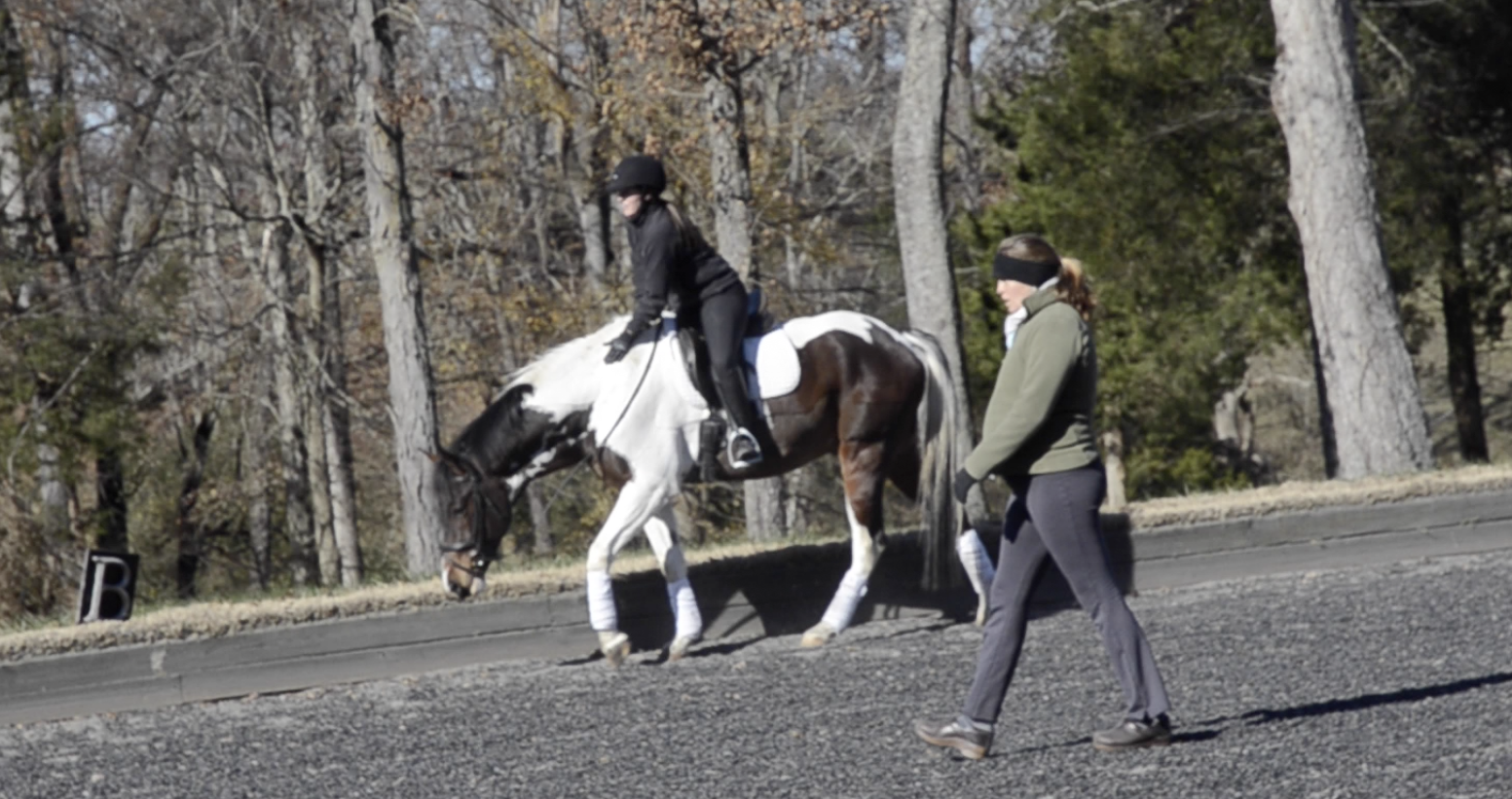
Since it has been, oh, 15 years since I last taught a horse rein-back, and knowing that in a test it is such an easy thing to go wrong, I wanted some feedback on the movement. A rein-back actually starts with a quality walk then halt. If the halt is crap, the rein-back will follow suit. So, square halt, soften then jaw, then put both my legs slightly back and even but light resisting aids with my hands. I’ll have to watch out for him dragging his toes, and staying soft through the jowl. But it was shocking how easily the idea came to him. How is this the same horse that in our early days, would stand with his jaw like a rock and refuse to give in any way shape or form?

Overall I am really pleased with how things are going, and am hopeful that the next scope will reveal a happily ulcer-free pony. Just two more weeks!!

Janet Foy and Chris Hickey Clinic Recap: Second – Fourth and Overall Impressions

Phew, how are you guys handling the information overload? Today’s post starts with the Second level rides, which was most interesting to me as this is what we are (were) working towards this year. Because of that, I took some rather shoddy video of Janet critiquing this pair as they rode part of Second level test 1.


(excuse my video skills, was trying to watch and listen at the same time!)

Second Level

  • At this level, collection is expected to “come and go” slightly
  • When the test was rewritten, Janet advocated for less counter-canter in the second level tests as she thought it was counter-productive for those schooling changes
    • She feels the current test therefore has too much counter canter
  • The short sides of the arena are the only place where the judge can see overall balance/collection/etc
Eliza demonstrates the Extended trot

Eliza demonstrates the Extended trot for Third level

Third Level

  • The primary goal of the half pass is forward, the secondary is sideways
  • The half pass should have more bend than a 10 meter circle
Another Raleigh trainer rides in the Fourth level demo

Another Raleigh trainer rides in the Fourth level demo

Fourth Level

  • In walk or canter pirouette, the haunches should be in the direction of the bend
  • Flying changes are the most “personal” of movements for a horse/rider pair, and so are most difficult to replicate for a strange rider
    • This because each rider is built differently- for instance she compared her leg length to Chris’s, which are about 6 inches longer. Her cue for the change will be in a very specific place, so if Chris asked for a change on her horse the horse might overreact due to not being used to feeling the leg ‘there’. If she got on Chris’s horse, the horse would likely ignore her aid for the change because her leg couldn’t reach where the horse is expecting that cue.

First level Friesian

Interesting Tid-Bits

  • In Europe, judges at the CDI level are only paid a per-diem fee of roughly ~$150, but nothing else, so judging is really out of a passion for the sport
  • The German language has much better verbage for dressage, whereas they have a single word for a concept, in English we sometimes need whole sentences to describe it. Takeaway? Germans just speak dressage better than us.
  • The change of diagonal (HXF or MXK) in intro builds the foundation for flying changes, as it tests the straightness of the horse
  • Most tests are written for the judge at C, so in tests where there are multiple judges C tends to be the highest score
    • Judging at ‘H’ is referred to the Hellhole, since judge’s can only see the horse’s ass (her words, not mine)
    • Judges at E and B typically give the lowest scores because they can see the most sins
  • Do not, under any circumstances, retire from the arena without the judge’s permission. Not only is it bad sportsmanship, but the judge can (and Janet Foy will) give you a zero for the test (which at a recognized show is a big deal since the scores stay with you forever) and the judge can also opt to give you 0’s for every other ride (even on other horses)
    • It doesn’t matter if it is a local show or a Selection Trials, good sportsmanship matters.

Congratulations to you if you made it through all that! 8 hours of dressage clinic left us all a little brain dead, but eager to hop on our own horses and apply some of the new found knowledge.

Last Thoughts
My overall impression was that each horse was extremely well schooled in the level it was representing. With the exception of the Friesian, all horses were warmbloods of varying quality. A couple were built downhill, a couple flat-crouped, and a couple that were just absolutely drool worthy. The riders also in general were very well turned out and for the most part had nice equitation, but some had holes in their position that definitely reflected in their rides. Seeing some of these imperfections made me think that perhaps a dressage clinic of this caliber might be something that Foster and I could do in the future, and will definitely be something I would consider going forward.

For certain, each rider left the arena having been improved in some shape or form, and the auditors left being a little more schooled in understanding scoring and the execution of movements at each level.

Janet Foy and Debbie McDonald Clinic Recap: Overall comments, Training and First

Or should I say, the Janet Foy and Chris Hickey Clinic. Unbeknownst to us, Debbie experienced severe vertigo before getting on the plane and was banned from flying, so Chris Hickey (formerly of Hilltop Farm – a la Riverman, Don Principe etc) filled in for her. Certainly it was a dissapointment that Debbie could not be there, but that didn’t mean the day wasn’t exceptionally informational nonetheless.

The clinic was structured around each level, progressing from Training level to Grand Prix with two riders demoing part of their level’s test or movements. Janet spoke mostly from a judge’s point of view, providing scores and their justification as the riders went through the test elements, followed by Chris working on each pair’s weaknesses for a short time.

Because the clinic was so darn long (8:30am – 4pm) there was just too much to capture in one post. So today, let’s look at the more general feedback and Training and First level demos.

_DSC7622

General:

  • Janet describes a “red line” for her, where at scores of 5 and 6 there are more problems than good, and where that starts to affect the overall scores of submission, gaits, etc.
  • Horses tend to like the right leg better than the left, and therefore be more submissive in that direction
  • Watch out for “jelly belly”, or the rider absorbing too much of the motion of the horse in their torso
  • The horse MUST be in front of the leg
    • Send the horse forward and back to confirm being in front of the leg
    • Also test how quickly the horse responds to the forward request (sounds familiar to me!)
  • For the horse that evades a more forward trot by cantering, don’t bring them back to the trot, instead send them forward at the canter, so the horse does not learn the escape being forward
  • True dressage is when things look easy, and the relationship is symbiotic
Training Horse checks out the crowd

Training Horse checks out the crowd

Training:

  • Stretchy trot: The nose should be between the shoulder and the knee, but not any lower, else the horse be on the forehand
  • Use the geometry of the tests to fix the horse’s problems, often being accurate allows the horse to better be on the aids
  • Even at this level, corners should be obvious, not part of the 20m circles
  • Straightness down the long sides is really represented by shoulder-fore (so the shoulders are in front of the hips)
This lovely creature rode in the First level demo

This lovely creature appeared in the First level demo

First Level

  • Even in the working trot, a lengthening should always be accessible at any moment
  • Don’t bother lengthening the frame in a trot lengthening until the weight is properly on the hind end
  • The canter is truly balanced when it is “10 meter circle-able”, or that the rider could complete a 10 meter circle at any time without the horse losing balance
  • The canter should be 50% pushing power and 50% carrying

Tomorrow, Second thru Fourth level and my overall impressions from the day!

How to Embrace Incompetence

Not having much to update today, I thought I would share this article from Dressage Today. If you are, or have ever been, frustrated by a skill that seems out of reach, this is the article for you.

DressageToday

Full disclosure, it was written by my dressage trainer, Eliza Sydnor, and so it’s probably no surprise that the words speak to me. I think they also translate very well into any discipline, as it describes the psychological phenomenom of learning to ride a horse, and that you could probably use Hunter-Jumper, or Western Pleasure, or whatever, and the article would still hold true.

Photo by High Time Photography

Photo by High Time Photography

Eliza discusses the responsibilities of the trainer-student connection, and how communication is vital to the learning process. Her discussion of that most frustrating stage, conscious incompetence, where you know what to do but just can’t seem to do it, reminds me of so many lessons where I have struggled to make my body do as I knew it should. Renvers, I’m looking at you. But knowing that we are moving from Conscious Incompetence to Conscious Competence, and that the cycle of learning is renewed with every new skill, is part of the process. Personally, I find this challenge of dressage part of the draw, and I imagine any rider who has learned along with their horse can relate.

IMG_1357

As part of my continuing dressage education, I will be attending the Debbie McDonald and Janet Foy clinic this weekend. A couple local trainers, including Eliza, will be riding as demo riders, which should make an already interesting day that much better. Plan to see a clinic rehash next week!

A Fosterpants Update

First of all, thanks to all of you who commented yesterday. I really enjoyed reading them and getting to know you all a little better! It was especially interesting (though maybe not surprising) to see that there were a lot of creative interests shared, fellow nerds, and to find that our equestrian lifestyle tends to permeate even the non-horsey parts of our lives.

Just a quick update on how the majestic beast is doing. His overall happiness is still greatly improved, and he’s consistently whinnying when he sees me arrive and when I walk away from his stall to get his tack. Cute as it is, I am fairly confident that he knows this adorableness often earns him a cookie. Again, horse is not stupid.

doug-lesson-trot

Gifs from our last Doug flat lesson

We’re about 60/40 on days that he doesn’t kick his belly as the girth is tightened, and he definitely isn’t tensing up when the saddle goes on.

At the warm up, I still have to insist he get in front of my leg at the walk, and the trot still has lots of tranter steps as he finds his groove. After having so much time off from work his right hind is back to being very weak, and his overall muscles have gone a bit soft. So the tranter response seems to happen when he finds himself a bit off balance. Once I get him going and he starts using his back and hind end, the trantering disappears almost completely.

shoulder-in-right

I’m still staying somewhat conservative with what I ask of him, but slowly pushing the envelope bit by bit. What work we do I want to be correct so he builds up the right muscles, but I can only do it for so long before the fatigue becomes both mental and physical. Right now we’re at about 35 minutes of work, with about 15 of that being purely at the walk. It gives me lots of time to work on my own habits, such as my elbows, and weighting my right seat bone.

walk canter gif

With all this is mind I have scheduled a lesson for next week with Eliza, as more of a check in than anything. Then if all goes well, the week after will include a flat lesson with Mr. Payne (or Mrs. Payne if need be), of course assuming that 45 minutes of work is something Foster can handle at that point. I know you guys have missed my lesson recaps! Right? 🙂

Abstaining from Riding

Last week, I was obviously having a bit of a rough time of it all. The stress leading up to traveling with Foster to the vet on Thursday, and not knowing if I would make it there without breaking down (the car, not me), was especially a bit much to handle.

So as I drove out to the barn last Wednesday, frazzled and bitching on the phone to my oh-so-patient hubs, I knew I could not ride that day.

One of my biggest light bulb moments since I really took over the reins training my own horses is this: not every day is going to be a good day to ride. Not because of the horses, or the weather, or other excuses, but sometimes just because I’m mentally not able to. Recognizing those times and foregoing saddle time can be tricky and tough, but its important nonetheless.

Good boy

The reason for this, is that in my mind, if I’m not in the mindset to communicate effectively, then it is unfair to the horse to ask him to respond to muddled requests, and could lead to confusion in his training as a result. Even more so, if I bring my emotional baggage to the saddle, it is absolutely and unequivocally not okay to expect the horse to fix my problems, or in the worse case scenario, to take those emotional frustrations out on the horse.

Happy days, CHP, May 2014

Happy days, CHP, May 2014

In the past with Ivan, there were certain issues that we had that would make me just plain mad. Much of the time it had to do with him bulldozing through my aids at the canter, or using his incredible strength to drag me around the arena at the trot and refuse to transition. I’ll admit it, I cursed, a lot some days, but if ever I got to the point where I thought I wanted to beat the senseless creature silly, I would just get off. Get off, hand walk around the arena, and if I could collect my thoughts and find some zen, get back on. If zen could only be found in a good night’s sleep and a glass of Cabernet, that would have to be okay too. It doesn’t mean failure if we have to try again another day, it just means that day was not our day.

Ivan dressage

Thankfully Foster is much, much easier on my patience, even though we have had our fair share of rough patches. There’s been a couple rides over the years where work was either too frustrating, and it felt like a square peg in a round hole, and I’ve just given up and let Foster play couch while watching others go around, and resolved to try again tomorrow. I try to respect that he has bad days as well, because really, horses are not machines, and well, bad days happen. Having that level of respect for his training is to me, part of being a horsewoman.

Foster kisses

It doesn’t happen very often, but making those tough decisions comes with the territory of being an adult amateur. Balancing work life, life-life and horses comes with costs. And if you’re lucky, all it takes is waiting until the right time and getting that magic ride that will last you through the week.